

I caught this news headline a while back, “Construction zone along I-75 facing changes after 2 fatal crashes within weeks”. I-75 has been under construction for 2 decades here in Dayton, and unfortunately the situation has finally come to a head. After a long summer of major traffic incidents, including fatalities, the state has decided to close the interstate through Dayton. When confronted by the decision, the governor responded with:
“Excessive speed, texting, and otherwise distracted driving has reluctantly led us to an unfortunate decision. Despite our best efforts, our State troopers and local law enforcement have simply been unsuccessful at thwarting the guilty offenders. Our public servants are simply understaffed, and despite federal aid, we cannot front the necessary resources to keep Ohioans safe. Regrettably, we must close the interstate until further notice. Once the necessary infrastructure repairs have been completed, the transportation department will reassess the possibility of reopening the thoroughfare.”
That’s ridiculous you say? Indeed, the carnage taking place on public roads in Dayton is very much true, however I crafted the fictitious response above. “There’s no way they would close the interstate!” you say. Agreed, under the circumstances I have described, they wouldn’t; it’s not culturally acceptable. However, unpaved public roads are closed under similarly described circumstances, with great frequency.
What do you mean culturally acceptable?
While I’ve been unable to find the exact ordinance, multiple sources suggest that in Cleveland, women are strictly forbidden from wearing patent leather shoes. Imagine if you will, a law enforcement officer arresting a woman outside the theatre, because of her flashy footwear. Preposterous, but in the event an officer of the city sees a woman in patent leather shoes, that officer is choosing to let a person willfully disobey the law. How does this happen? In today’s world, It’s no longer culturally acceptable to arrest someone over their choice of shoes. Politicians know full well, demonstrations would be held in front of the county courthouse the moment that took place. Our culture won’t stand for it.
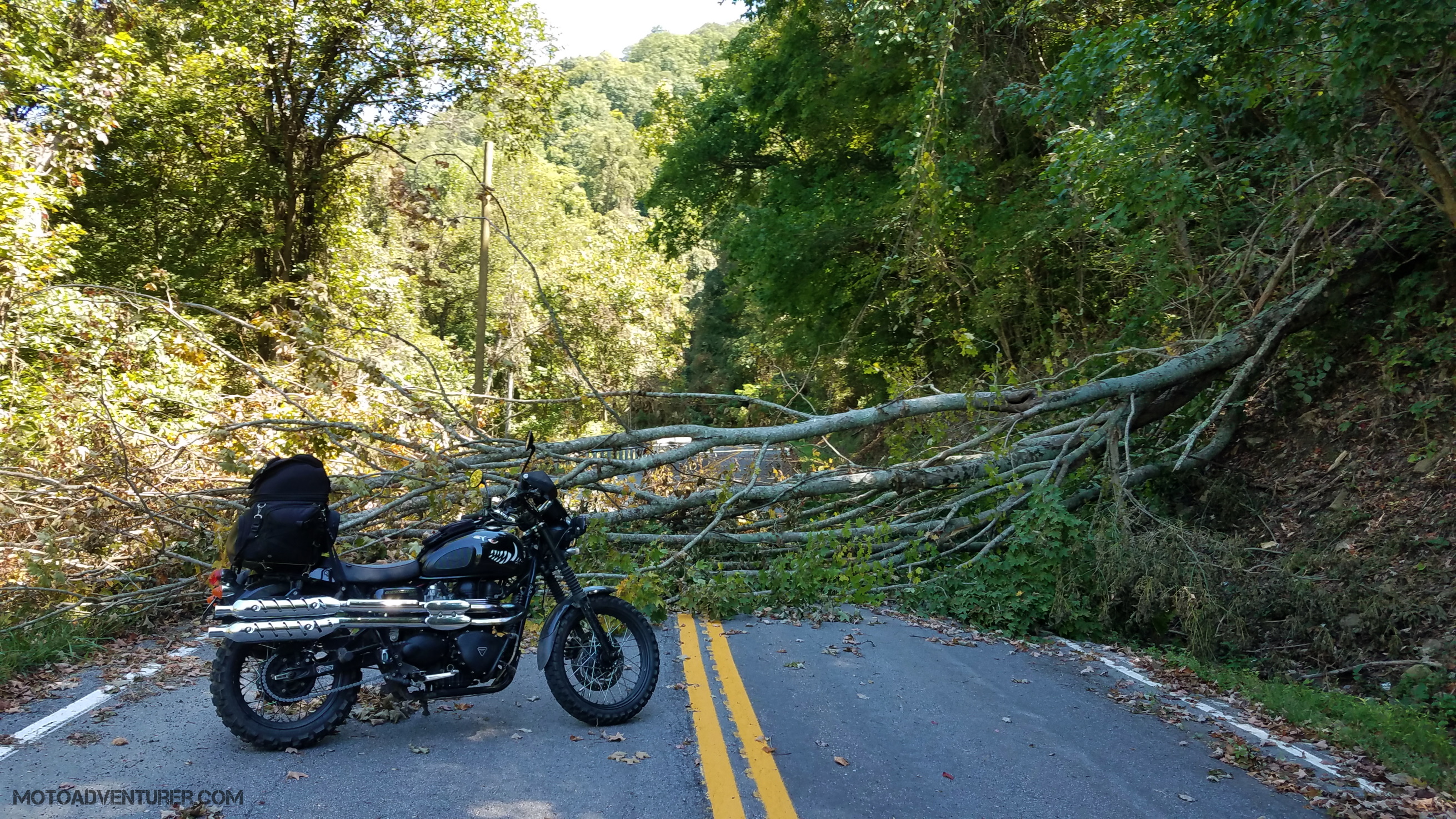
Inversely, if you want to spend twenty-geez on a side-by-side UTV, load it down with beer, and then hold the accelerator to the floor in every mud puddle you find, the locals will let you get away with it… Until they don’t. Eventually, enough complaining from residents will have the sheriff, if not federal authorities, install a gate; closing access to what was once seen as public property. Equestrians, bicyclists, hikers and bird watchers will likely retain access, moreover they’re bound to promote the wisdom of closing the byway to motorized traffic. It is culturally unacceptable to hoon around on a powersports vehicle, litter, and excessively wear public routes (especially after sundown). It is quite evident however, that it is culturally acceptable to punish the innocent by limiting access, or even outright closing areas to the public, under the guise of safety or preservation. In the end, the pedestrians outnumber the off-road community by a wide margin. In Red River Gorge, this was The Narrows Road, recently miles of trails were closed in Moab, Utah, and just last week, Flatlands Road near Suches Creek was closed in Georgia.
It’s time for a culture change
Folks aren’t going to like these terms, but this is the tyranny of the majority to quell the poor decisions of individuals while lumping them with a minority. Government funding for maintenance and law enforcement for these backcountry areas is limited. In the end, closing these areas means municipalities, counties, and park services can stop fighting a complex problem and spend that money on something that appeals more to voters. While I would love to promote a massive demonstration of off-roaders parked out front of various government buildings to protest the mass punishment of the innocent, I suspect it will be received like the “Freedom Convoy”. Our movement to keep public access unfortunately means improving our very underserved image, building relationships, offering alternatives to the rowdy crowd, and policing our own.
Seeing is believing

Gandhi said, “Be the change you wish to see in the world.” I’d love to wait around for our great off-road freedom fighter to show up and whip these authoritarians into shape, but that savior isn’t coming. Virtually no one is going to go toe-to-toe with “city hall”, if we want maintain the riding access to public roads we have, we have to be perceived as a force for good. I type this, reluctantly, because I’m the last person to adorn my helmet with a halo and promote a message of “set a good example” for the public. Unfortunately, we have no other choice. We’re swimming up stream against climate activists, government budget shortfalls, and generations of Americans that have no idea why anyone would ever engage in a risky behavior like motorcycles. If we want to hold the line, we must band together to present a brand that non-riders want to associate with.
Off the top of my head, the first, best method is the formation (or reinvestment) of clubs with focus on supporting the local communities and the highways and byways we ride. The Daniel Boone Backcountry Byway hosts two annual events called “back the byway” where Jeepers get together to fundraise for trail repairs and pick up trash along the routes. If the local trails are littered with beer cans and candy wrappers, some folks feel less guilty adding to the squalor. If a band of motorcyclists is keeping the byways tidy, the casual passerby feels at least marginally delinquent about throwing trash on the ground, let alone how the locals perceive the club when they’re hauling bags of garbage to the dump. I recognize this is tall order; motorcyclists are typically “rugged individualists”. Unfortunately we can individually lament the loss of public access, or band together in attempt to thwart it.
Building relationships

Getting motorcyclists to join a club for a cause is one ask, having that club establish relationships with the locals, especially the authorities is another level. In most cases, the sheriff, the Park Ranger, and the locals couldn’t care less about disappointing some out-of-towner when they close a trail. That discussion becomes much more painful when they have to look a familiar face in the eye. As clubs and individuals, we have to go out of our way to meet local residents and authorities and leave a positive impression. For Adventure riders, this should be easy. If you’re grabbing a sunrise breakfast at the local diner, when you spot the sheriff, tell them to have a great day (bonus points for buying their coffee). Meeting the local park service folks may be a bit more difficult, but if you’re passing through those areas, opportunities arise, and in the interest of volunteering, have your club make some shirts, and show up to hiking trail clean up days. You’ll meet the locals, the trail support people, and maybe even some activists; subsequently you’ll get the opportunity to put a name to an otherwise faceless stranger that has been demonized as a trail destroying force. Taking this a step further is networking with the 4-wheeled organizations; they’re a larger part of the overall population and like it or not, they’re in the same boat with us. If you’re really motivated, it would be wise to befriend the mountain bikers. They will undoubtedly be less likely to understand our plight, but you’ll have your foot in the door with the pedestrian community, and while they don’t see it coming, parts of the hiker community will gladly kick bicycles off the trail when they’re done with us.
I get it, this is work. It’s much easier however to keep a trail open, than it is reopening a trail that’s been closed.
Ride rowdy

All of us have that one friend. If you don’t, it’s probably you. Wheelies in the parking lot, every incline turns into a hill climb contest, holding the throttle open and praying is easier than finding skills and talent… I can go on. These folks are apart of the community, and they’re not going away. Motorcycles attract extreme personalities; ultimately folks need opportunities to ride the way they like to ride. The first answer to this is private property. There are various motocross and enduro clubs around the country. We need to network with these organizations to get new members to the clubs that are accepting, and ideally set up public events at these spaces that offer the kind of riding the ornery folks enjoy. Events like these become maintenance and improvement fundraisers for the clubs and a networking opportunity for everyone. A similar situation can be offered by public organizations, but needless to say, most of them will balk at the possible “trail damage” caused by competition events. I want to reiterate, I’m not trying to push the rowdy riders off as someone else’s problem, to some degree these folks are simply missing the outlet they’re looking for, at the price they’re prepared to pay to engage in it.
Policing our own
When folks can show up and pay nothing to hoon around, they’re going to. Unfortunately there will be those among us that refuse to play nice with public riding areas; be it nihilism, narcissism, laziness, or deviance. Unfortunately, counter culture is as much part of the motorcycle culture as “live and let live”. Again, as individualists, I’m asking that we evolve to something beyond our station. When we see one of our own behaving in ways that will likely come at a cost to us all later, we have to say something. It’s uncomfortable and very much against my nature. Unfortunately until we build a massive off-road paradise, we’re stuck dealing with trigger happy authorities that are simply looking for an excuse to close access to off-roaders. We have to guard our brethren and prevent them from becoming said example, if we can.
Talk is cheap
Closing a road, installing a gate, passing a law, issuing citations, and publishing editorials (like this one) are easy solutions. You know what’s hard? Leading by example. In the last 3 years we’ve seen globally that telling other people what to do is easy. Proving that your actions lead to better outcomes takes effort. It’s human nature unfortunately. Doing the same thing expecting a different result is insane. If we want to strengthen our community and keep trails open, we have to do something different. We have to make the hard choices and evolve. I pray that writing this article is the first step for me personally. I hope to find at least some of you on the same “proverbial” trail in the future, headed in the same direction.


 Moto Adventurer
Would be nice if people knew how to leave someplace as they found it. I don’t ride off road much, but I live near a park. People are prone to throw their trash there. I kindly pick it up and throw it in the road so the fucking human pigs can live in their own squalor.
LikeLiked by 2 people
That behavior is impressive really. Like where did these people learn this behavior? Are they like that at home? The answer is likely yes. It would be impressive to see how such behavior would have played out 100 years ago. I assume bugs would be involved.
LikeLiked by 1 person
Maybe a bit off as it’s not related to off-roading, but I had recently a discussion with a guy who is into speed / knee down on public roads. I said that I won’t tolerate such behaviour and suggested to do this on a racetrack along with talking about the benefits a racetrack provides. He then argued that he’d need an extra bike, a trailer a full weekend time and the cost of all this plus racetrack charges would take away all the fun he has when he does what he loves on a public street arround the corner. I think that you can’t talk some sense into such people. They endanger people or leave their trash somewhere or remove the db-eater when they go thru beautiful landscapes for no good reason. Such people don’t consider what they do to others – be it people, animals or environment – let alone consequences their behaviour may have but scream when they face road closures or driving bans based on the dB output of their bikes. As an old saying goes “He that will not hear must feel.”
LikeLiked by 1 person
Agreed. There is definitely no eliminating disrespectful people, it’s unfortunately a personality archetype we’re stuck with. We should however defend our own rights, and work to prevent losing access to public byways that are threatened by the irresponsible actions of the limited few. With that, there are methods to thwart some of that behavior, but there’s way to eliminate it entirely.
LikeLike
Everything is different now. In the 70s and 80s we rode everywhere. On dirt roads, trails, fields and alongside railroad tracks. No one cared. When taking them home for the night, cops would actually tell us to “get those things off the road”. Today, everyone cares and no one wants the two things that come out of your tailpipe. Wyoming is looking good. Here in New England the money wins, every time.
LikeLiked by 2 people
It’s fascinating how the culture has changed. I expect we’ll be revisiting this topic more in 30-40 years depending on how urbanization ends up. I’m not keen on electric, but it’s a solution in the urban sprawl. Unfortunately, the urbanites moving to the country to “relax” will create some culture clash. That’s definitely happening in my favorite parts of Kentucky right this moment.
LikeLike
Looking at the first picture from the post and wondering how well do those tiger handguards protect against the wind during this time of year? Is the heated grips and guards combo enough to keep your hands from freezing, or is it better to get the heated gloves?
LikeLike
Hey Bart! Those hand guards were okay, but in the end, I purchased some “hand mitts”. I bought a cheap set from Part Unlimited, and then paid $70 for a set from Oxford that I like much better. I have a set of $200 heated gloved (shown in that photo), but I personally prefer heated grip and my oxford hand mitts. all in, the second setup is actually cheaper.
LikeLike
Why are we “upstream with climate activists”? Motorcycles are hugely fuel efficient as far as MPG goes. Just discovered your blog and great article. Oh and I do believe in climate change since the scientists have proven it.
LikeLiked by 1 person
I agree that motorcycles are extremely efficient. My old Honda got 70mpg under 60mph. While that may be true, it appears that great effort is being put into electrifying all vehicles including motorcycles. There’s much to debate there, but I suspect there’s a cohort of folks that wish to end all internal combustion engines.
LikeLike
Yep, and I think that would be very short sighted. ICE’s are the only thing I want LOL
LikeLike
What a terrific discussion! I guess there is a component of me that is optimistic about my fellow man and feel most people are responsible and willing to self impose responsible limits on themselves. And then there are a few rowdies that buck the trend. Yes, of course even the most responsible of us like to gun the throttle from time to time, but they see the bigger benefit from abiding by a few rules. Even the most red state, gun toting, gas guzzling redneck can still love the beauty of preserved, unblemished, serene nature. And most of these ‘cowboys’ can appreciate that a few rules and some open minded negotiation with the locals can benefit themselves in the long haul.
LikeLiked by 1 person