
“A race bike with a plate a dual-sport does not make.”

The American moto media has applied the label “Dual-Sport” to motorcycles like the Tenere 700 the same as it describes the CRF450RL. A club of baggers bros can ride through the chasm between these bikes. In 2021, I sent my beloved CRF250L off to a new home and welcomed a plated KTM 350 XCf-w into the garage. In the time that’s passed, said 350 has received a similar goodbye, with a Yamaha WR250R usurping the dual-sport stall in the stable. One might chalk this up to boredom, but it has more to do with the intended use case.
Performance vs. Comfort

Few segments of the motorcycle market symbolize compromise like the dual-sport. Having off-road competency while providing on-road comfort and confidence are particularly at odds with one another. Weight becomes blatantly obvious when the terrain becomes challenging; inversely less weight comes as a penalty on the pavement at high speeds or windy days. Off-road cockpits tend to be spacious and allow the rider to dance with the bike on single-track. Beating the bitumen is more comfortable with a wide padded seat and some wind protection. More weight can reduce vibrations transmitted to the rider, but lacking immaculate pavement, engine vibrations are a moot point on washboarded trails. A dirt bike is intended to spend its life off-road, with virtually no creature comforts whilst pavement machines see less variability in terrain features while providing comfort for idle time in the saddle. This battle is endless, so how much time does a rider spend in either realm?
Ease of Ownership
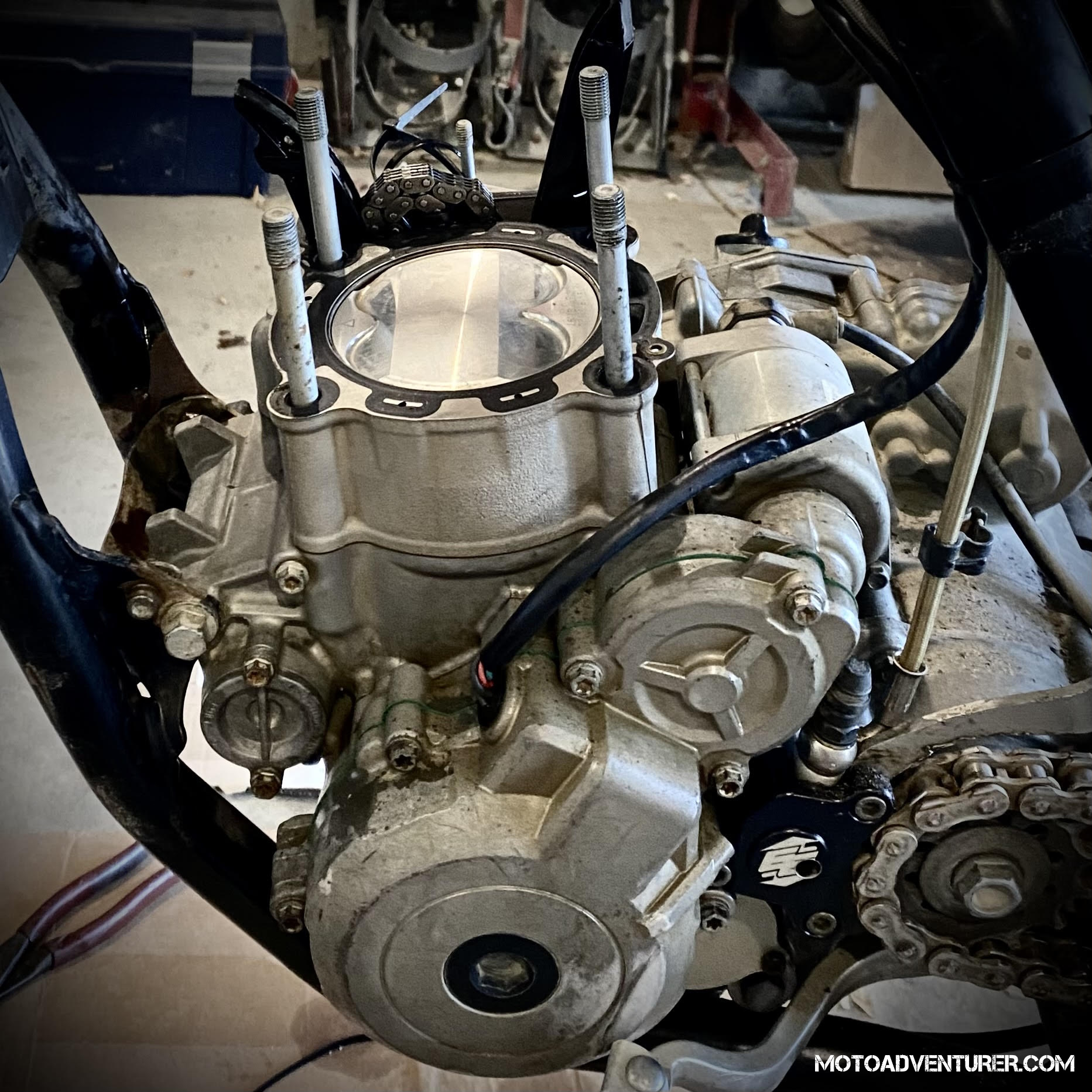
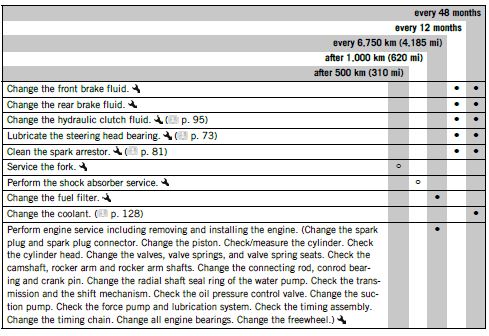
You’re unlikely to hear a dirt bike racer beg for tubeless rims. Off-road riders won’t skip a beat about changing a tube; some can shoehorn bib mousses into tires with impressive proficiency. Maintenance skills are par for the course for off-road riders. Out on the single-track, there’s simply no service shop available to fix your flat tire. Consequently, off-road machines are built to be worked on… often. Boatloads of maintenance conveniences are designed into the motorcycle architecture to make tasks easier, but it doesn’t detract from the frequency required; nor are said features cheap. Service intervals are measured in hundreds of miles, not thousands like street-faring motorbikes. The KTM service manual says to change the EXC-f engine oil every 465 miles; the Yamaha WR250R manual recommends oil changes every 3,000; Honda’s CRF250L every 8,000. The WR requires valve clearance checks every 26,600 miles; meanwhile, KTM advises EXC-f owners overhaul engines every 4,185 miles. Assuming one follows the recommended service intervals, a KTM “dual-sport” owner would be looking at their second motor overhaul at about the same time a 250L owner would be changing the oil for arguably the first time. A dual-sport has to balance the convenience of riding against the task of wrenching. Performance, purpose-built off-road machines require frequent service; whilst under-stressed and heavier machines require more talent & fitness when the terrain difficulty goes parabolic.
Horses for Courses

You can absolutely ride a Gold Wing off-road or pack down a supermoto for a cross-country trip. Assuming that’s your fancy, I’ll conclude you revel in “type 2 fun”, believe me, I get it, but you’re in the minority of motorcyclists. Despite our cultish passion for the two-wheeled machines, they’re still tools, designed for specific purposes. Despite our admiration for Pol Tarres, deep down most of us know the T7 was designed primarily for road use. Conversely, with few exceptions, modern two-stroke motorcycles are designed for off-road use only (it’s difficult to get legal state plates for many of them). Here on the East Coast, it’s hard to beat smoker in the woods, but I’ve yet to meet a rider that compliments their road manners. Most of those riders would agree, hare scrambling a CRF250L doesn’t sound like much fun, let alone a Tenere. If you’re like most mortals, riding a motorcycle in the “meat” of its intended purpose range tends to be the most fun. For you Type 2 riders, we hold meetings you’re welcome to join.
Explicit Content
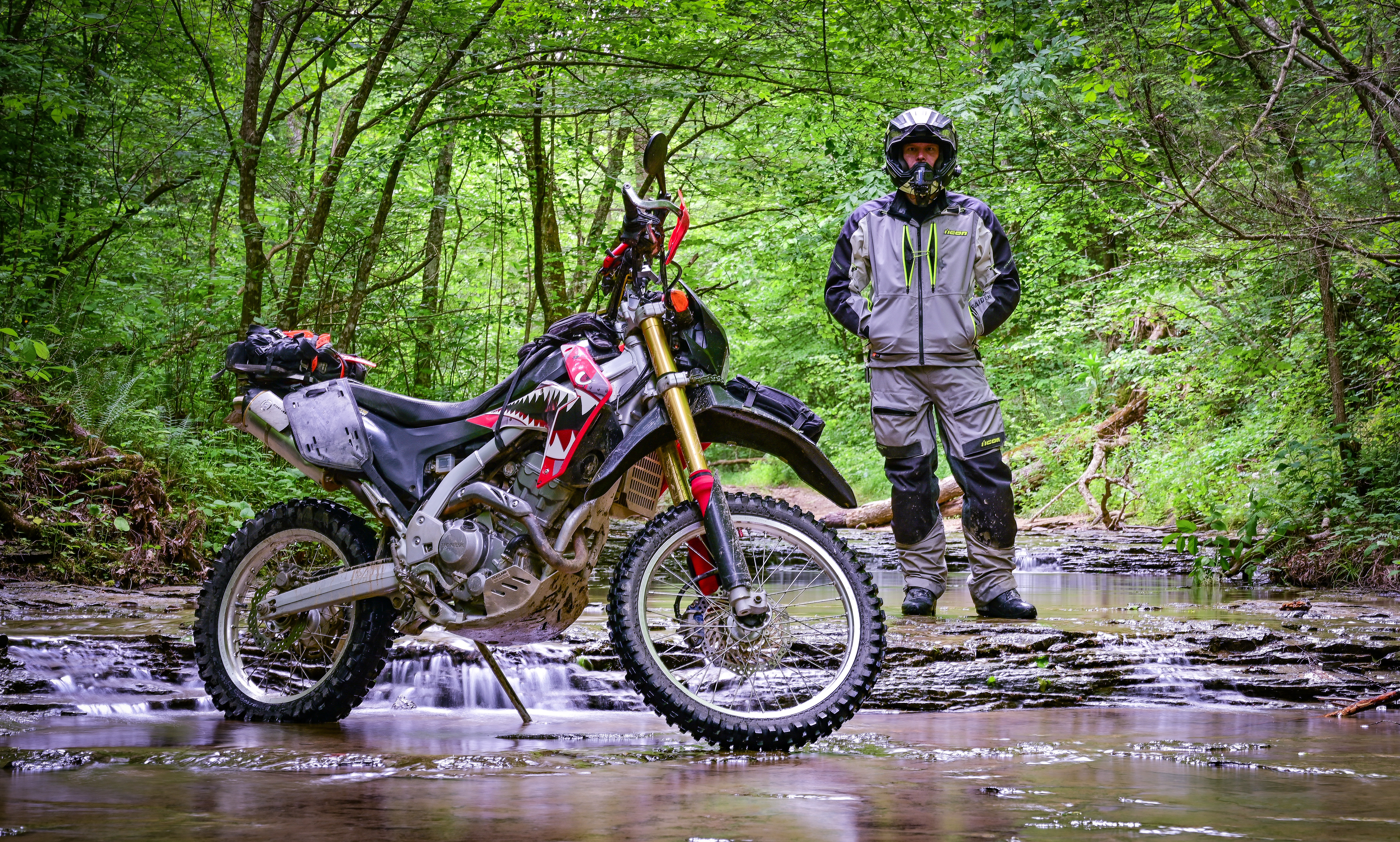
A deal on a dual-sport fell in my lap in 2018. That bike created opportunities for riding previously unimagined to me. The thought of “go anywhere” felt like a real possibility. Racing said dual-sport was equally awakening; in the off-road world, 70 pounds may as well be a ton. The convenience of a tow vehicle eliminated any reason to keep fighting a 320-pound dual-sport when a thoroughbred race bike found a home in the garage. My dirtbike had a plate, and the Jeep had a hitch carrier; driving saved energy for harder trails; trails made much easier on a lighter bike.
As time passed, boredom intensified with extended “windshield time”. For me, riding beats driving almost every time. I never trusted a European-plated dirt bike to endure the 300-mile round-trip commute to my favorite riding areas. I grew impatient with the off-road maintenance schedule and wasn’t about to push it harder. Riding a dirt bike on the street can actually be fun, but “comfortable” is seldom a word I would associate with it, contrasted against alternative options. Between highway monotony and losing a tow vehicle, my KTM 350 was put out to pasture, already supplanted by the lightest Japanese dual-sport available. The WR250R only packs an extra 45 pounds of street-worthy bloat, and hare scrambles halfway decent for a 1990’s era machine.

Here in lies the rub; in America we call the KTM 350 EXC-f a “dual-sport”. However, aside from a few street legal niceties, EXC-f models share all of their major components with their bespoke racing stablemates. We would be wiser to be explicit with our words; perhaps we should adopt a more European perspective and refer to these machines as “Enduro” motorcycles.
Yes, you can plate a dirtbike; however most folks only want that plate for legal reasons; they tow their bikes to riding areas, and avoid the pavement like the plague. The demand for these performance machines became so great, that even Honda plated their CRF450X and gave it an “L” to compete with the Austrians. Inversely, traditional dual-sports like the XT-250, XR650L, and WR250R are meant to be ridden to and through the trails and then home; they live life with one wheel firmly planted in both worlds, compromising on pretty much everything.


 Moto Adventurer

DRZ400’s don’t get enough love…as you probably know, I’ve been doing quite well in harescrambles with mine, at least in the C-class. But the way mine is setup, it would run out of gear on the highway above 55mph.
LikeLiked by 2 people
DRZ deserves so much more. I wish and hope they made minor tweaks to the new gearbox to help it a bit on the highway.
LikeLiked by 1 person
I’ve recently been able to try a friends KTM 500exc and Husky 501…they weigh 60# less than the DRZ, have 6 gears, and are very manageable (compared to a 450, for example). I think that might be the ticket for guys like me who want some separation of capability between their street bike and their dirt bike…my street in a Harley PAS….so when I seriously want to tour, that’s what that bike is for.
LikeLiked by 1 person
Agreed. That’s totally my point. If you’re trailering a dual sport, you’ll get along well with a plated Enduro. If you’re not, you need true dual sport, not an Enduro.
LikeLiked by 1 person
I wholeheartedly agree with this article. A plated dirt bike (I own one) is NOT a dual sport. Neither is and ADV bike (I own one) not a dual sport. Just because they are used as one doesn’t make them that. A dual sport is a true compromise. The plated dirt bike and the bavarian beluga whales, et al are at polar opposite sides of the spectrum. A dual sport ride is typically and all day affair of around 100-150 miles with a mixture of tarmac, dirt roads, unimproved dirt and possible single track. Perfect for your thumper de jour.
LikeLiked by 1 person
Thanks for commenting Cap’n! I also delve deep in all three disciplines, and it’s frustrating how marketing has really glossed over how specialized, yet inglorious the true dual sport really is
LikeLike
Great read! Your detailed comparison of the two dual-sports perfectly captures the thrill of adventure riding.
LikeLiked by 1 person