
When KTM introduced the 690 Rally, the comparisons came almost immediately. Yamaha Ténéré 700, Aprilia Tuareg 660, the usual middleweight adventure motorcycles, but I think they’re looking at this the wrong way. I’m not saying we need to completely rethink what constitutes a lightweight motorcycle, a middleweight, a dual sport, or an adventure bike. Those classifications exist for good reasons. Displacement is useful shorthand; most of the time, engine size, weight, intended use, and the type of rider all move together.
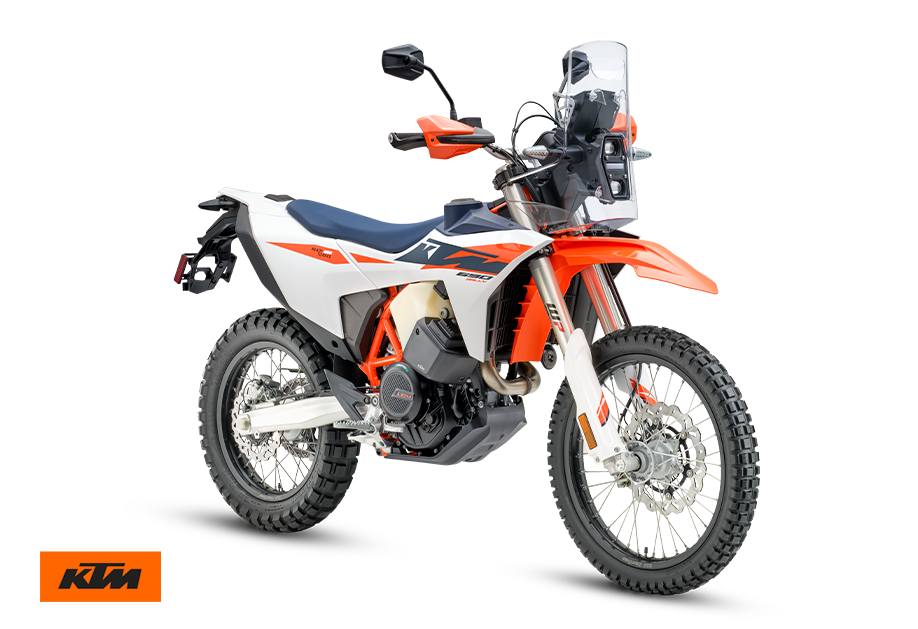
But every once in a while, a motorcycle comes along that stands apart. I think the KTM 690 Rally may be one of those motorcycles. The mistake, in my opinion, is assuming that the person buying a 690 Rally is a middleweight adventure shopper simply because the engine displacement and horsepower numbers hung on it. I don’t think they are. I think the use case is lightweight ADV.
Look at the numbers; the 690 Rally is arguably the lightest motorcycle in the performance envelope that people are calling “middleweight.” It has substantially more suspension travel than the typical middleweight adventure motorcycle. It has the kind of ground clearance, wheel configuration, and off-road focus that you normally associate with a dual sport or lightweight adventure bike. In fact, with the exception of displacement and horsepower, it has more in common with something like a CRF300L Rally than it does with a Ténéré 700.
Taking a closer look, I think the customer who buys a CRF300L Rally has a lot more in common with the customer who buys a KTM 690 Rally than the person who buys a Ténéré 700 has with the 690 Rally. That doesn’t mean the 690 Rally is a CRF300L Rally. Obviously, it isn’t. It’s a much more powerful motorcycle, but the intended use case is much more simlar.
I’m the Customer KTM Is Chasing
I very well recognize that I’m a niche customer. I ride to the trail most of the time. This season,I think I’ve pulled a trailer once; it’s probably 10-20% of my riding experience each year. Regardless of our feelings, at this stage, gasoline is getting mighty expensive. Trailering is surely more comfortable, but it costs money. If I can ride marginally less difficult trails and commute on the motorcycle, for me, that’s a more cost-effective and enjoyable way to get to the same place.
But there’s another relevant part of my use case: I ride alone and often in places with especially difficult trails. I need a motorcycle that I can rely upon that isn’t going to put me in a position where I’m going to injure myself because I picked the wrong motorcycle for the terrain. I suspect I’m more toward the extreme end of the spectrum than most riders, considering I ask a lot from both myself and the motorcycle. I might ride a couple hours on the highway in the morning, then go ride some of the scariest public roads I’ve ever found, and then ride home. I could end up doing 200 miles of pavement before I even get to off-road riding. That’s an extreme use case, but I don’t think I’m the only person moving in this direction.
Two Markets Are Starting to Collide
Dual-sport riders are getting older. A lot of them eventually want something more comfortable. They want to ride farther and do more adventure-riding things without giving up the ability to ride difficult terrain. At the same time, adventure riders are also getting older. They’re looking at their 450-pound motorcycles and thinking, I’d really like something lighter. They don’t necessarily want to give up the places they’re riding. They just want a motorcycle that makes the experience easier.
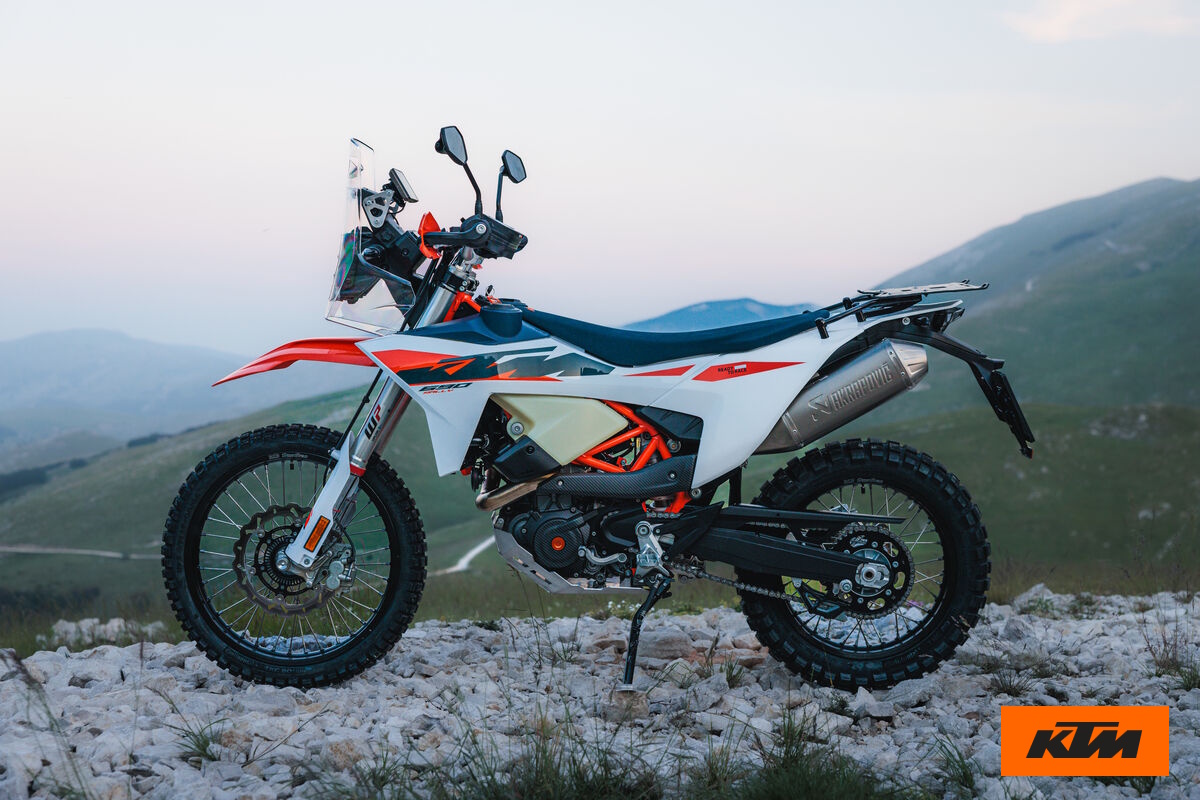
Simultaneously we’ve got newer riders gaining confidence. They’re looking at what other people are doing and thinking, “I’m missing out on opportunities because my motorcycle isn’t capable enough.” We’re getting to the point where riders can purchase that capability without having to build it themselves. That’s important, because until now, those two markets haven’t really merged.
I’m seeing this evolution firsthand. Hosting an Appalachian Adventure Rally, I’m seeing heavy adventure motorcycles, dual sports, and even plated race bikes all showing up to ride the exact same difficult trails. It’s wild. The market is shifting, and I think KTM has recognized that.
So What Exactly Is the 690 Rally?
This is where I think people are going to have a hard time with the bike. Some people are going to look at it and say, “That’s a dual sport with a windshield.” Other people are going to look at it and say, “That’s an adventure bike.” And then the adventure-bike people are going to say, “Sure, it looks like an adventure bike, but it’s going to be less comfortable than my Ténéré 700.”
They all have a point. The 690 Rally isn’t going to be the most comfortable adventure motorcycle. It’s not going to be the lightest dual sport. It’s not going to have the luggage capacity of a traditional ADV, and it’s not going to have the smoothness of a twin-cylinder motorcycle. But that’s exactly why I think people are going to struggle to categorize it.
If KTM had simply made another 450-pound adventure motorcycle with a 700cc twin, nobody would be having this conversation. Instead, they made something that has the power of a middleweight, the weight of a lightweight, the suspension of a serious off-road motorcycle, and enough wind protection and fuel capacity to actually get you to the trail. That’s the unicorn ADV riders’ claimed they wanted.
But the Compromises
I’m not blind to the compromises. Engine vibration is probably the biggest question mark for me personally. I’ve not traditionally liked big single-cylinder engines. Spending 16-hour days in the saddle is not uncommon for me.That’s my bread and butter. So if the vibration on the 690 Rally becomes irritating after several hours, that’s a legitimate problem. However, that’s probably a six or seven out of ten concern. But while iit is significant, it may not be a deal breaker. My Ténéré 700, WR250R and Scrambler all have some irksome vibration in various conditions and I haven’t kicked them out yet. Wind buffeting is another concern, but windscreens can be changed; vibration is harder to fix. That’s one of the things I’m going to be watching very closely as these motorcycles get into the hands of actual customers.
I’m also very interested in the front fuel tanks and the ability to switch between the front and rear tanks. We’ve heard people discuss the way the rear tank on the 690 Enduro can affect the bike’s handling. If moving some of that fuel forward changes the way the motorcycle feels, that could be a really important part of the equation.
Who Shouldn’t Buy One?
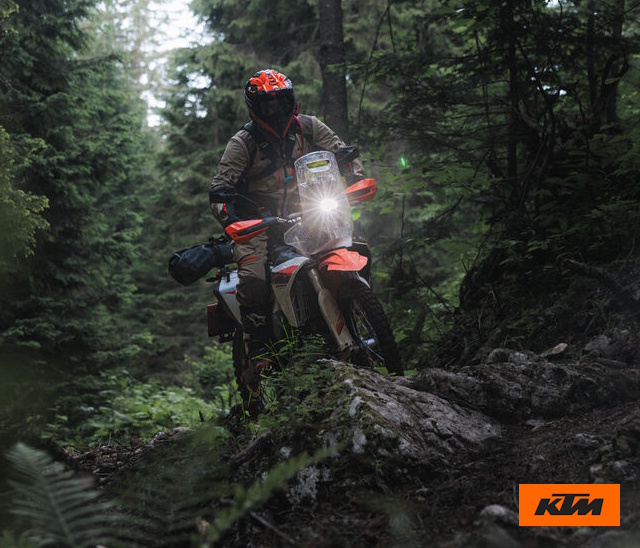
Who should actually buy a 690 Rally is an important question. If you’re going to spend more than 51 percent of your time on pavement, particularly if you’re going to spend significant amounts of time on the highway, I think there are other motorcycles that are probably going to make you happier. If you want huge luggage capacity, passenger capability, and all-day highway comfort, this probably isn’t the motorcycle for you.
I’m concerned that adventure riders are going to flock to the 690 Rally because it looks like a race bike, because it looks like something that went to Dakar, and because they want to own a motorcycle that looks like that. Then however, when they discover that it’s not the comfortable adventure motorcycle they actually wanted, they’ll start overpopulating the marketplace (asking retail prices no doubt). Honestly that probably works out for me; in a few years, there might be some reasonably used 690 Rallies sitting around for people who actually want them.
But What Happens If KTM Gets This Right?
If everyone classifies the 690 Rally as a middleweight, then KTM may have just raised the performance envelope for the entire middleweight class. Now we’re looking for lighter motorcycles with higher performance suspension and similar power. If we classify it as a lightweight, we’re looking for something else entirely. We’re asking for lighter motorcycles with more performance and more off-road capability. And that’s exactly what the 690 Rally does. It still outperforms a CRF300L Rally, but it doesn’t carry the weight penalty of the CF Moto Ibex 450 or typical middleweight adventure motorcycle. That’s the interesting part.
Adventure riders will always want a lighter motorcycle. Dual-sport motorcyclists, especially as they age, are always going to want a more comfortable motorcycle. This motorcycle starts to fix both problems. It doesn’t completely solve either one, and that’s why people are going to shit on it. The off-road crowd is going to say it’s too heavy. The adventure crowd is going to say it’s not comfortable enough. The dual-sport crowd is going to say it’s too expensive. And they’re all going to be right about something. But maybe that’s the point.
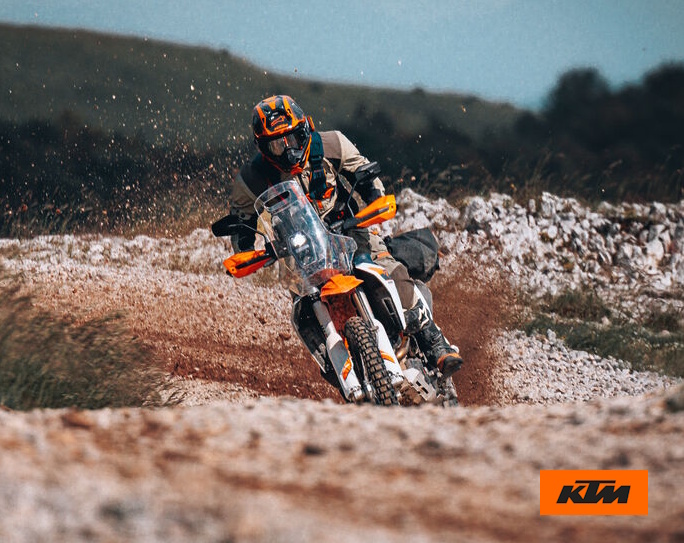
KTM may have just delivered to us the unicorn motorcycle we’ve been asking for. A motorcycle that can ride hundreds of miles of pavement, get you to the trail without a trailer, and then take you into terrain where a 450-pound adventure motorcycle starts becoming a liability. It isn’t perfect. I’m not even sure yet whether I’d personally tolerate the vibration on the long highway rides; but I’m piqued to find out. For the first time (in recent history), we’re getting very close to a motorcycle that bridges the gap between the lightweight dual sport and the middleweight adventure motorcycle without simply becoming another heavy adventure bike.
If KTM has actually figured this out, the really interesting question isn’t whether the 690 Rally belongs in the lightweight class or the middleweight class. It’s whether those of us who have been asking for this motorcycle are finally going to get exactly what we asked for. And then complain about it anyway.


