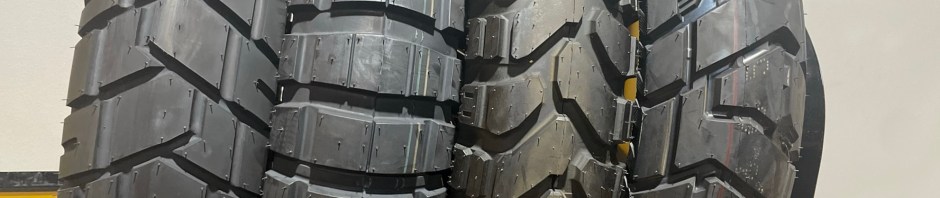

In the shadow of the cerveza sickness, inflation is very real, and tires sure feel especially affected. These days, buying new tires is one of the most expensive routine maintenance items you’ll pay for. As the middle-weight segment gains more members, the tire options are expanding, but at the same time, the price of “new & improved” is becoming exorbitant for many. The latest crop of ADV bikes are dancing on 21-inch front wheels, paired with 17 or 18-inch rear rims; tubeless tires have become almost ubiquitous, which has unfortunately added nearly a $100 premium to many rear tires, however, there are a few deals available, especially if you’re prepared to stuff a tube in a tire. On a similar note, for folks rocking the more traditional 21/18 dirt combo, slimming down to a 140 rear will definitely save you a few bucks, albeit possibly at the loss of some road manners.
Shinko 804/805 Adventure Trail

I’ve been a proponent of the Shinko 804/805 combo for a long time. If one is dipping their toe into the off-road end of the ADV pool for the first time, spending a few bucks on a set of Shinko “50/50” tires is a solid choice. The knobs on the 805 set are deep enough to get some bite off-road while sacrificing very little on the pavement. The front knobs won’t be the best choices for slogging your way through the mud, and the rear “paddles” will cause the rear wheel to drift into the ruts, but these tires will swat down about any “70/30” or less aggressive tires on every trail. When initially mounted, the rear wheel tends to let the bike “fall” into the corners depending on your bike and wheel combinations, but on dry pavement, the 805 holds the corners well once “scuffed in”. Shinkos also tend to be a bit cold-blooded, so it’s wise not to get ham-fisted with the throttle or the brakes until you’ve put some heat in the tire. Both front and rear are “directional” tires, so you (technically) shouldn’t flip them, but I typically saw upwards of 4-5k tread life before the center sipes on the rear tire made rain riding a little sketchy, while the front would easily do twice that, but with significant scalloping. Most common ADV sizes are available in tubeless options and will set you back around $260 for a set.
Tusk 2-Track Adventure
Rocky Mountain ATV’s house brand “Tusk” has been putting downward pressure on tire prices for about 5 years now. Just recently, Tusk dropped the new “2-track” on the market, specifically targeting the Tenere 700, TransAlp, and 890 Adventure crowd with an aggressive off-road tread that still has longevity for the pavement. The 2-track front appears to have closely spaced chevron knobs, yet provides surprisingly good traction on the gravel and arguably a shade better than the 805 in the mud. The 2-Track rear rivals the D606 for the chunkiest “dual purpose” tire I can think of. The 2-track rear tends to ride mostly on the center knobs at recommended pressures; I find this makes the bike feel like it’s falling into the corners, and unfortunately lasts longer than the initial break-in miles I’ve experienced on other tires. Off-road, the rear tire is decent but tends to share the same “paddle-style” lateral slide behavior of the Shinko 805. The beefy knobs help the tire last over 4,000 miles, but also inhibit some off-road grip considering the bevelled knobs. The front tire appears to wear evenly with the rear if not faster; aggressive riding on pavement will unfortunately “saw-tooth” the front tire rapidly and diminish the off-road performance. Both tires are also directional, limiting overall longevity, but are tubeless. Also of note, mounting this rear tire is a real bear; the sidewalls are so stiff that a friend of a friend claims he rode a significant distance on a flat and had no idea. I recommend sitting the tire somewhere warm before mounting it to soften it up if you’re swinging spoons at home. At initial launch, the 2-Track rear was only about $130, but after a recent price bump, the set will cost you about $260.
Mitas Enduro Trail
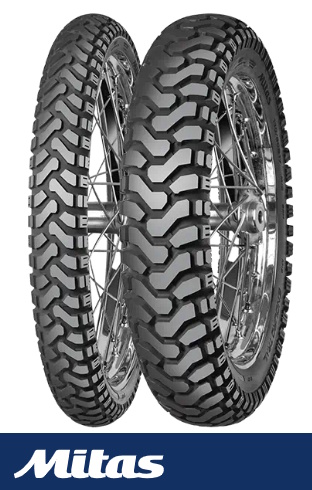
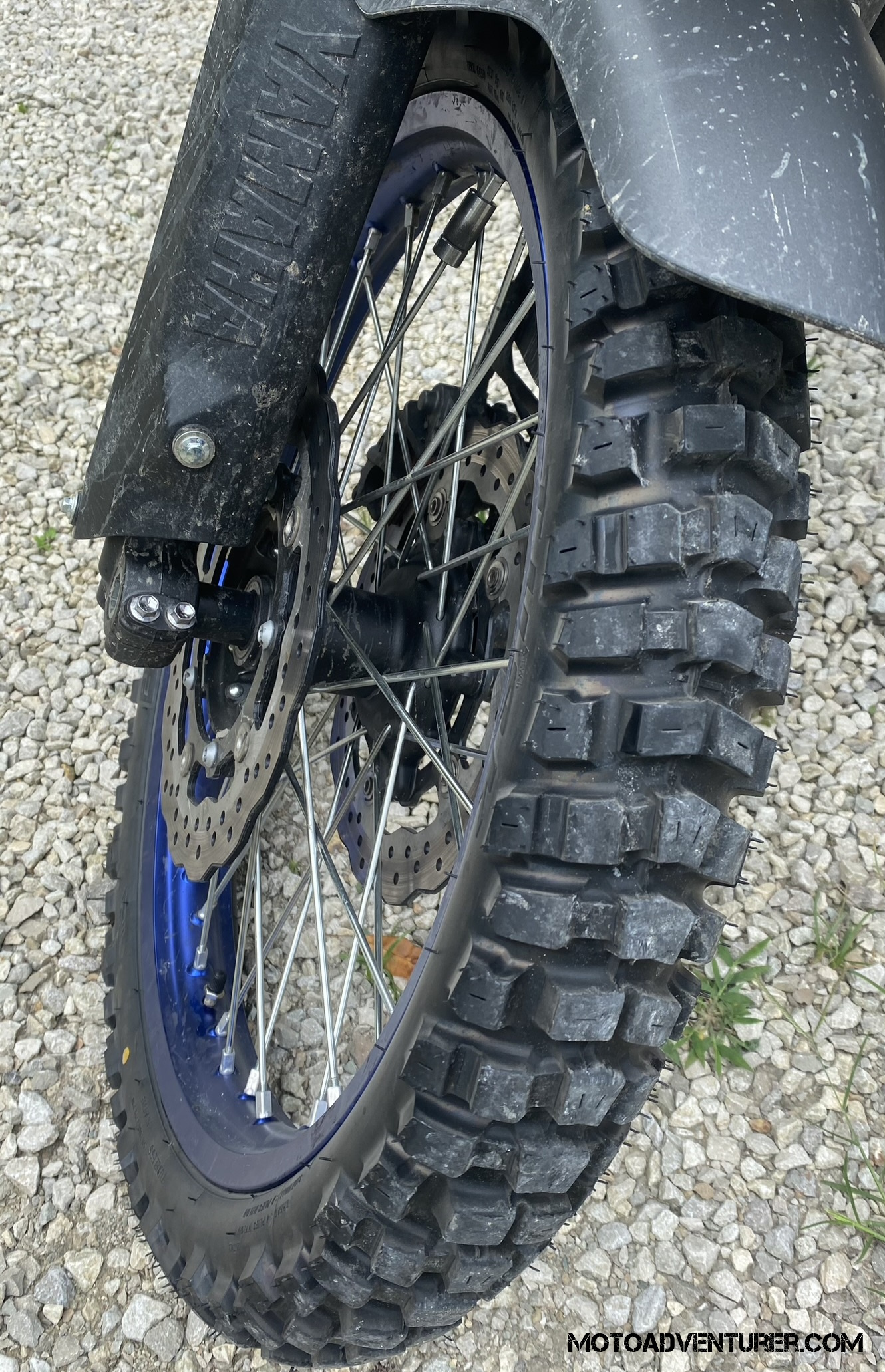
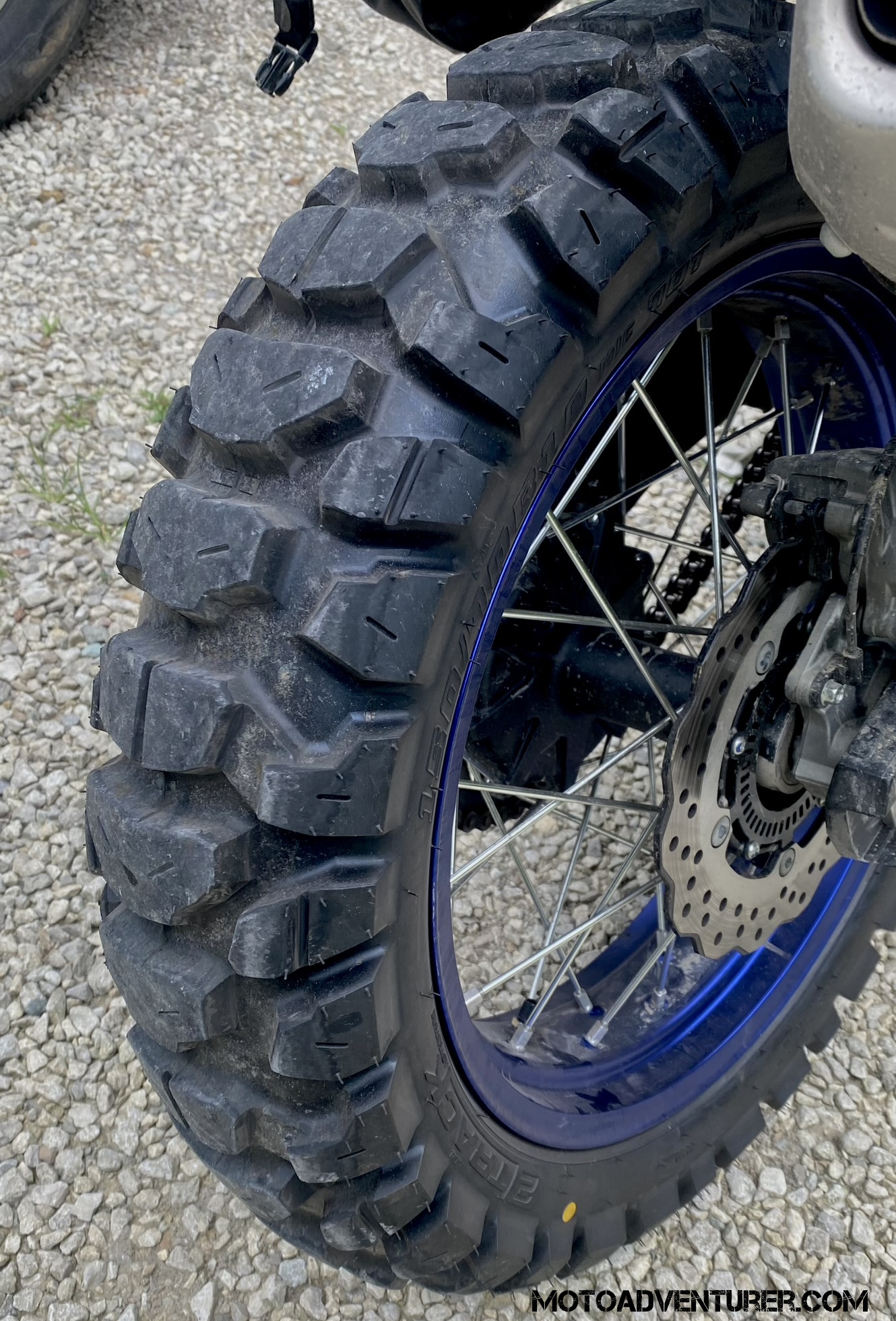
Formerly the “E-07”, now Enduro Trail, has been on the market since at least 2015. I’ve been anxious to try them, but unfortunately, the price versus the competition back then didn’t make sense. Today, that is the opposite. Unfortunately I’ve so seldom encountered these tires in the wild I’m unable to comment on their performance and behavior first hand, but have generally gathered from “internet wisdom” that they’re very competitive over the Heidenau K60 Scout (which I’ve mentioned before) with regard to on and off-road performance, and outlast the TKC80. Somewhere buried in the archives of Common Tread, there’s probably some legit anecdotes from Spurgeon regarding prowess. Again, the Enduro Trail is also directional and available in tubeless options and will cost you about $260 a set.
Mitas Enduro Trail+

Around 2020 Mitas beefed up the knobs on the E-07 to launch a plus-size offering for the heavy weight bikes with today’s latest generation called the Enduro Trail+. I talked a buddy into these a few years back, and they’ve become his go-to for his GS. He tells me he expects around 5k miles out of a rear and loves them on pavement and gravel roads, including riding two-up on both surfaces. I’ve seen them in the mud first hand, considering weight and size of the knob patches, they could certainly be better, but it’s hard to pair longevity with mud prowess. I’m told the sidewall is pretty stiff, but that’s another price we pay for mounting tubeless tires and running “50/50” ADV tires. Like the standard version, these too are directional and will set buyers back about $285 a set.
Mitas Enduro Trail-XT+

For riders looking for the most aggressive off-road ADV tires without giving up tubeless options or breaking the bank, Mitas also offers the Enduro Trail-XT+. I’ve seen the previous generation E-09 a few times on the trail, and for off-road riding, those ADV pilots had a lot of nice things to say about them. Inversely, rumor has it that on-road, the XT+ is not the most confidence-inspiring on wet pavement, however, that’s nothing new with Knobby-shod heavyweights on lubricated bitumen. The XT+ again has a “paddle style” knob arrangement for the rear tire, so typical warnings about lateral traction apply. On the other hand, unlike the previously mentioned options, the XT+ is not directional, allowing riders to flip the tires to wear each side of the knobs more evenly and get improved longevity. Mitas offers a “Dakar” version of XT+ designed with a tougher sidewall to prevent punctures. Needless to say this tends to make mounting or field repairs tougher, but there are tactical and price reasons to choose the Dakar trim depending on the size you need. Like the previous offerings, a set of XT+ carries a price tag of around $270.
Stretching the dollar
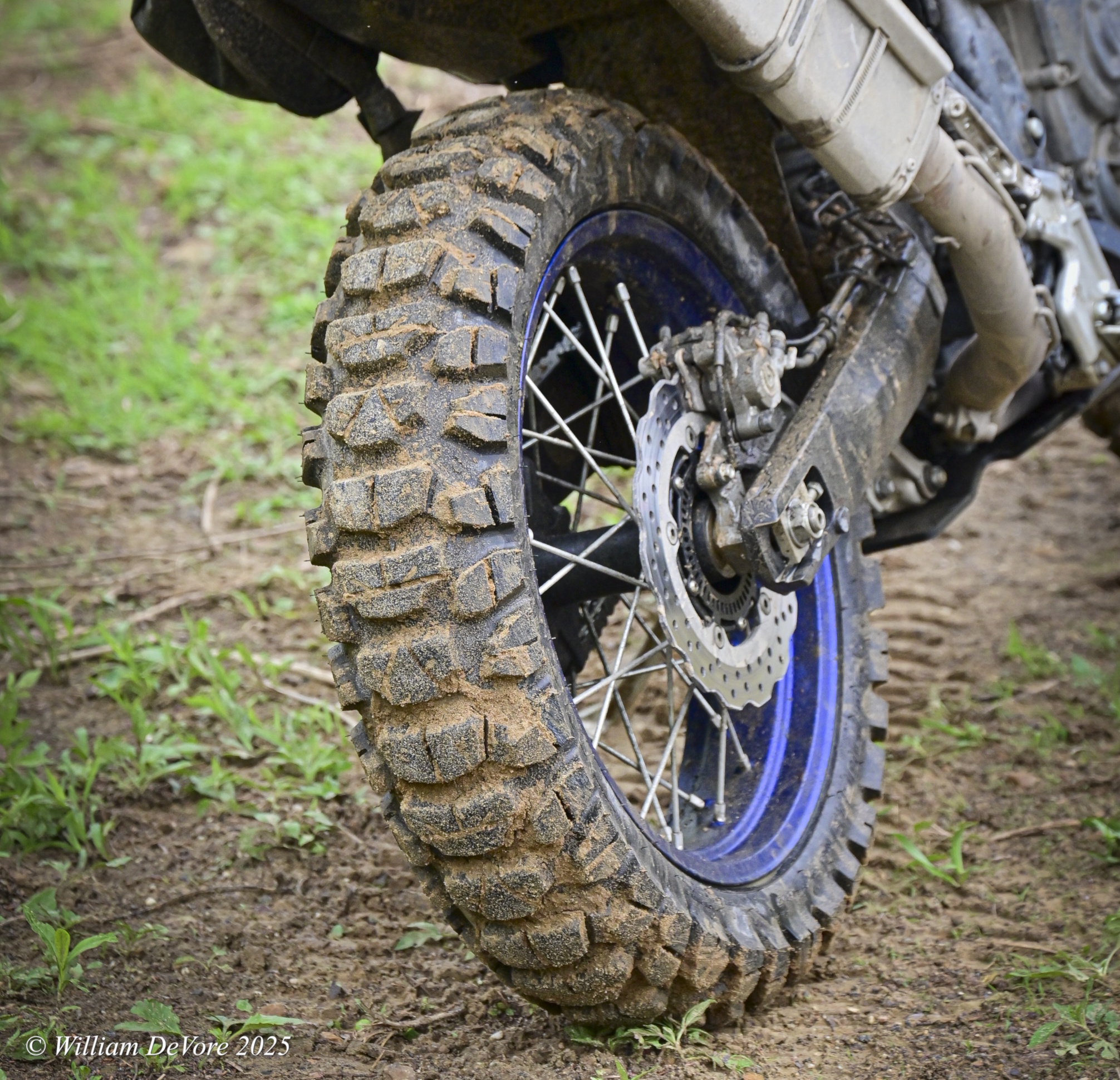
Most of the middleweight ADV bikes on the market now are sporting a 4 to 4.5-inch rear rim, paired with a 150-width tire. More off-road-oriented riders can save a few bucks by downsizing to a 140/80-18 tire, and arguably gaining traction off-road while sacrificing some road manners. At the same time, to get access to cheaper or more aggressive tires, it typically means installing tubes. Legal disclaimer, manufacturers and other safety proponents are going to warn you against “undersizing” the tire for your motorcycle, likely citing risks associated with tubes, sidewalls, high speeds, load rating, etc.; I am not suggesting you do this, I’m pointing out availability and observation of these tires in the wild. For whatever it’s worth, re-lacing a rear rim to a slimmer width would alleviate concerns with undersizing tires, while also changing chassis dynamics and road handling.
Tusk Dsport Adventure
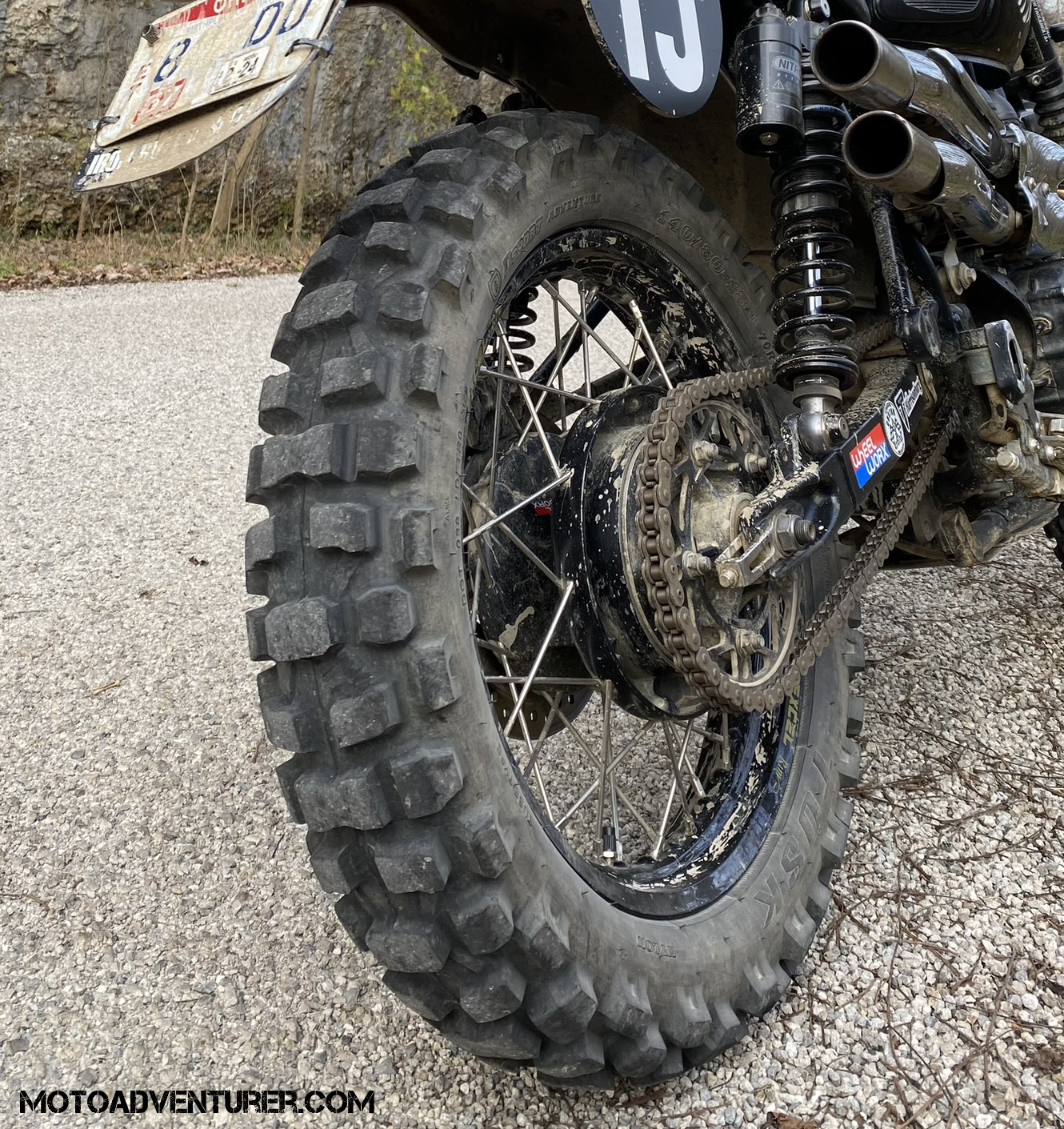
One of Tusk’s first ventures into the DOT realm was the Dsport Adventure. I’ve run this tire on various dual-sport bikes since it was released. Tusk obviously took some notes from the Dunlop D606 as the two tires are extremely similar in looks and composition. I’ve met multiple T7 owners who have mounted the Dsport for ADV riding in the gnarlier terrain, considering its price point for both front and rear. In my experience with smaller bikes, the Dsport is very difficult to compete against off-road while still having reasonable on-road manners. The front tire is directional, and does experience excessive “saw-toothing” with aggressive braking and potentially worse on a heavy bike, but does the job and it’s cheap. The rear blocks will slide a bit on the clay, but compared to most ADV tires, the Dsport is a big improvement in the slop. Dsports are tube-type tires, and strike me as a bit cold-blooded in the rain, similar to the Shinko 805. On 300-pound dual sport bikes, I typically experienced about 3 to 4 thousand miles before tires lost usefulness off-road, and a set costs around $160.

Tusk Waypoint Adventure

Just recently, Tusk released a more ADV-oriented sequel to the Dsport, they call the “Waypoint”. The knob configuration of the front tires are extremely similar to the Dsport, marginally expanding the knob surface area, while lowering the knob height to make them more confidence inspiring at speed on the heavy bikes. The Waypoint rear is a dramatically different knob configuration, but like the front, lowering knob height and distributing the blocks and spaces to smooth out the pavement ride while still offering bite in the dirt. I have a Waypoint rear mounted to my WR250R right now, and I’m actually keen to use the Waypoint over the Dsport in most conditions. The Dsport is by far the better option for riders who will spend over 50% of their time off-road, but true 50/50 or more pavement riders will find big advantages to the Waypoint. I don’t yet know the longevity of the Waypoint, but have every reason to expect it to meet or exceed the standard set by the Dsport in both mileage and rain manners. The Waypoint rear is not directional, and both are tube-type tires, and run about $160 for a pair.
Motoz Tractionator Adventure

Motoz tires found their way into the U.S. in the mid-2010s and have been a staple of the ADV community with their “Tractionator” adventure tire almost from go. In the 50/50 realm, the Tractionator is one of the best off-road tires I’ve ever run. On my Scrambler, the Tractionator was the most confidence-inspiring tire in the gravel and dirt I could find that still had some respectable pavement chops. Meanwhile, lots of riders will bemoan the impressive howl these knobbies can sing on the highway. I’ve also seen these tires load up pretty good in the clay, but that’s not saying much, as very few big-bike 50/50 tires can shed the peanut butter as effectively as off-highway skins. Circumstances on my Scrambler meant these tires didn’t last as long as many claim to get, but I think 5k is a conservative target, depending on how much off-road traction you need toward the end of its life. Unfortunately, like most of these other offerings, the Adventure rear is also directional, so you can’t flip it. Motoz has ended the Tractionator front variants for now, but offers a “Dual Venture” that we’ll talk about in a minute. Motoz does offer these tires in traditional 150 width, including tubeless, but they’re a pretty penny, per my comments about “bending” the rules, you can find tube-type 140’s for around $150.
Motoz Tractionator Rallz
Offering more off-road bite to their “Tractionator Adventure” variant, Motoz spaced out the lugs a bit more and released the “Rallz”. Traditionally I’ve seen the Rallz priced a bit cheaper, and it’s also available in a front tire that resembles the Tusk 2-Track knob configuration. Unfortunately, I’ve not had the chance to run these personally, but reviews seem positive, and considering my experience with the adventure, I expect similar behavior with a bend toward off-road. Again, if you’re going to give a 140 width a shot, a front/rear combo will cost you about $280 for a set.
Continental TKC80 Twinduro
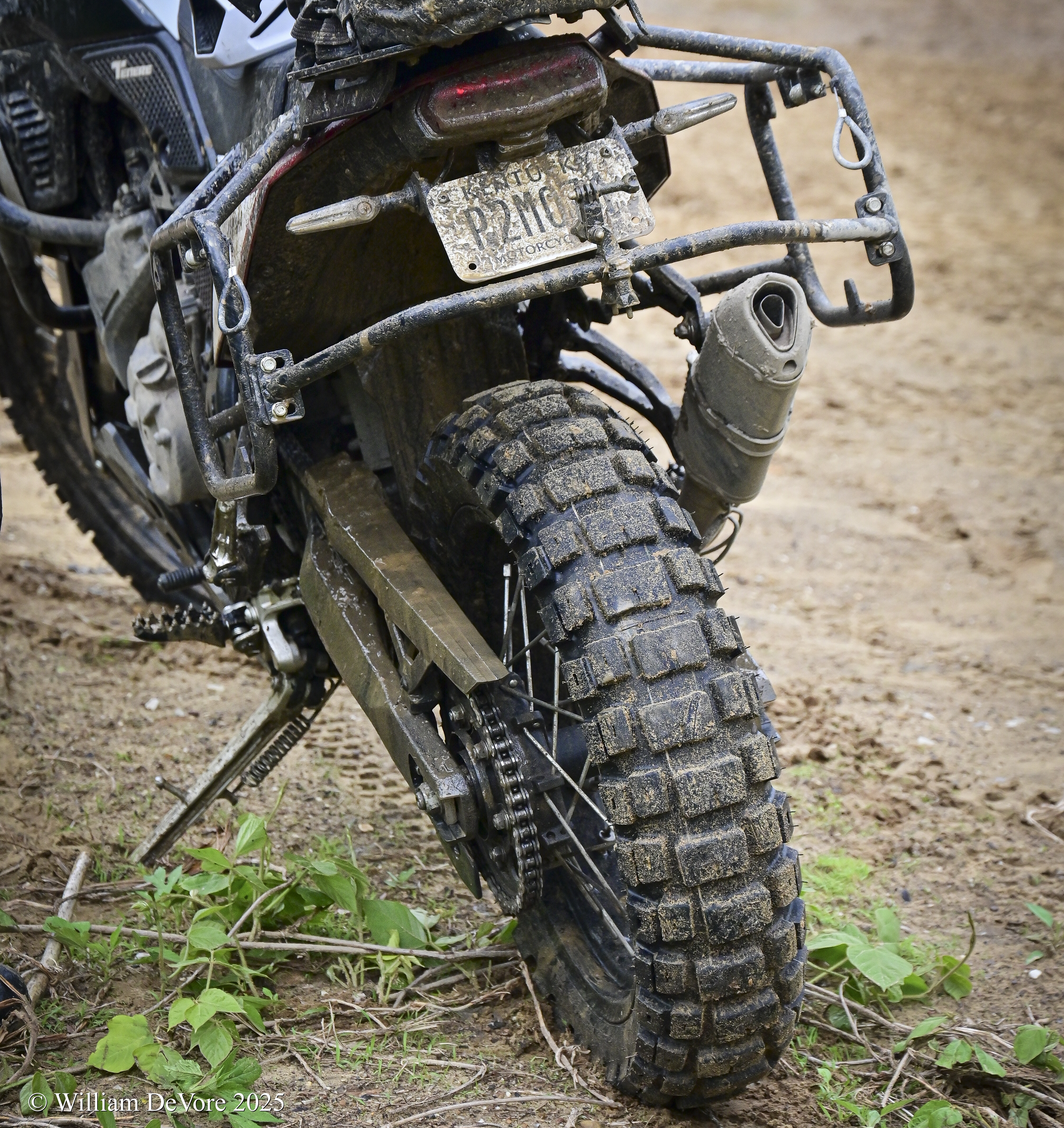
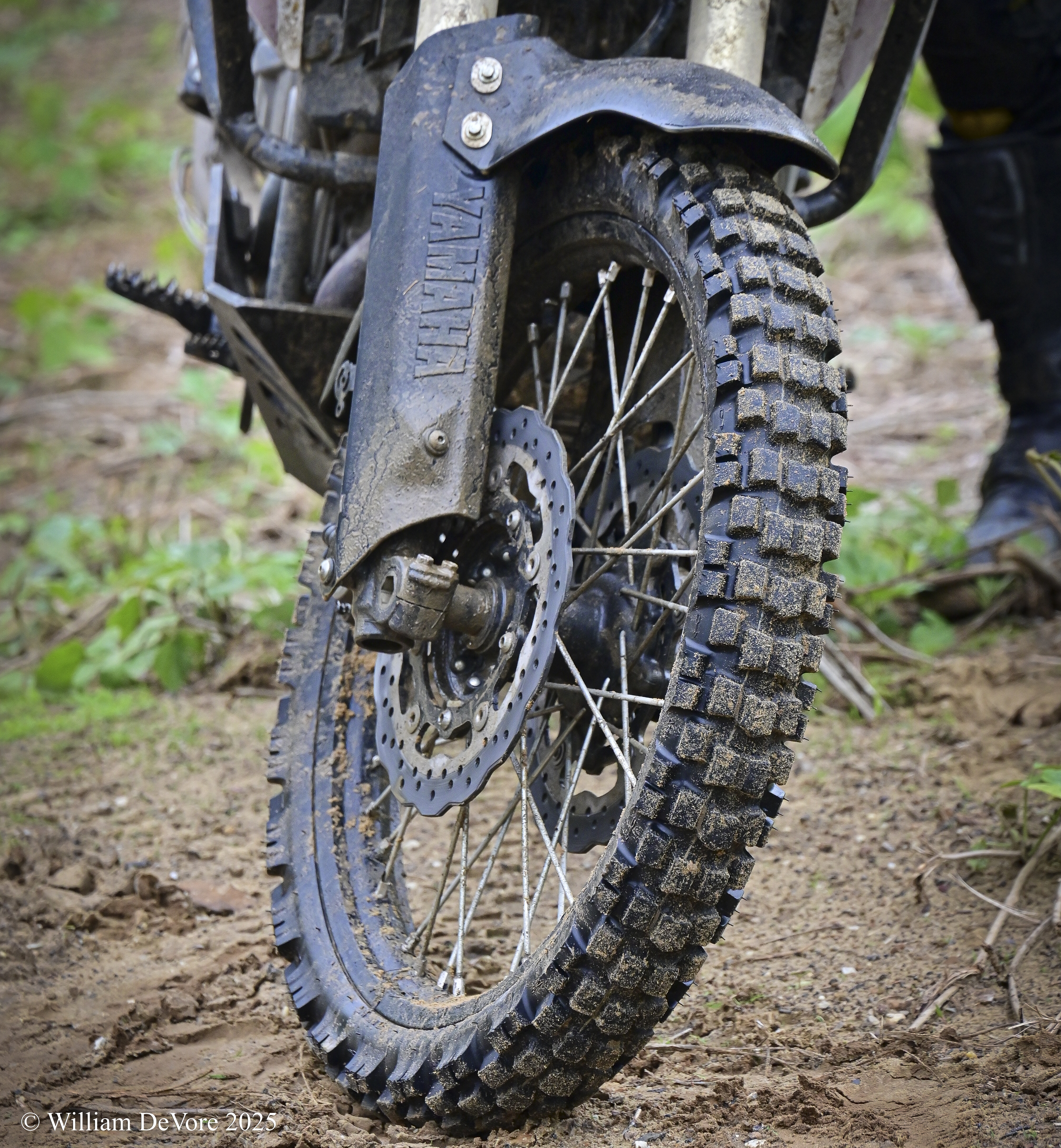
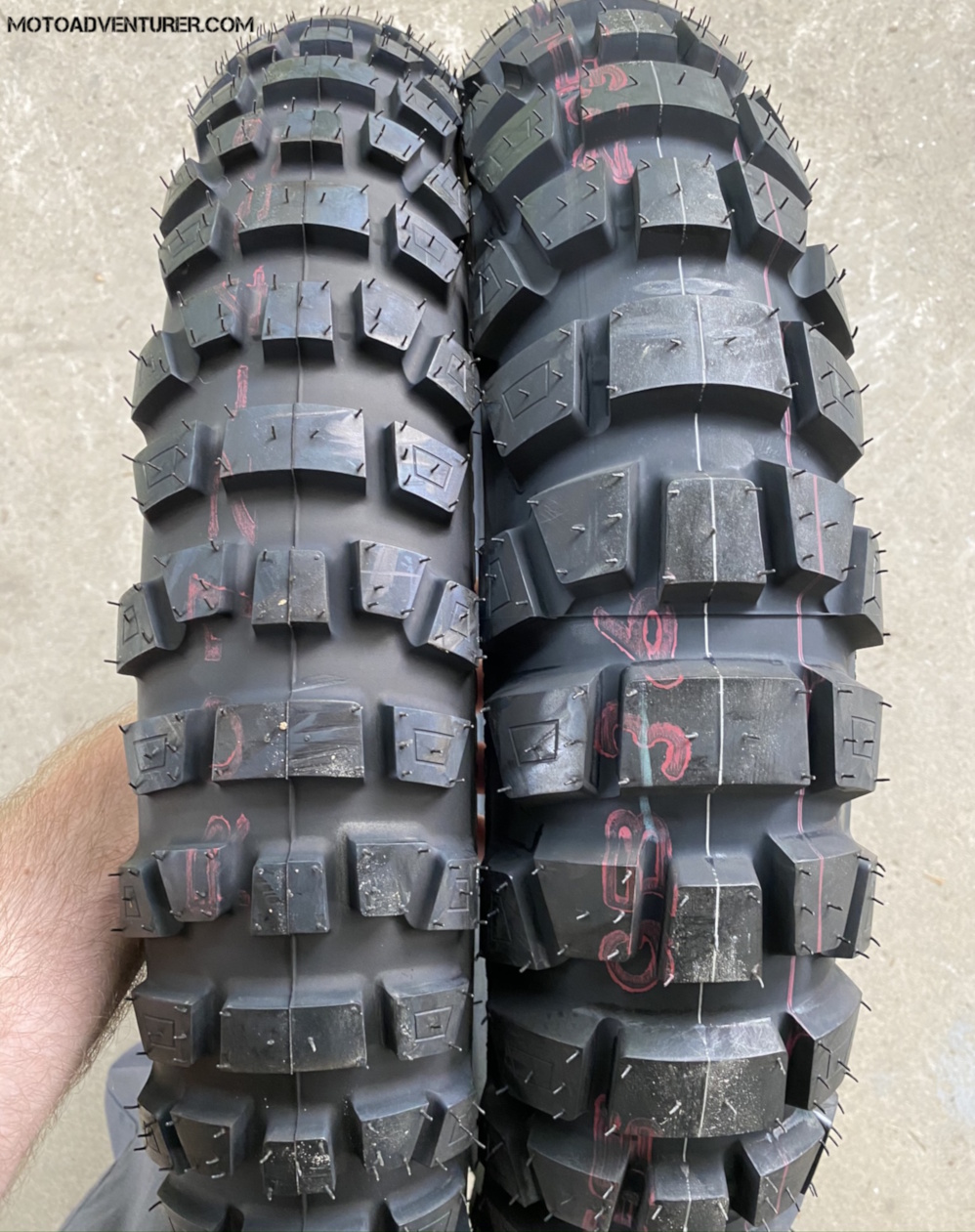
Love it or hate it, the TKC80 is still the standard in the ADV off-road realm. If longevity is not a factor, the TKC80 arguably has the least compromises on and off pavement compared to most of the competition. Admittedly, my experience with the TKC is pretty short but the reputation speaks for itself, and considering the price, this list would be incomplete without it. 150 rears are quite steep these days, but if you can spoon on a 140, you can have both tires in tubeless for about $250.
Shinko MX216
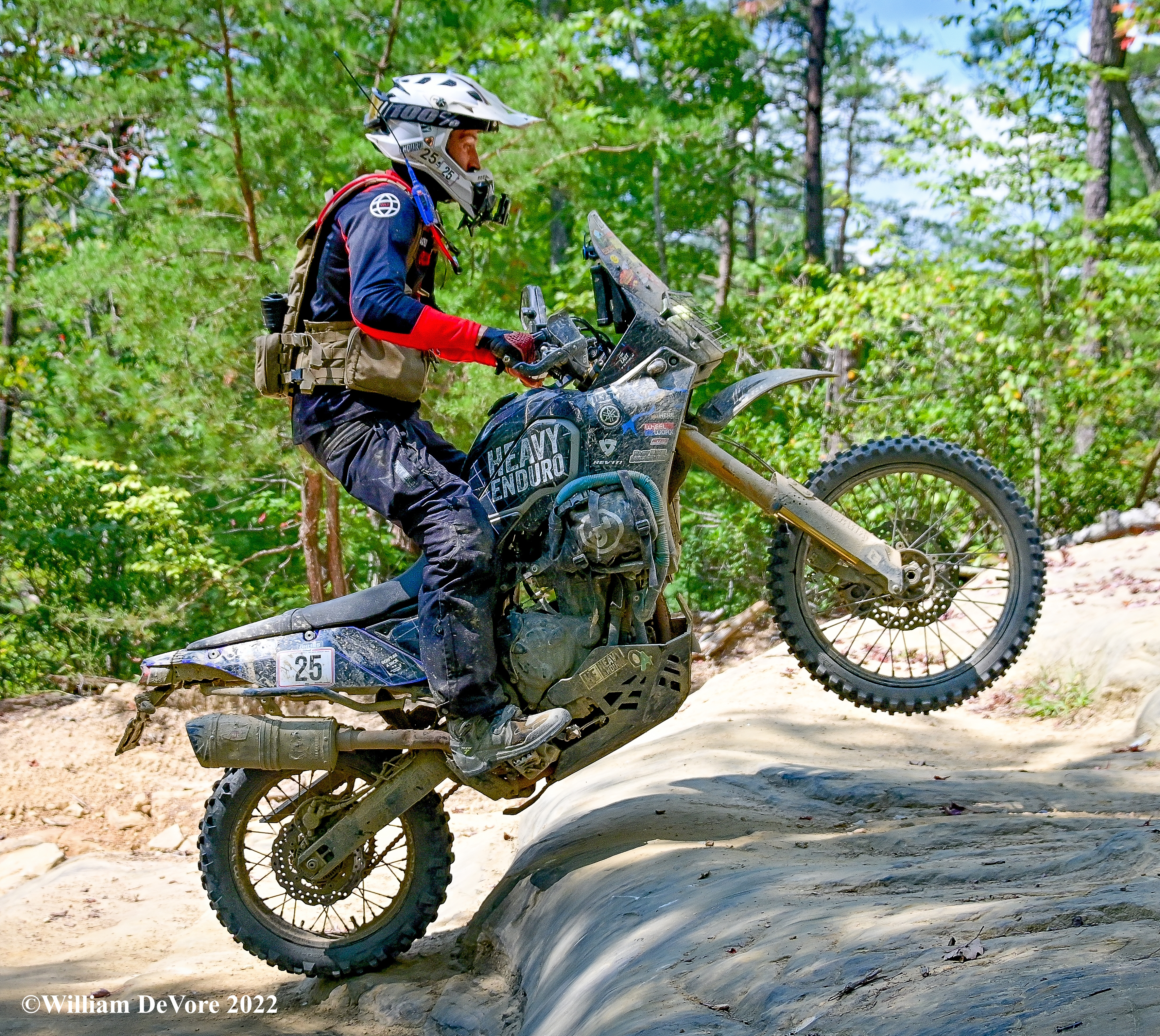
I’ve been a huge fan of the MX216 for years as it was my go-to front tire when I was racing hare scrambles on my 2-stroke. When the big-bike series opened with KXCR, several competitors were using the 216 front and rear on their adventure bikes, including Andy Janik with Heavy Enduro. The 216 has really stiff knobs, which handle the weight of the heavier bikes well off-road, and while they look like any run of the mill dirt bike tire, the 216 MX is actually DOT and FIM compliant; the rear tire is even available in Tubeless. Needless to say, the MX216 is aimed at the most aggressive off-road riders who want to be street legal; blasting around canyons on true knobbies is unquestionably not for everyone. Off-road, these tires would absolutely last me a season, but pavement use will definitely determine lifespan; needless to say, comparing mileage and rain manners to traditional ADV tires is a non-discussion. For $180 you can mount a set of gnarly knobs to your ADV machine if you’re comfortable with a 140 rear.

Mixing and Matching

As tire prices have climbed, I find myself mixing and matching tires more and more. There are several great ADV tires out there that unfortunately have an extremely pricey mate, or sometimes I just prefer the superior performance of a certain front or rear tire. Here are a few outstanding front tires that won’t break the bank.
Motoz Dual Venture
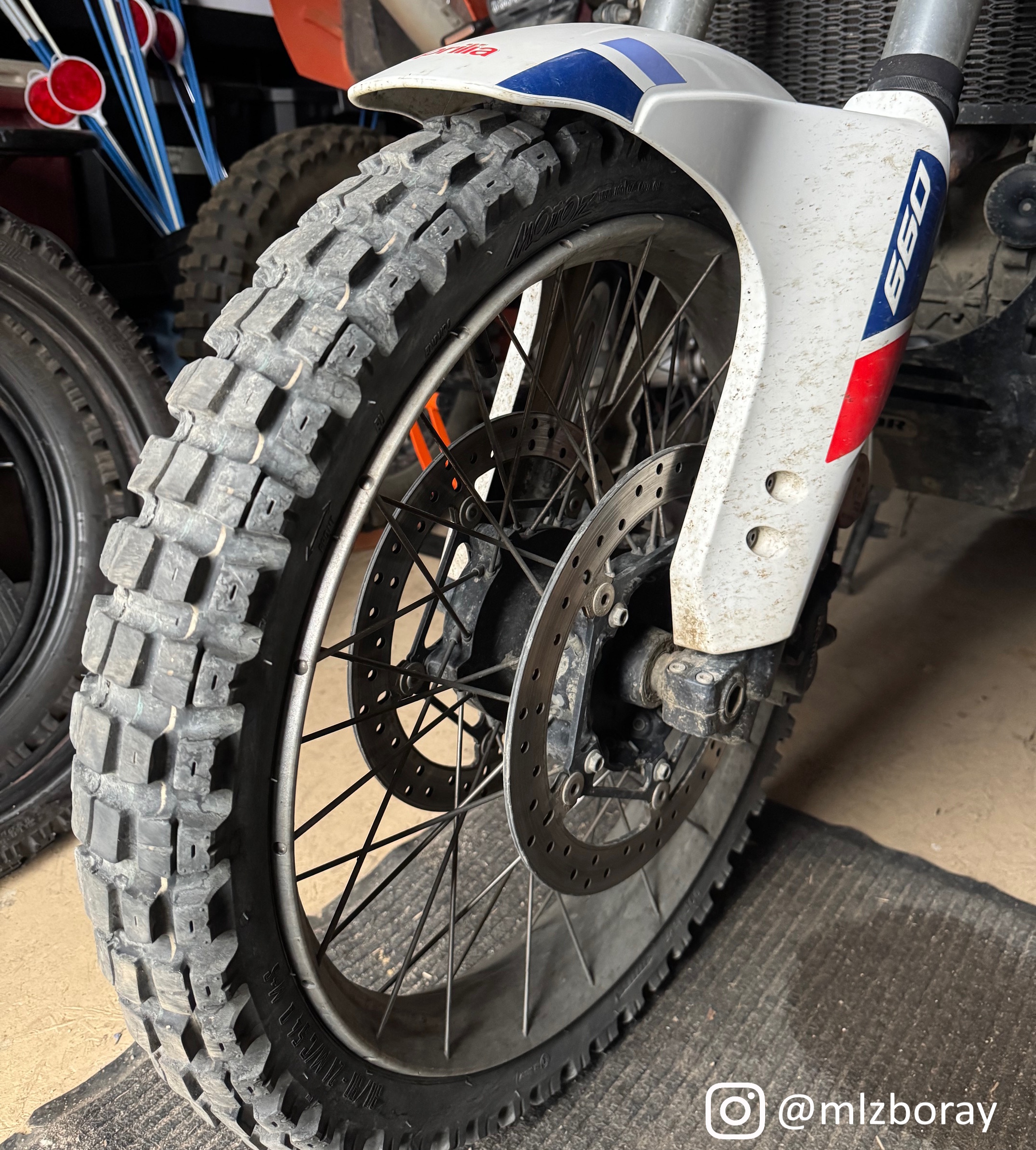
Per comments above, Motoz has been working with various front tire solutions to satisfy the complex needs of the ADV community. After 2 iterations of Tractionator fronts, the “Dual Venture” seems to be the newest offering and quite popular off-road. The Dual Venture again has “paddle style” front knobs, which are not directional, so riders can flip the tire to get more miles. Again, I’ve not run the dual-venture personally, but lots of folks who do have asked me why I haven’t sprung for them yet, but they’re on my list. Intel from folks that keep me in the know claim these tires will easily run 4-5k miles, more if you flip them. I’m told there are some grip advantages to choosing the Rallz vs the Dual Venture, but you may lose longevity. It’s been suggested that the TKC80 is probably the Dual Venture’s closest competitor in overall compatibility. Like other Motoz tires, there are comments regarding road noise and scalloping if you don’t flip it soon enough. For a $25-ish premium, it’s available in tubeless, but tube-type tires are about $135.

IRC TR8 Battle Rally

The TR8 has been a go-to front tire for dual-sport and ADV riding for me for quite some time. Arguably more aggressive than the TKC80 or the Shinko 805, the TR8 is cheaper with similar performance on-road and superior off-road in my experience. The TR8 has a softer sidewall, which makes mounting a breeze, especially compared to the Dsport front I typically run on my 250 dual sport. The TR8 is not directional, so I tend to flip it occasionally to keep the knobs square. I trust the Battle Rally a bit more in wet conditions and generally find the pavement ride to be a pinch more pleasant against the more aggressive ADV choices out there, but the off-road bend does come at a small price. Also of note, the TR8 is in English sizes, so you’re looking for 3.00×21 instead of the 90/90-21, which is more common on ADV bikes. The TR8 does have rear tires, but unfortunately, they’re a bit too skinny for most big bikes (worth looking at for bikes with 2.5” rear rims), but a front will set you back about $75.
Bridgestone Adventurecross AX41
You want ADV Off-road chops with zero compromise on pavement? The Bridgestone AX41 is my favorite ADV tire when I want to ride off-road but still grind pegs in the twisties. The rear tire has become pretty pricey, and the longevity is definitely not worth the expense, considering the competition; however, the front tire is very reasonable. The AX41 front lasted upwards of 7k miles and wasn’t helpless off-road under my watch; not bad for a directional knobby front. Also, I can’t stress enough how much more confidence inspiring it is on pavement considering how much open space it has between the knobs. I was a Shinko 804 guy for the longest time, but for $15 extra, the on and off-road confidence is better with the AX41 in my experience. These tires are available in tubeless for another $15, but for folks not afraid of tubes, you can buy them in 3.00×21” for about $115.


 Moto Adventurer
Thank you for a very thorough breakdown – very helpful to those of us looking at the available options as the weather warms. I’m curious what effect the current fracas with tariffs will have on some of the offerings, and when…
LikeLiked by 2 people
Superb comparison thanks!!! Of course the TKC80 tends to dominate the market and I have heard very good things about the Mitas tyres. BUT as I stick to the tarmac and my two semi offroad bikes and both running 17 inch wheels front and rear, I have zero experience to relate!!
LikeLike
Thanks for reading Simon! Perhaps I should evaluate the street tire segment. I still grind the pavement a bit 🤔
LikeLiked by 1 person
I have a 2010 WR250X and a 2016 XT660X and I love both!!!
LikeLiked by 1 person
Which tire sizes are on your XT660?
LikeLike
Pingback: What Accessories Should You Buy for Your New ADV Motorcycle? | Moto Adventurer