
I’ve had quite a few people ask me what I think about the rumored Yamaha Ténéré 900. I’m excited about the possibility of a new Yamaha adventure touring motorcycle, and I think there’s plenty of legitimate discussion to be had about what Yamaha might do with it. While I plan to unpack my thoughts about a future T9 soon, what has me more stirred is the number of fake motorcycle images showing up on social feeds and “journalistic” websites. Post-Photoshop, most images these days are AI-generated, but unfortunately are too often being presented as legitimate. This concern gains merit considering it comes on the heels of BMW releasing halfway legit photos of their new 450 in AI-generated backgrounds, assuming those motorcycles were real anyway…
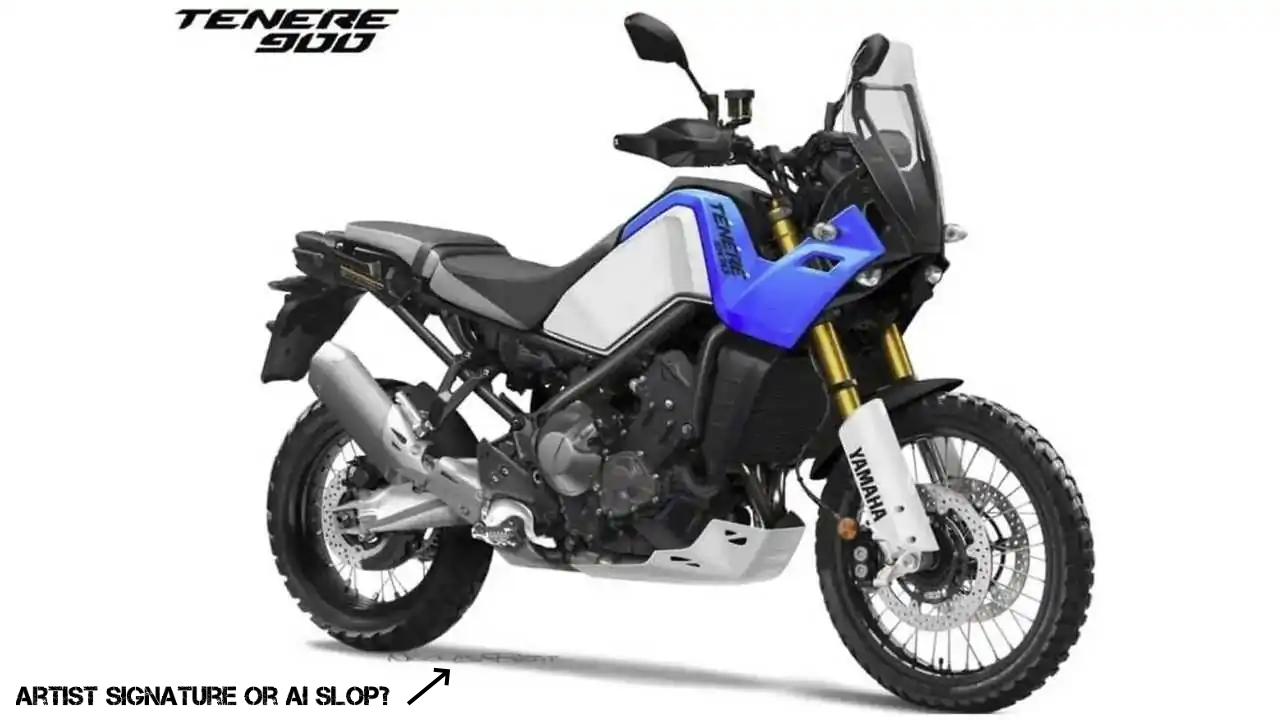
I don’t have a problem with somebody making AI images of motorcycles. People have been doing this sort of thing for years. Before AI, people used Photoshop and other tools to create concept motorcycles, sometimes because they hoped a manufacturer would build something similar and sometimes simply because they thought it was fun. There’s nothing wrong with that. The problem starts when those images are sold as legitimate in a story about a motorcycle that doesn’t actually exist. It’s one thing when it’s Yamaha posting a SolidWorks rendering of a bike; it’s another when “HotBikez” channel on Facebook posts an uncaptioned “rendering”, making similar claims. There’s a big difference between showing somebody what you think a motorcycle might look like and convincing them that you’re showing them the OEM’s media of the motorcycle itself.
The Problem Isn’t AI
The T7 was a big deal; a T9 will be an equally big deal, and people want to talk about it. That’s part of the fun of following the motorcycle industry. People want to speculate about what the motorcycle might look like, what engine it might use, what features it might have, and whether it will eventually replace something that’s already in Yamaha’s lineup. That’s all fair game. The problem is that the message gets noisy when people start presenting things that aren’t real as though they are. The biggest issue isn’t that somebody made a fake motorcycle; it’s the misinformation.
If I publish an article that says, “I think Yamaha might build a Ténéré 900,” that’s clearly speculation. If I put an AI-generated photograph next to that article that looks like an actual leaked Yamaha photograph, a lot of people are going to assume that the picture is evidence that the motorcycle exists. It isn’t. At that point, we’re no longer having a conversation about what Yamaha might build. We’re having a conversation about a cartoon, while claiming it’s real. Undoubtedly, no shortage of people taking advantage of these situations to get clicks, and I’m concerned about the consequences.
We’re Stealing People’s Time
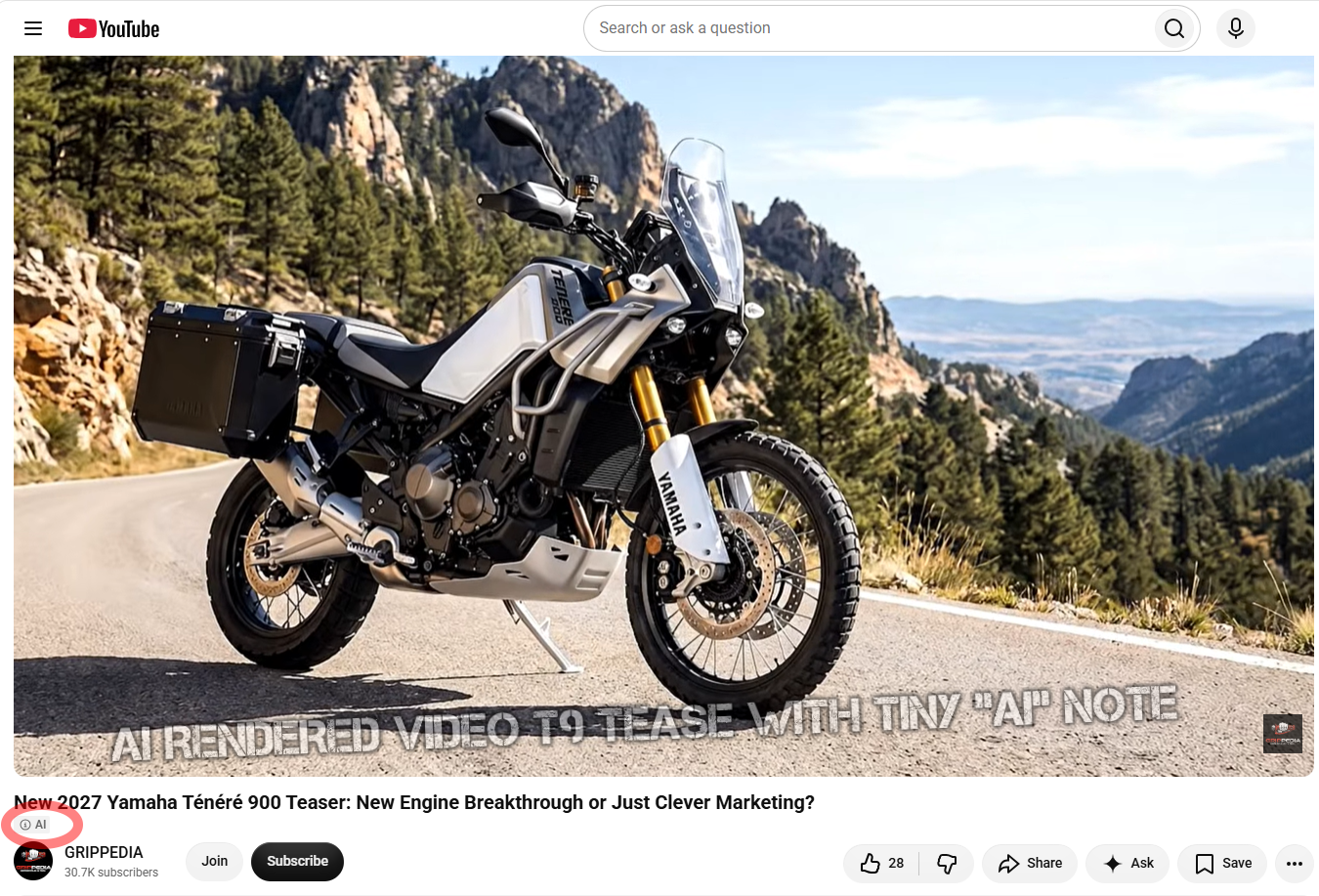
People are trying to have an earnest conversation. They want to debate things on their merits, and when you give them things that are false, you’re taking people’s time away from them. People look at a picture, and they can see it with their own eyes, so they naturally start making assumptions about the features of the motorcycle. They might debate the headlights & fairing, the suspension, the wheels, or whatever else is visible in the image, but none of that stuff is necessarily true. The person who created the image got the engagement they were looking for, while everybody else spent their time discussing a motorcycle that doesn’t exist.
Once you’ve wasted people’s time, they’re going to be reluctant to invest again. That’s where I think the unintended consequences become more serious. People aren’t just going to be skeptical of that particular image. Eventually they’re going to become skeptical of the entire conversation. If you can’t tell whether the picture you’re looking at came from Yamaha, a legitimate spy photographer, a motorcycle journalist, or somebody sitting at home generating images with AI, why would you trust any of it?
When Misunderstanding Gets Awkward
In the past couple years, I’ve had friends and family members send me photos and videos like, “Hey, Kawasaki is launching this new motorcycle.” After which I have to deliver the bad news. Sorry, it’s fake.
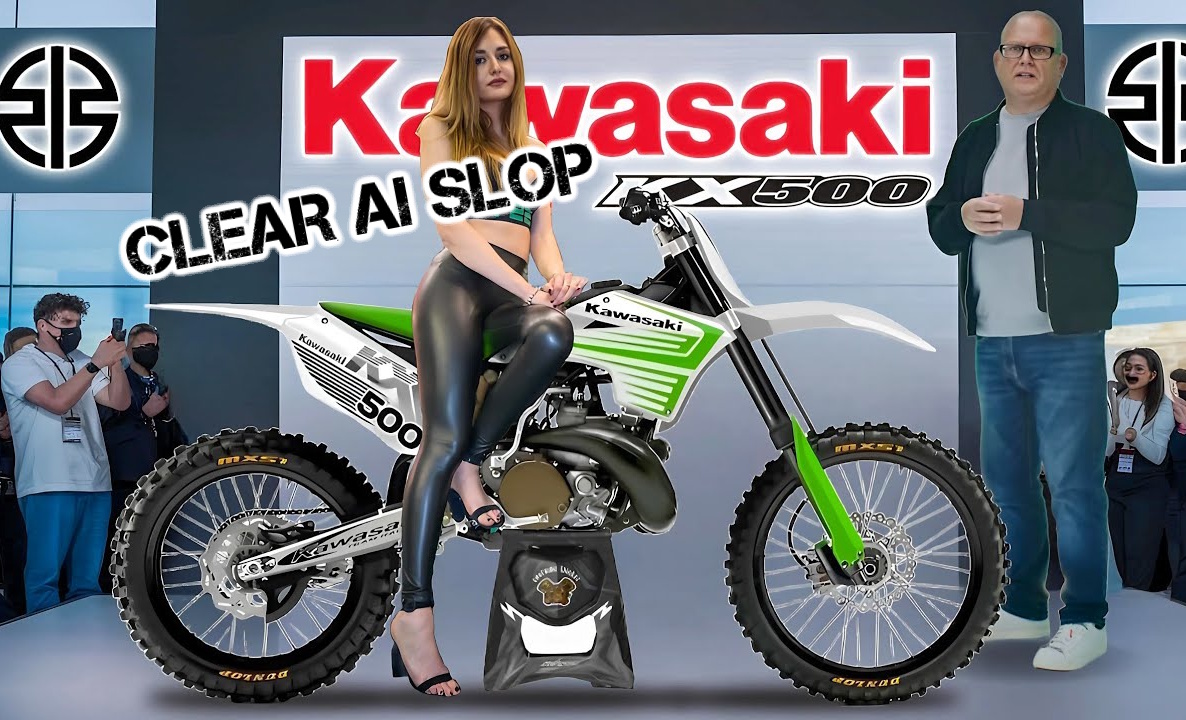
Until recently, the imagery was often an old motorcycle from the 1990s with some minor changes made to it using AI. YouTube was loaded with these fake reveal videos recently. However, the person sending it to me wasn’t trying to deceive anybody. They believed it was real, but now they’re embarrassed because they sent something to somebody that turned out to be fake.
While most folks can chalk this up to a funny mistake, over time I don’t think this ends in simply a trivial consequence. People are trying to trust one another. They’re sharing things they think are interesting. They’re having conversations about motorcycles with their friends. If somebody gets embarrassed enough times, eventually they stop sharing things. Worse, slowly we all stop trusting anything as “journalism” anymore because we can’t tell what’s legitimate anymore.
We’ve All Been Sucked Into This
The other part of this is that I don’t think we can put all of the blame on the people making these images. We’re all a little bit responsible for this. We as consumers have been herded into these spaces to behave this way, and we’ve been sucked into the clickbait. Social media is fueled by engagement, and the easiest way to get engagement is to give people something they want to see. A new motorcycle is perfect for that. People are interested in it before the manufacturer has even announced it, so if you can produce an image that looks like the motorcycle they’ve been waiting for, you’ve already got an audience. Then we make it worse by sharing it.
If we’re fooled and we share something without checking it, we’re participating in the same system. More importantly, if we later find out that we were wrong and simply move on without acknowledging it, we’re missing an opportunity to establish trust.
I’m not innocent either; I too have been fooled before. All of us have. I’d rather somebody tell me they got fooled than pretend they knew the answer all along. That’s the honesty that needs to come back into this conversation. And more importantly, resist the urge to proliferate the slop by mindlessly hitting the share buttons.
How Do You Know What’s Real?

Anytime somebody tells me something about a new motorcycle, I typically go to established motorcycle journalism outlets. I look at RevZilla’s Common Tread and VisorDown in the UK, along with several other European motorcycle publications. Europe tends to get a lot of motorcycles that we don’t get here in the United States, and even if they come here, Europe still tends to get them first, so those outlets are often a good place to start. I’ll search those websites and see whether there’s actually an article about the motorcycle. That’s important because legitimate motorcycle journalists are generally trying to be first to report legitimate news from the OEMs. If something real has happened, you’re probably going to find somebody who has written about it. There’s also an important distinction between an article that says, “We expect to see a new motorcycle from Yamaha,” and an article that says, “Here is the new Yamaha.” Those are two completely different things, and a reputable journalist should make that distinction clear. YouTube and Social are full of absolutist titles, while written articles leave room for nuance.
The other thing I look for is legitimate spy photography. There are outlets that tend to get spy photographs of motorcycles, and those photographs are often terrible. They’re low quality, the motorcycle might be covered in camouflage, and you may not be able to see much of anything. But that’s actually useful because it’s a photograph of a real motorcycle. You can look at the components in the spy shot and compare them to whatever you’re seeing in the latest AI-generated image. Does the image you’re looking at actually resemble the components on the spy motorcycle? Or did somebody simply create a motorcycle that looks like what they think Yamaha should build? That’s another distinction.
Accountability Matters

For me, one of the most important things about journalism is the byline. You should be able to read an article and know who published it. You should know when it was published, because the date tells you what information was available at the time. You should also be able to identify the source of the information. Even if people are using AI to write or edit articles, the human responsible’s name should still be on the article.
If somebody is using AI to help produce motorcycle journalism, I don’t have a problem with that. If AI eventually becomes capable of publishing motorcycle news on its own, I’m not necessarily opposed to that either. But that AI still needs a name, and there needs to be a date stamp on the article. There also need to be references that allow the reader to go back and determine where the information came from.
The same thing applies to photographs. If Yamaha supplied the photograph, say that it’s a Yamaha photograph. If it’s a legitimate spy photograph, tell me where it came from. If it’s a rendering, tell me that it’s a rendering. If AI created it, tell me that too. The ability to establish where something came from is going to become increasingly important as AI becomes increasingly capable.
Show Me Your Sources
I think we’re going to see more and more motorcycle websites and social media accounts that are essentially built around AI-generated content. Considering the breadth of AI-generated and rendered video now on YouTube, it’s all but inevitable. The problem isn’t necessarily that the content is generated by AI; the problem is: where is the accountability behind it?
If you’re publishing something, I should be able to figure out who you are. I should be able to see when you published it and where you got the information. If you’re making a claim about a new motorcycle, there should be some way for me to verify that claim. I believe this is the, albeit vague, but thin line that separates journalism from somebody simply trying to get clicks.
Ideally, this is where established motorcycle websites may still have an advantage. They have a reputation to maintain. They have writers whose names are attached to their work. They have a history of publishing information that can be checked against what actually happened. In my opinion, the more legit outlets have comment sections where readers can challenge the information being published in real time. Sometimes the readers are wrong. Occasionally the journalists make mistakes, but there’s at least a mechanism for somebody to say, “Wait a minute. Where did you get that?”
A lot of the websites and social media accounts publishing clickbait motorcycle news don’t have accountability. You don’t really know who they are, where the information came from, or who is responsible for it. Sometimes there isn’t even a way to challenge what they’ve published. Ironically, a lot of “legit” non-motorcycle outlets have disabled comments, but that’s a different discussion. But in both cases, when entertainment dresses up as journalism, it’s debasing the value of information.
The Ténéré 900 Is Just the Latest Example
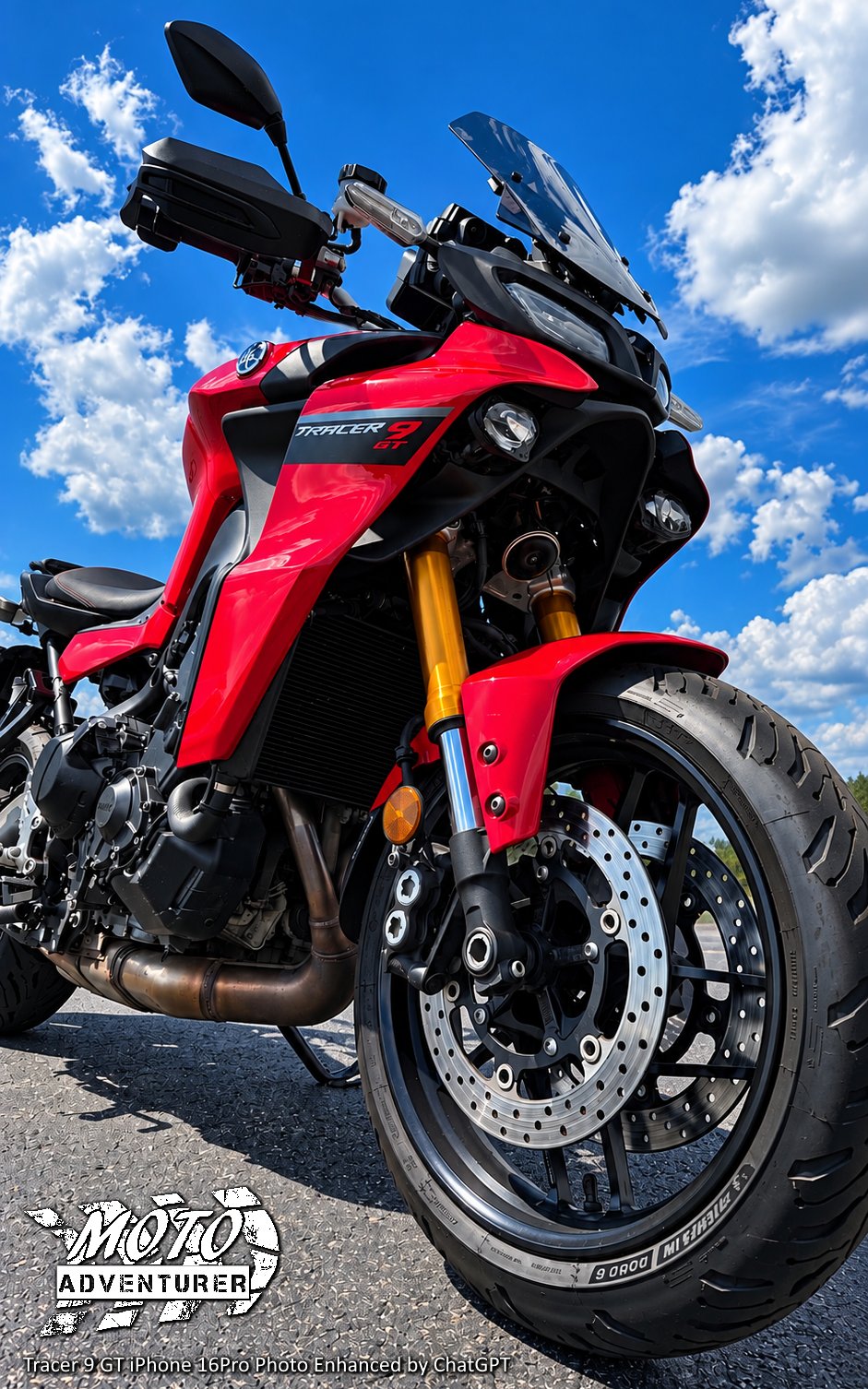
That’s really where I land on the Ténéré 900 rumors. I’m excited about the possibility of a new Yamaha adventure touring motorcycle, and I’m interested in seeing what Yamaha actually builds. But I’m not going to pretend I know what the motorcycle looks like based on an AI-generated photograph. There’s nothing wrong with speculation. There’s nothing wrong with creating a rendering and saying, “This is what I think Yamaha might build.” That’s part of the fun of following motorcycles. But there’s a difference between speculation and misinformation. If you want to create an imaginary motorcycle, go ahead. If you want to use AI to make the imaginary motorcycle look incredibly realistic, that’s fine too. Just tell people what they’re looking at. Put labels on the photo or at least in the caption below it, because once you’ve convinced somebody that an imaginary motorcycle is real, you’ve changed the conversation. People start making assumptions about something that doesn’t exist; they share it with their friends, and eventually somebody gets fooled, which slows legitimate debate when people are concerned about being wrong or embarrassed.
More importantly, every time this happens, we’re making it a little harder to trust the next thing we see. That’s what scares me the most. The motorcycle industry is going to use AI. Motorcycle journalists are going to use AI. Motorcycle enthusiasts are going to use AI (guilty as charged). That’s not going away, but if we’re going to keep talking about motorcycles on the internet, we’re going to have to put a little more effort into knowing where the information came from.
Help me fight the slop. Call out people sharing fake stuff without context. I get it when it’s clearly cartoonish, tongue-in-cheek, and for a good laugh. But all too often, people are speaking with authority about vaporware. Tell “journalistic” outlets to publish bylines and caption photos as “rendered” when that’s the case. Don’t settle for less, or “Idiocracy” takes yet another step toward becoming a documentary.


That’s a very exhaustive way of saying: “AI isn’t the problem, but AI-produced clickbait is. The solution: label content according to what it actually is.”Note: if every content creator followed this advice, I estimate 80% of the content wouldn’t even exist – simply because readers would skip the clickbait. 🤭
LikeLike