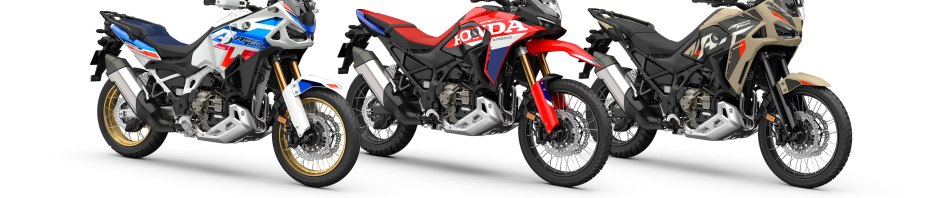
I love Honda. I’ve owned one before, and I’m looking forward to another. I would have bought an Africa Twin instead of my T7 if I could have found a used one that was remotely affordable at the time. It’s fair to say I’m still an Africa Twin fanboy. That’s part of why this makes me scratch my head. I’m excited to see another Africa Twin generation born with more power, improved suspension, and electronic accoutrements. However, I still feel like Honda is missing the boat.
To me, the Africa Twin has officially graduated into the heavyweight adventure touring class. The engine capacity has grown, the weight hasn’t meaningfully come down, and they’ve added more and more creature comforts. Those things say touring motorcycle more so than off-road motorcycle.
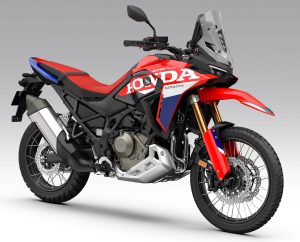
That’s not a bad thing. Honda makes a quality product, and I believe the Africa Twin is reasonably off-road capable. It’s a bike that offers more aggressive riders a segue when they start to lean more into adventure touring, a strong option for people who like ADV styling, want a taller commuter bike, like the extra power, and anyone who wants Honda reliability.
I don’t begrudge these manufacturers for making a profit. Make what you think people will buy; that makes perfect sense. What I cannot understand for the life of me is why Honda keeps throwing money at the big Africa Twin while the smaller bikes don’t get the aggressive off-road package.
Ten years later, what are we comparing?
Ten years later, coming out and saying that this new Enduro Sports is a more off-road-focused Africa Twin lands a little flat when you compare it to the original 2016 base model, and even the 2026 base model, for that matter. I understand the argument versus the Adventure Sports: they’re offering a more aggressive off-road stance. However, the base model has always been the more dirt-worthy Africa Twin without all the crap on it. The new 49mm upgraded suspension is a good thing. I dig it, but the older bike already had fully adjustable suspension. Beefier suspension is welcome; I just think that investment would look a lot better on a lighter, smaller-displacement motorcycle.
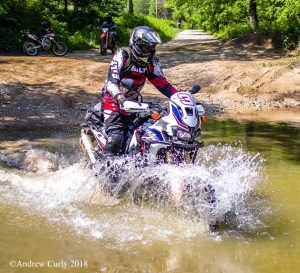
Then there are the wheels. I understand why people want tubeless spoked wheels. That’s what touring adventure riders want. If we’re seriously talking about more aggressive off-road riding, I think traditional tube-type wheels are more appropriate. I’ve got friends who run legit dirt-bike knobbies & mousses on their Ténéré 700s. There’s still a demand for a wheel setup suited to that kind of riding. So when I look back at the first-gen Africa Twin, I see better suspension on the new bike, but a wheel choice that leans toward touring.
And what are we comparing when we talk about cutting weight? Honda’s press release says, “…further elevating ease of handling and overall balance as an adventure bike through extensive weight reduction.” Sorry, how about we compare the new 2027 “Enduro Sports” against the previous-gen AT? Looks like the new “Enduro” lost 7 pounds against the previous model year, whilst the 2027 base model somehow found 12.5 pounds in the last 12 months (reference table below). Having enjoyed several rides on the first-gen Africa Twin, it’s one of the reasons I love the T7: it feels like AT except it’s like someone put it in the dryer. Way lighter.
Look, no multi-tool is good at everything. While Honda turns the Africa Twin into a touring bike, it’s also trying to sell me on how much more off-road-focused it is. I’m sorry, the marketing people have lost the plot.
There’s a 750 parked right next to it
Stop the madness. Don’t try to convince me that a big-bore adventure motorcycle is somehow super off-road focused when there’s a 750 middleweight parked right next to it that’s been given almost no off-road treatment.
This is where Honda’s missing the boat. KTM is dropping bikes from 390 to 890 cc with serious off-road chops; CF Moto’s Ibex 450 wins Red Bull Romaniacs, and Yamaha keeps sharpening the T7’s off-road focus. Meanwhile, the Honda leaves the Transalp sitting on the curb.
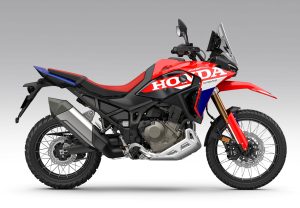
Give me a 450-pound Transalp 750 with fully adjustable suspension, ten inches of travel, and ground clearance to match. Protect that bollard of an oil sump under that engine with a proper subframe and skid plate. Give me ABS I can turn off completely and adjustable traction control like the first-gen Africa Twin. Ultimately, priorities are weight and suspension; they don’t have to go nuts.
I get it, “Enduro” is some adventure marketing buzzword; however, that doesn’t mean it belongs on 500-pound motorcycles. Best I can tell, an “enduro” is a street-legal off-road race bike. I will, however, take an “Africa Twin Rally” all day, but we can split hairs about labels and vocabulary some other time.
A Welcome Heavyweight
At 1131 ccs, the Africa Twin has graduated to the heavyweight ADV division with the other touring machines. I like it, it looks great, and I expect people to line up to buy it. I just wish Honda would spend some of that engineering money on the Transalp 750 and give us the bike we’ve been asking for. If they’re going to make an Africa Twin Enduro, then for the love of all that is holy, make a Transalp 750 “Enduro” that can finally compete with Yamaha’s T7. That is my biggest ask.
| Specification | 2016 Africa Twin CRF1000L | 2026 Africa Twin Base | 2027 Africa Twin | 2027 Enduro Sports | 2027 Adventure Sports |
|---|---|---|---|---|---|
| Displacement | 998cc | 1,084cc | 1,131cc | 1,131cc | 1,131cc |
| Bore × stroke | 92 × 75.1mm | 92 × 81.5mm | 94 × 81.5mm | 94 × 81.5mm | 94 × 81.5mm |
| Compression ratio | 10.0:1 | 10.5:1 | 12.1:1 | 12.1:1 | 12.1:1 |
| Power | 93.9 hp at 7,500 rpm | 100.6 hp at 7,500 rpm | 117.3 hp at 7,500 rpm | 117.3 hp at 7,500 rpm | 117.3 hp at 7,500 rpm |
| Torque | 72.3 lb-ft at 6,000 rpm | 82.6 lb-ft at 5,500 rpm | 87.8 lb-ft at 5,750 rpm | 87.8 lb-ft at 5,750 rpm | 87.8 lb-ft at 5,750 rpm |
| Transmission | Six-speed | Six-speed | Six-speed | Six-speed | Six-speed |
| Fork diameter | 45mm | 45mm | 49mm | 49mm | 49mm |
| Suspension | Fully adjustable conventional Showa | Conventional Showa | Showa EERA with Skyhook | Fully adjustable conventional Showa; closed-cartridge fork | Showa EERA with Skyhook |
| Front suspension travel | 9.1 in | 9.1 in | 8.7 in | 9.4 in | 8.3 in |
| Rear suspension travel | 8.7 in | 8.7 in | 8.3 in | 9.1 in | 7.9 in |
| Wheels, front / rear | 21 / 18 in | 21 / 18 in | 21 / 18 in | 21 / 18 in | 19 / 18 in |
| Wheel construction | Tube-type spoked | Tubeless spoked | Tubeless spoked | Tubeless spoked | Tubeless spoked |
| Seat height, low / high | 33.5 / 34.3 in | 33.5 / 34.3 in | 33.5 / 34.3 in | 34.3 / 35.0 in | 32.7 / 33.5 in |
| Ground clearance | 9.8 in | 9.8 in | 9.4 in | 10.2 in | 8.7 in |
| Fuel capacity, U.S. gallons | 4.97 | 5.0 | 4.97 | 4.97 | 6.39 |
| Curb weight | 510 lb. | 510 lb | 522.5 lb | 502.7 lb | 540.1 lb |
| Original U.S. base MSRP | $12,999 | $15,199 | Not announced | Not announced | Not announced |


