
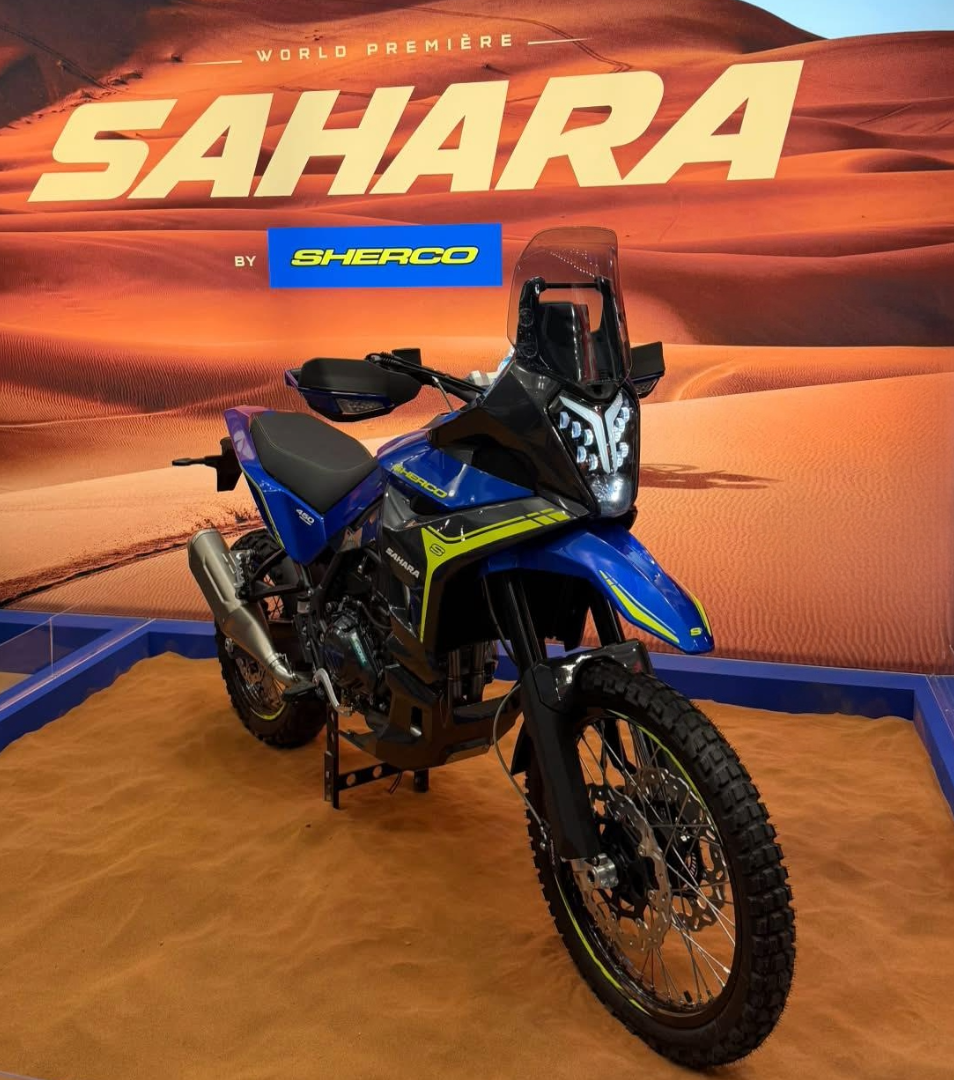
EICMA 2026 brought a number of interesting new motorcycles to the table, particularly in the lightweight adventure segment. After years of watching manufacturers dress up relatively low-performance street bikes with half-fairings & adventurous graphics, it’s encouraging to see more companies taking this segment seriously. Sherco’s new Sahara 450 caught my attention, as did a lightweight ADV concept from Beta. Both companies have considerable experience producing high-performance off-road motorcycles, so perhaps we’re finally going to see some serious competition in a segment that’s been largely underserved.
Unfortunately, while digging into the specifications of the new Sherco, I came across a news article suggesting its engine was being sourced from China. Further investigation led me to Beta’s RE 330 and Alp models, which raised similar questions about their engine origins. I can’t say I was particularly surprised, but I was a little disappointed. When a company known for building competitive enduro motorcycles announces a new adventure bike, I’m hoping for something more exciting than another modestly powered motorcycle wearing the appropriate costume.
This sent me down a rather interesting rabbit hole. Just how many recognizable European and Japanese motorcycle manufacturers are sourcing engines from China? More importantly, how many motorcycles are manufactured in countries other than the one proudly represented on the fuel tank? As it turns out, this has been going on a lot longer than I realized.
Where Are BMW Motorcycles Made? The Loncin Connection
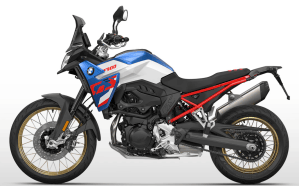
Most enthusiasts probably remember the conversations surrounding BMW’s F 850 GS when it arrived in 2018. BMW, a company synonymous with German engineering and premium motorcycles, was using an engine manufactured by Loncin in China. For some buyers, this was apparently difficult to reconcile with the premium price BMW expected them to pay.
What surprised me wasn’t that BMW had contracted Loncin to manufacture the engine. It was discovering that the relationship had already existed for more than a decade. Loncin began manufacturing BMW’s 650cc single-cylinder engines in the 2000s, long before the F 850 GS became a topic of conversation. BMW’s newer F 900 GS continues that manufacturing relationship, meaning the Bavarians have been selling motorcycles with Chinese-manufactured engines for nearly two decades.
Where Are KTM Motorcycles Made? The CFMoto Partnership
KTM has a similarly interesting relationship with CFMoto. The Chinese manufacturer produces engines and motorcycles associated with KTM’s middleweight platforms while simultaneously selling motorcycles under its own name using related technology. The CFMoto Ibex 800 and KTM’s 790 Adventure are examples of this relationship, although the complete motorcycles differ considerably in their intended applications and equipment.
Motorcycle Manufacturing Beyond China
Of course, Chinese engine manufacturing is only part of this story. Motorcyclists have a tendency to associate a brand with its country of origin, and understandably so. BMW is German, Triumph is British, Ducati is Italian, and Honda, Yamaha, Kawasaki, and Suzuki are Japanese. However, the country where a company maintains its headquarters isn’t necessarily where its motorcycles are manufactured.
Where Are Triumph Motorcycles Made? Thailand and India
Triumph is a particularly interesting example, and one I’m intimately familiar with. When I purchased my 2013 Triumph Scrambler, I knew the motorcycle had been manufactured in Thailand. The modern classic twins had been associated with Triumph’s Thai manufacturing operations for years, and that didn’t concern me in the slightest. The air-cooled Bonneville engine has proven itself exceptionally durable, and my own experience with the Scrambler has done little to change that opinion.

What I didn’t recognize was just how extensively Triumph’s overseas manufacturing operations had expanded. The company has invested heavily in Thailand, manufacturing motorcycles and major components far removed from its historic home in Hinckley, England. Even the Tiger family, a cornerstone of Triumph’s modern adventure lineup, has substantial manufacturing ties to Thailand.
Meanwhile, Triumph’s entry into the small-displacement motorcycle market introduced another arrangement entirely. The Speed 400 and Scrambler 400 X are produced through a partnership with India’s Bajaj Auto. In other words, the British company has motorcycles produced through its own overseas operations as well as motorcycles manufactured through a partnership with another company.
Where Are Honda Motorcycles Made?
Honda operates an enormous international manufacturing network, producing motorcycles in Japan, Thailand, Indonesia, India, Vietnam, China, and other countries. Depending on the model and market, the Honda sitting in your garage may have been manufactured thousands of miles from Japan. The XR150L that’s recently caught my eye has a Chinese engine built in cooperation with Honda and is assembled in Mexico. BMW’s smaller-displacement motorcycles have manufacturing relationships in India, KTM has worked with Bajaj for years, and numerous Japanese manufacturers produce motorcycles throughout Southeast Asia.
Motorcycle Engine Manufacturing: Outsourcing vs. Overseas Factories
There are some important differences between these arrangements. Buying an existing engine from a Chinese supplier isn’t the same as designing an engine in Europe and contracting a Chinese company to manufacture it. Neither is quite the same as Honda or Triumph operating their own factories overseas. From a manufacturing engineering perspective, those differences can be significant, particularly when it comes to controlling manufacturing quality.
But I’m not going to turn this into a manufacturing engineering lecture. The important point for motorcyclists is that a motorcycle’s country of origin, its engine’s country of manufacture, and the location of its corporate headquarters can be three entirely different places. And the best I can tell, most buyers probably don’t recognize just how common that arrangement has become.
Chinese Motorcycle Brands: From Cheap Imports to Global Manufacturers
There was a time when Americans were particularly proud of purchasing American-made products. Foreign manufacturing wasn’t always viewed favorably, but Japanese manufacturers eventually established a reputation for exceptional quality, reliability, and manufacturing precision. Made in Japan became something consumers actively sought rather than avoided.
Chinese manufacturing has followed a rather different path. For years, inexpensive Chinese motorcycles had a reputation for being exactly that: cheap. You could purchase a motorcycle for a fraction of the price of an established Japanese model, but finding replacement parts after a major mechanical failure could become an adventure of its own. Unless you were a particularly resourceful mechanic with the right connections, your inexpensive motorcycle might become an oversized paperweight.
That reputation wasn’t entirely undeserved, but the industry has changed considerably. Companies like CFMoto, Loncin, QJMotor, and Zongshen have become significant players in global motorcycle manufacturing. There’s still plenty of inexpensive, poorly made equipment coming out of China, but there’s also some exceptionally good Chinese equipment arriving on U.S. shores too.
Riding the CFMoto Ibex 800 (800MT): Are Chinese Motorcycles Any Good?
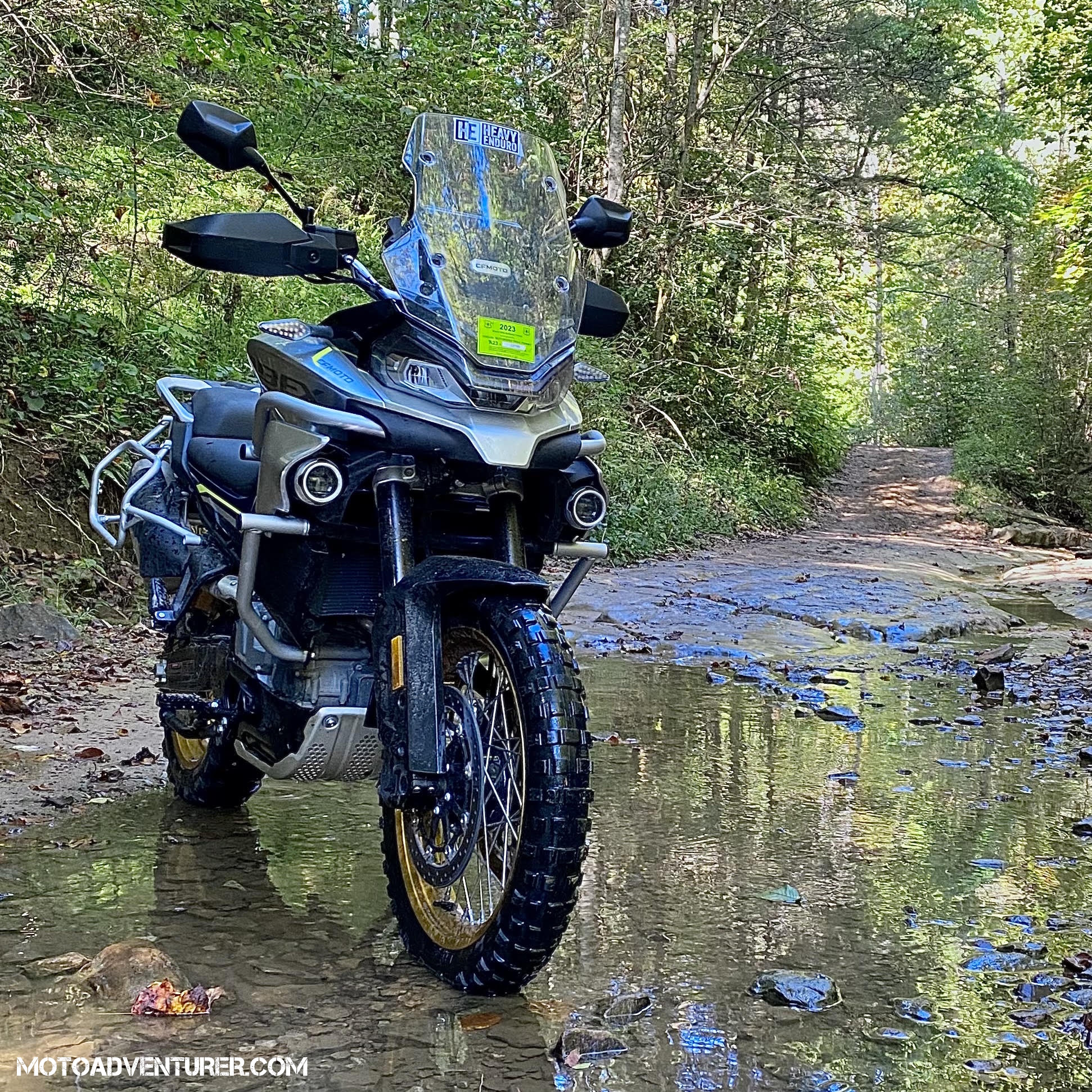
In the fall of 2023, I had an opportunity to spend an afternoon riding a CFMoto 800MT, the motorcycle Americans now know as the Ibex 800. I rode it through familiar roads in Kentucky, places where I’ve spent considerable time riding a variety of motorcycles. Frankly, I was surprised by just how well that machine performed.
The engine was exceptionally lively, the motorcycle felt remarkably refined, and I was able to hustle it through those familiar roads in a way I hadn’t anticipated. There was nothing about the experience that suggested I was riding some inexpensive imitation of a European motorcycle. It was a precision machine, and an absolute blast to ride.
Spending a day riding a motorcycle doesn’t qualify me to make sweeping claims about its long-term reliability, but I can certainly recognize a motorcycle that performs well. If you removed the badges and asked experienced riders to identify the manufacturer, I suspect many would struggle to distinguish that CFMoto from something produced by an established European or Japanese company.
Chinese Motorcycle Engines and Premium European Motorcycle Prices
Outsourcing also raises questions about value. BMW certainly isn’t discounting its F 900 GS because Loncin manufactures the engine, and CFMoto offers motorcycles using related KTM technology for considerably less money. It’s hard to do an apples to apples comparison between the Euro motherships and their Chinese spin-off models due to major disparities in specifications. Something I suspect has to do with how the contracts work, but I have zero evidence to prove that perspective. However, assuming all else was equal with exception to the dealer network, I feel there’s more value to gain from performance and utility than a prestigious badge.
Are Chinese Motorcycles Worth Buying?
The motorcycle community has a peculiar habit of holding onto reputations long after the circumstances that created them have changed. Chinese motorcycles have been dealing with that reputation problem for years, but I think attitudes are beginning to change. I’m seeing more CFMoto Ibex 450s in the adventure riding communities I frequent, and I don’t hear nearly as much criticism about their country of origin as I expected years ago.
I also don’t worry nearly as much about purchasing a Chinese motorcycle as I once did. Dealer networks have improved, replacement parts are more accessible, and established Chinese manufacturers now have reputations worth protecting. Certainly, international supply chains remain vulnerable to political tensions, tariffs, trade disputes, and logistical disruptions, but those concerns aren’t exclusive to Chinese motorcycles. A friend of mine waited six months for a replacement part for his Japanese-built Yamaha Ténéré 700, which rather effectively demonstrates that even established manufacturers aren’t immune to supply problems.
There are broader differences between the historical relationship American consumers developed with Japanese manufacturers and the economic relationship between the United States and China today. Japanese manufacturers invested heavily in American production facilities and became significant contributors to domestic manufacturing. China’s industrial ambitions and the geopolitical relationship between the two countries introduce considerations that shouldn’t simply be ignored. To be blunt, Japan grew as an American partner; China is not exactly a political friend at the moment.
None of that means a Chinese motorcycle is inherently a bad purchase. As things stand today, I’d have little hesitation considering a motorcycle from an established Chinese manufacturer if it delivered the performance, reliability, and value I was looking for. The same applies to a European motorcycle using a Chinese-manufactured engine or a Japanese motorcycle assembled in Thailand.
The best I can tell, motorcycle manufacturing has become so international that judging a machine solely by the country associated with its badge is becoming a rather pointless exercise. Considering how long BMW, KTM, Triumph, Honda, and others have been participating in global manufacturing, perhaps the more interesting question isn’t whether Chinese manufacturers can build a good motorcycle. It’s how many of us have already been riding motorcycles with Chinese-manufactured engines without giving it a second thought.


Well said indeed, we all need to wake up!! BUT it is fair to say that BMW for instance has a fine reputation so I guess that the quality controls and the warranty are both very serious. Tha name on the tank will give some assurances I think
LikeLike
It’s rather sad to see all these brands and bikes being built and sold from the other side of the earth, but it’s partly our fault–remember the Canondale and Motus brands that came and went? The Canondale was ahead of time with the reversed head–exhaust port facing rearward. Everything I read about these bikes while the builders were trying to build and sell was a lot of criticle critiques. Sure would like to see Canondale survive.
Remmeber Honda Goldwings were made in Ohio until about 2009 when Japan moved manufacturing back to the island to better manage quality? Being a former owner of a 2005 and 2021 Goldwing, the 2021 had quality issues with missing parts and wire throttle problem. See here: https://youtu.be/Zoc5BK5ovNg?si=xydSyRF86ULCxmHk
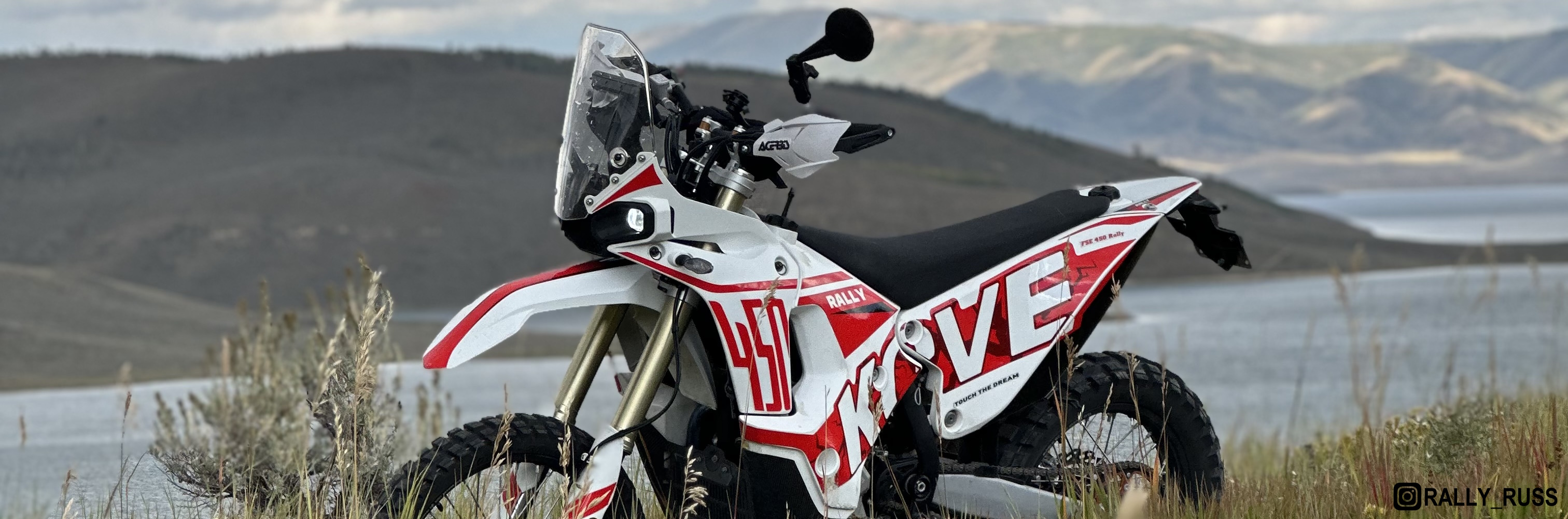
Anyway, I grew up in the 70’s and recall all the talk of Japanese car quality. Toys stamped from tin cans. Now look at them. Other Asian manufacturing quality will likely to improve as we’ve seen with Korean Kia and Hyundai brands.; and, like what Kove and CF-Moto are achieving. They are smart for using off-the-shelf systems for suspension, fuel injection, ABS, etc. Bearing (transmission shfts, wheels, etc) sources and size should be suspect until proven otherwise.
Just to add to your findings, the two CRF-230’s my boys had were built in Brazil–iirc. Also, several years ago when CF-Moto was hitting the showrooms in Nashville, I was comparing one of the engines to the nearby Versys 650 and that CF-Moto engine was a clone. So, did CF-Moto have a contract with Kawasaki, or is that 650 twin a universal Asian motorcycle engine?
Good article for capturing some history.
LikeLike