Turn the key. Pull in the clutch. Thumb the ignition.
Wait… what?
Did I mention “unconventional”?
Look, countless articles have been written on winterizing your motorcycle. This time of year it’s the same old song, clean up the bike, protect the chrome, put Sta-Bil in the tank, put the battery on a tender, cover the bike, put it on a lift…
Here’s my unconventional advice (But only for the most dedicated):
Spend $600 on dependable cold weather gear
I’ve discussed my kit at length, but waterproof jacket, pants, winter boots, full face helmet, neck gaiter, and winter gloves are a must.
Spend $100 on Heated Grips.
Good gloves will take you to about freezing in my experience, if you want to ride as the mercury plummets, it’s time to get some extra heat.
Watch the weather religiously
I run WeatherBug on my phone all summer, but when winter comes around, I typically check the weather on multiple platforms to make sure I don’t get stranded in the snow.
Heated grips are good, but keeping the wind off your hands is even better. My hands are typically the first thing that gets cold, but if I plan right, only a little, and typically the only my fingertips.
Break the bank on an Aerostich riding suit
There’s some intense riding gear out there. I don’t have an “stich” yet, but the faithful will back up their credentials.
Get some heated liners for you jacket, pants, and gloves
Heated gear is incredible, being comfortable makes all the difference; from being more alert to looking forward to the next ride despite the cold.
This plan isn’t fool proof, and absolutely not without pitfalls. Salt, water main breaks, unsuspecting drivers, and cold rubber, all things to be avoided, and above all, riding on two-wheels in the snow is a no-go, even for me. Despite all that, you’re going to be grounded at some point (Snow or excess salt). I hit that impasse yesterday morning as the second January snowfall started coming down. In the interim, put some Sta-Bil in the tank and keep it covered while you wait out the storm. As mentioned in the conventional advice, I recommend starting the bike and running it through a full heat cycle from time to time. Avoid short idles as they can cause moisture inside the block from condensation; run the bike (preferably ride) long enough to get the engine good and hot to burn off any moisture in the engine or the pipes. With a little luck, you’re probably only going to be off the road for a couple weeks (it was about 5 weeks back in 2014).
While you may be “crazy” among acquaintances, and probably even friends, I believe there are advantages to riding through the winter. For one, it keeps your skills sharp. Many riders break from November until March; but “Rider Focus”, like algebra, is a perishable skill, lost over months of riding in the stagnant car. Short rides through the winter help shallow out the learning curve come spring. I’m also a firm believer that like airplanes, sitting idle is actually bad for a motorcycle. Routinely running the engine gets oil circulated over the essential parts, and helps burn moisture out of the crankcase, keeps the seals from dry-rotting, etcetera, etcetera.
I realize this advice is not for everyone. Ohio is a very strange place, while “vanilla” in my opinion, the weather here can easily swing from summer to winter in about 24 hours, if not faster. I’ve played ice hockey in 72 degree weather in December, it was 7 degrees earlier this week, and I managed to ride the bike Saturday when just above freezing. The locals often say “Don’t like the weather? Wait a few hours, it’ll change”. The line in the sand is different for everyone, over 40F is typically my Dad’s rule, and I’ve met other guys that ride as long as the roads are dry and it’s above freezing. But If you’re not comfortable, it’s not fun, and there’s no shame in that. All I am saying is that there is an alternative when it comes to winterization, if you have the means, and the passion…. Ride the bike…
On more than one occasion I’ve mentioned I’m clearly in the tank for Triumph Motorcycles. Obviously, the launch of the completely new Triumph Bonneville line is a “must-see” for a Triumph die-hard like myself. Considering that family obligations may keep me from getting up to the Progressive International Motorcycle Show this year, I caught wind that Iron Pony Motorsports in Columbus was hosting a Bonneville Reborn showing last week, so I sped over there after work.
Several other media outlets have covered the new Bonneville Launch in great detail, however I’ve yet to see accurate pricing or horsepower specs, but I figured I’d share more imagery with the masses.
2016 Triumph Bonneville Street Twin
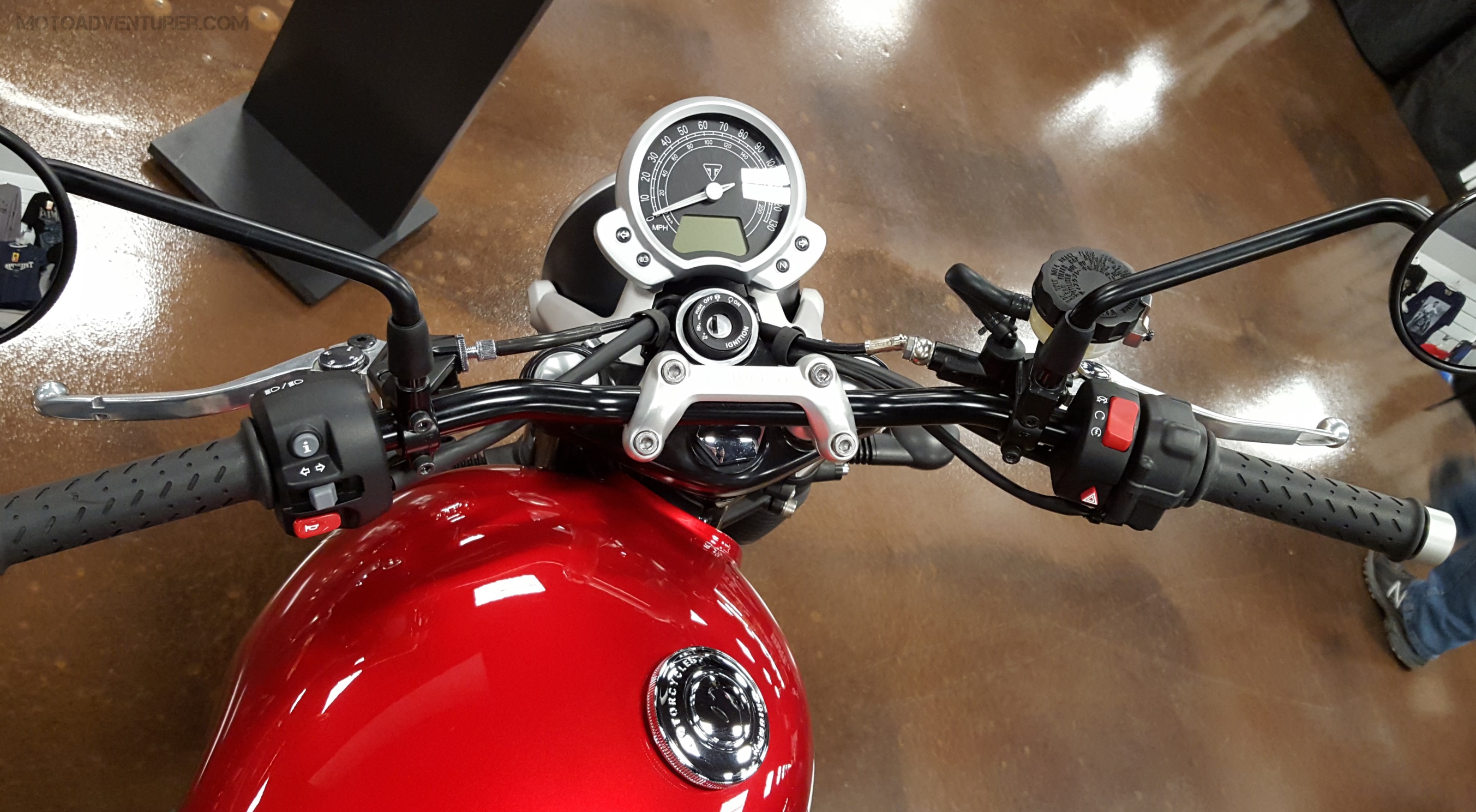
I’m a big fan of the new mag wheels; with maintenance friendly solid paint (vs. machined two-tone), I’m sold.
Stainless pipes also look awesome, especially as the previous generation Bonnie pipes blued almost overnight.
The new blacked out engine is right on; classic lines and low profile. The faux carbs are a little more modern which I find “ho-hum” but the overall simplicity is good.
While the exhaust looks great, there’s this dirty secret, a massive catalytic converter hiding under the engine.
The ignition has finally been relocated, to the applause of longtime Triumph aficionados. I have no idea if there’s a digital tach hiding in that big speedo, but the speedo looks great regardless. At the same time, the “functional” plastic brake fluid reservoir is back, no complaints from me, but it’s often criticized in reviews. The info button has also been relocated to the left control, which is another welcome improvement to those of us familiar with reaching up past the bars to check the trip odometer on the freeway.
The fender “delete” kit is a popular aftermarket solution for many Bonnie owners; I have to hand it to Triumph, they did put some serious effort into minimizing the formerly clunky fender.
The true genius of the new liquid cooled engine is hiding the radiator in plain sight. Lots of manufacturers have tried to cover the radiator with chrome and whatnot, but Triumph simply bolted the black simplicity on the front of the frame and left it alone.
2016 Triumph Bonneville T120 & 120 Black
I’ve been looking forward to a 1200 cc solution for the modern classic Triumph for a long time.While liquid cooled isn’t necessarily my first choice, it looks great, and I’m sure the stats will speak for themselves.
When I’ve shown them the photo; the new T120 has fooled a lot people into thinking it’s a lot older at first glance.
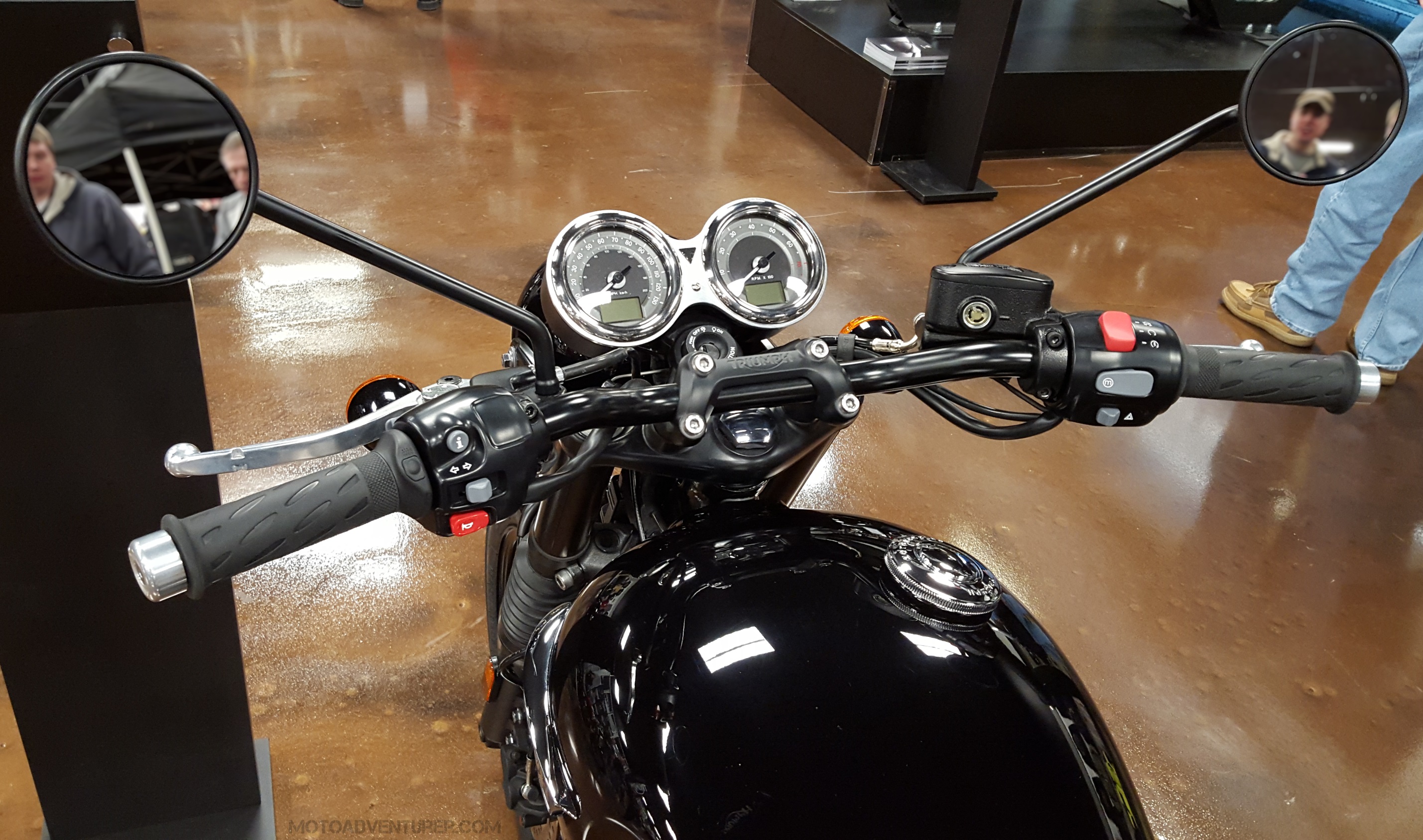
Looks like Triumph pulled out all the stops and loaded these new 1200’s with farkles that are normally add-ons (heated grips are coyly hidden).
Center-stand included as standard is another awesome add-on (coming from a guy who does all his own maintenance).
The new LED Daylight Running Lights are real sharp, hopefully these new lamps throw some good light down the road.
The T120 Black is definitely my favorite of the new line; the classic looks, blacked out pipes, included options, along with the almost complete absence of shiny stuff, it’s a slam dunk.
2016 Triumph Thruxton
…no show… I guess Triumph figured everyone is going to spring for the R spec?
2016 Triumph Thruxton R
The popularity of the new Thruxton R pretty much speaks for itself. Thruxton enthusiasts have been modifying their stock rides to improve the “entry level” prowess with sportier kit for years. The Thruxton’s liquid cooled 1200 is stamped 1200 HP, not sure what that equates to just yet, but the torque stats look pretty good.
Ohlins rear suspenders and adjustable Showa front forks come stock out of the gate, as do a set Brembo radial brakes. Spoked 17 inch hoops come fitted with Pirelli Diablo Rosso Corsas (Pirelli seems to be the new OEM choice for all 6 new models, retiring Metzeler from years past).
The old-school café racer tank with flip up gas cap is another classy touch.
The new Thruxton comes with new elevated clip-ons while bar-end mirrors return as standard (albeit, more modern).
Well, 2015 is officially in the books. While I have turned another page on the calendar, I don’t really see myself as the kind of person that makes resolutions and whatnot around the new year. However, this is the beginning of the dark time for most of us motorcyclists in the northern hemisphere; in my case that does equate to “planning time”. Related to the Event Calendar I posted recently, I typically spend the next four weeks or so scouring the web for motorcycle events and demo days.
I do however want to take a moment and again thank everyone for reading the blog each week and even leaving comments and feedback. Aside from all the fun stuff I plan on doing for me, I hope I can continue to entertain and maybe even inspire folks in the coming year.
While I spent most of the holidays with family or just relaxing, I actually have a pretty decent backlog of writing topics I need to get to.
A little teaser of things on waiting in line:
2016 Bonneville reveal, a close up tease of the 6 new Triumphs in the Bonneville line
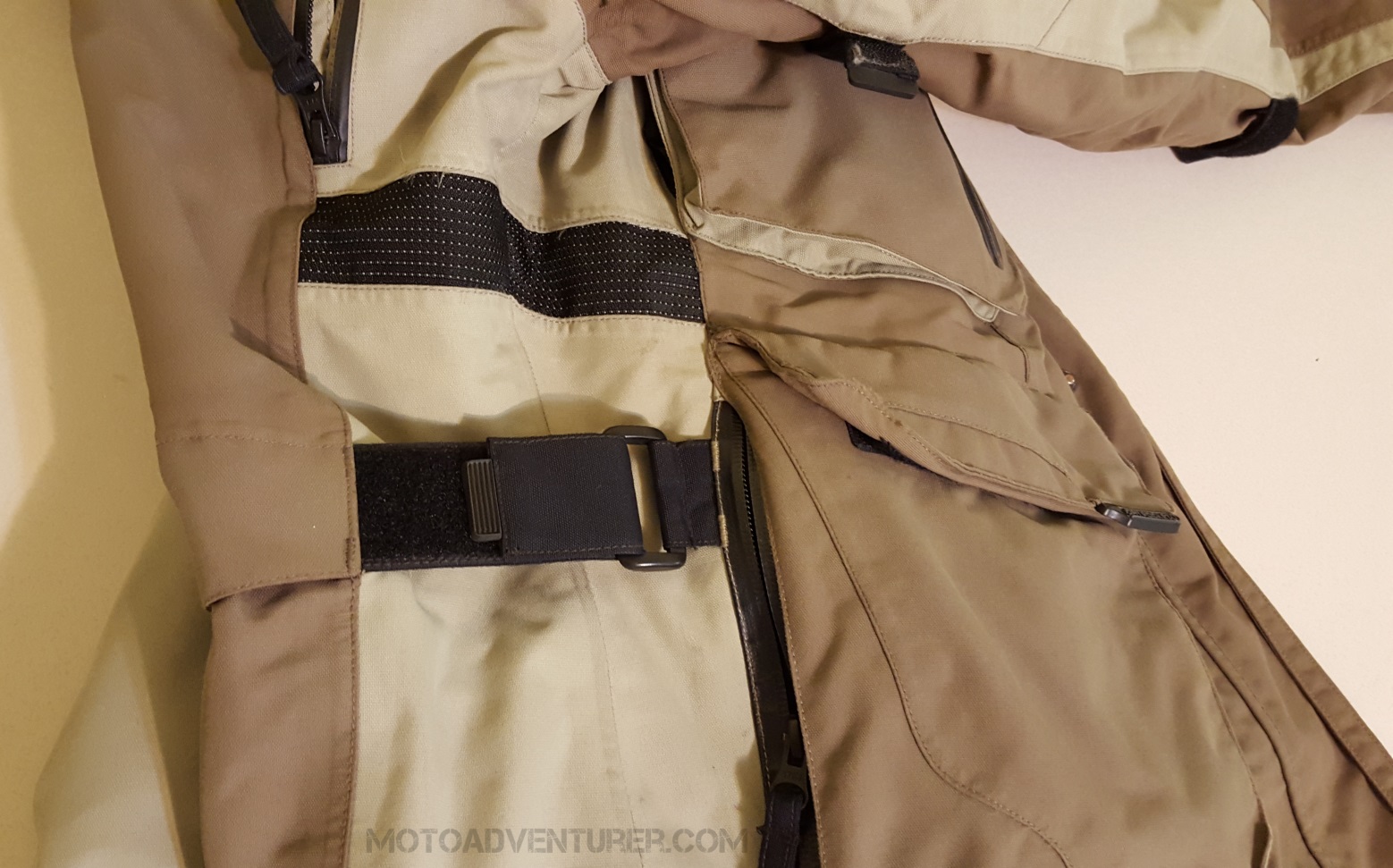
Since it’s officially winter, I figured now is as good a time as any to review the First Gear “kit” that I’ve often mentioned. Last summer I started searching for some better winter riding gear. At the time, my best winter gear was a textile, three-season jacket with liner and sweatshirt, which simply couldn’t cut it. Several of my friends pointed out that if you want to ride year round, you need a good waterproof outer layer. As it turns out, one of those friends was looking to part with an aging Firstgear Rainier jacket, which I wasn’t about to pass up. Considering that the Rainier jacket joined me on the vast majority of the 17,000 miles I put on the bike this year, I feel it’s fair to assess the jacket’s seasoned experience.
For longtime followers of the blog, I’ve mentioned the flexibility of the Firstgear jacket a several times. While I tend to be of the school of thought that there is a given tool for a given job, a rider could feasibly wear this jacket year-round. The included thermal liner with a long-sleeved shirt will easily get you through the coldest months, while the outer layer breathes well enough you can wear the jacket on long rides throughout the summer. It does however get a bit toasty above 75F when you’re sitting at stop lights, but there’s no reason to worry about being hot on the freeway.
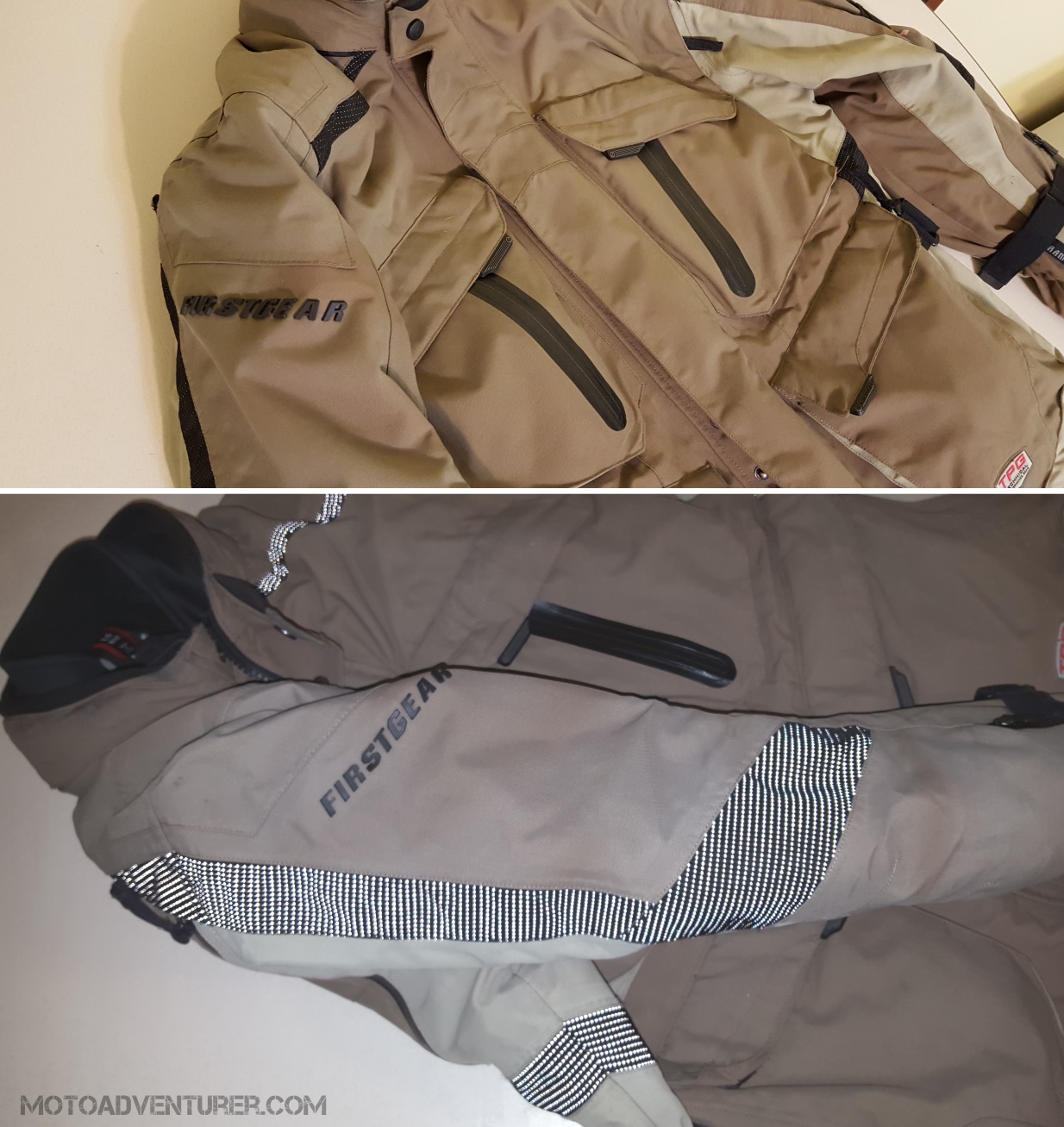
My Firstgear TPG Rainier jacket is actually a 2009 model; I’m under the impression that Firstgear has a newer, revised, version out right now, I assume with improvements on any complaints I might have with the older model. The Rainier jacket has a “waterproof”, Hypertex, outer layer. I’m betting that “Hypertex” is trademark technical term, but I can attest that the outer layer, despite being six years old, is still in fact waterproof. For those that have watched the video review, I use the term “waterproof” jacket in quotations; you will occasionally get wet in the hardest rain, but this jacket does keep out, let’s say, 95% of the water. Like similar jackets with zippered vents, it has the potential to leak at the zipper joints. Thus far my jacket has only leaked at the zipper connection on the forearm in heavy downpour (or all-day rain), which is pretty tolerable considering my shirt doesn’t get wet (A zipper “garage” might help this on newer models). I find that under layers wicking water elsewhere is typically the big offense among “waterproof” gear, which this jacket has not done. I do have to admit, there have been a couple times where the armpits of my T-shirt have been damp, as the chest vents are not the typical waterproof zippers, but the fabric folds do a good job of routing the water away. From what I can tell, it’s a real challenge to find a vented jacket that’s also 100% waterproof; the vents may seal initially, but the seams wear out over time. In the end, if you’re looking for four-season flexibility, you have to accept the potential threat of getting wet if you also want direct ventilation (so I’m told…).
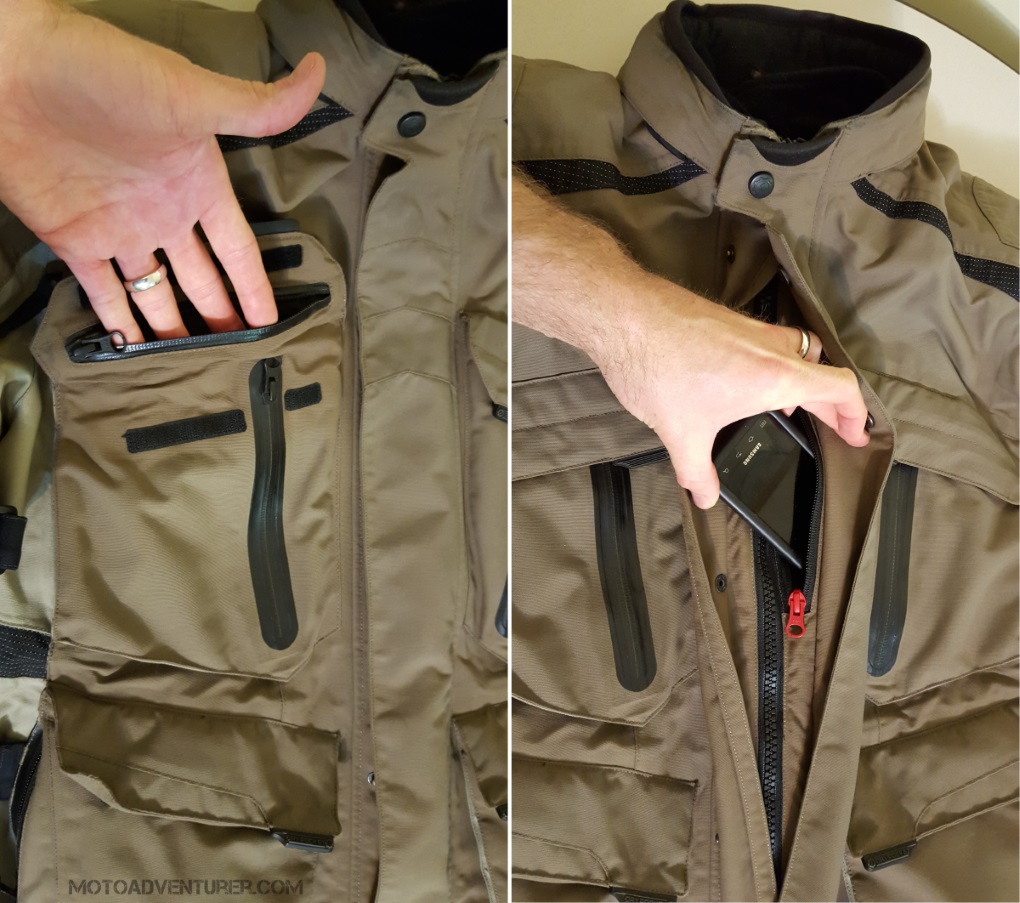
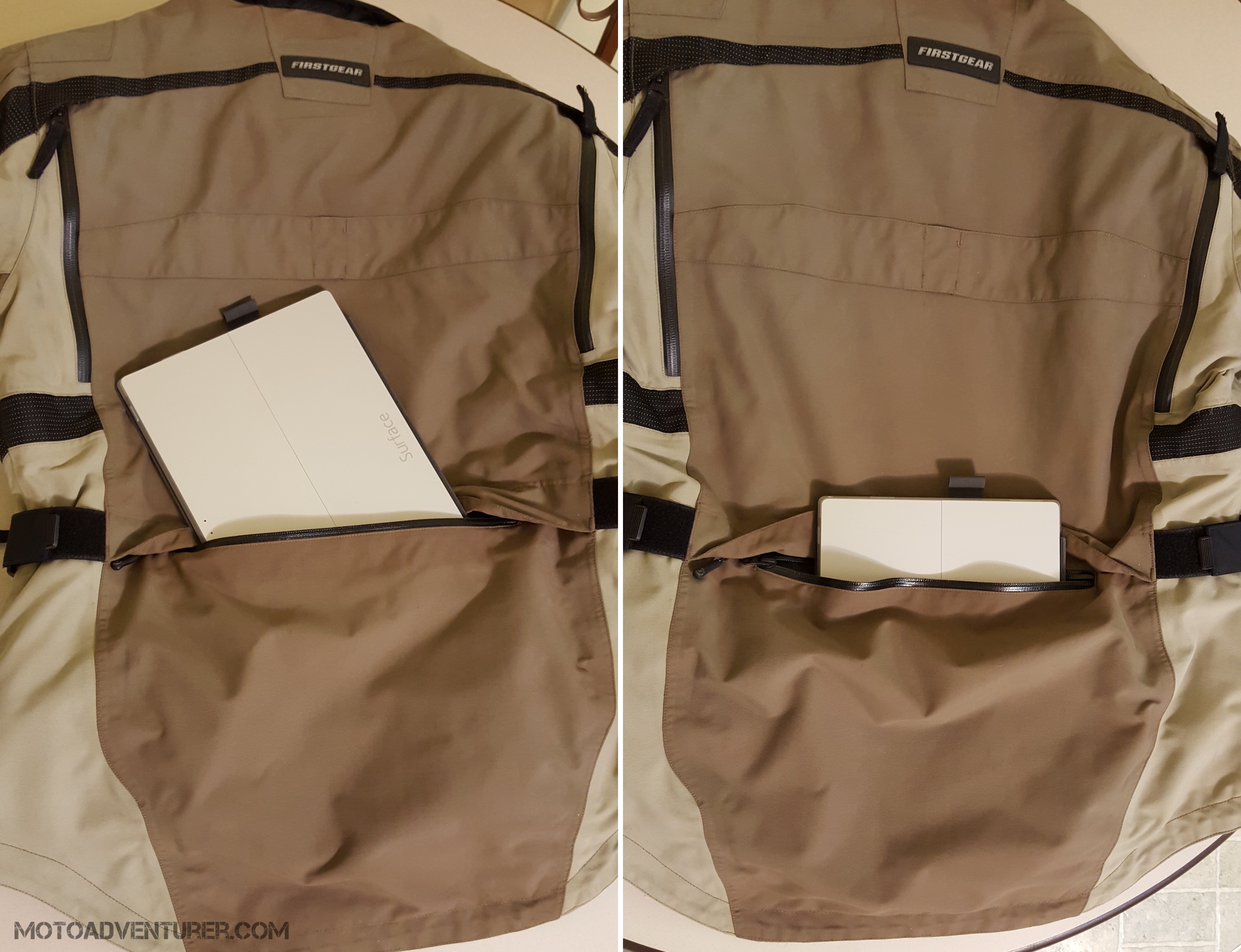
If you like keeping stuff in your pockets instead of in your motorcycle luggage, this jacket is for you. With over 10 pockets in the outer layer alone, storage space in the Rainier jacket is virtually never a problem. I prefer to have a jacket that is snug, but not tight, keeping the armor in place. Thus, I don’t usually fill up the pockets because I feel it somewhat impeding when I’m riding; however, for folks that plan on getting on and off the bike frequently during the day, it’s convenient to have items in those big pockets versus getting into the panniers at every stop. As shown in the video, the left front hand warmer pocket has a pass-through for the heated gear rheostat. Despite riding in mid-twenty degree weather, I’ve yet to have a need for a heated vest or jacket, but I do wear heated gloves almost religiously when it’s near freezing. That pass-through is really convenient, making it so I don’t have a bunch of wires to hassle with at each stop. Despite the plethora of options available, I generally find myself only using the cell phone pocket and the two lower pockets. The chest pockets would probably be good for maps etc. but I tend to keep things in the tank bag for easier access.
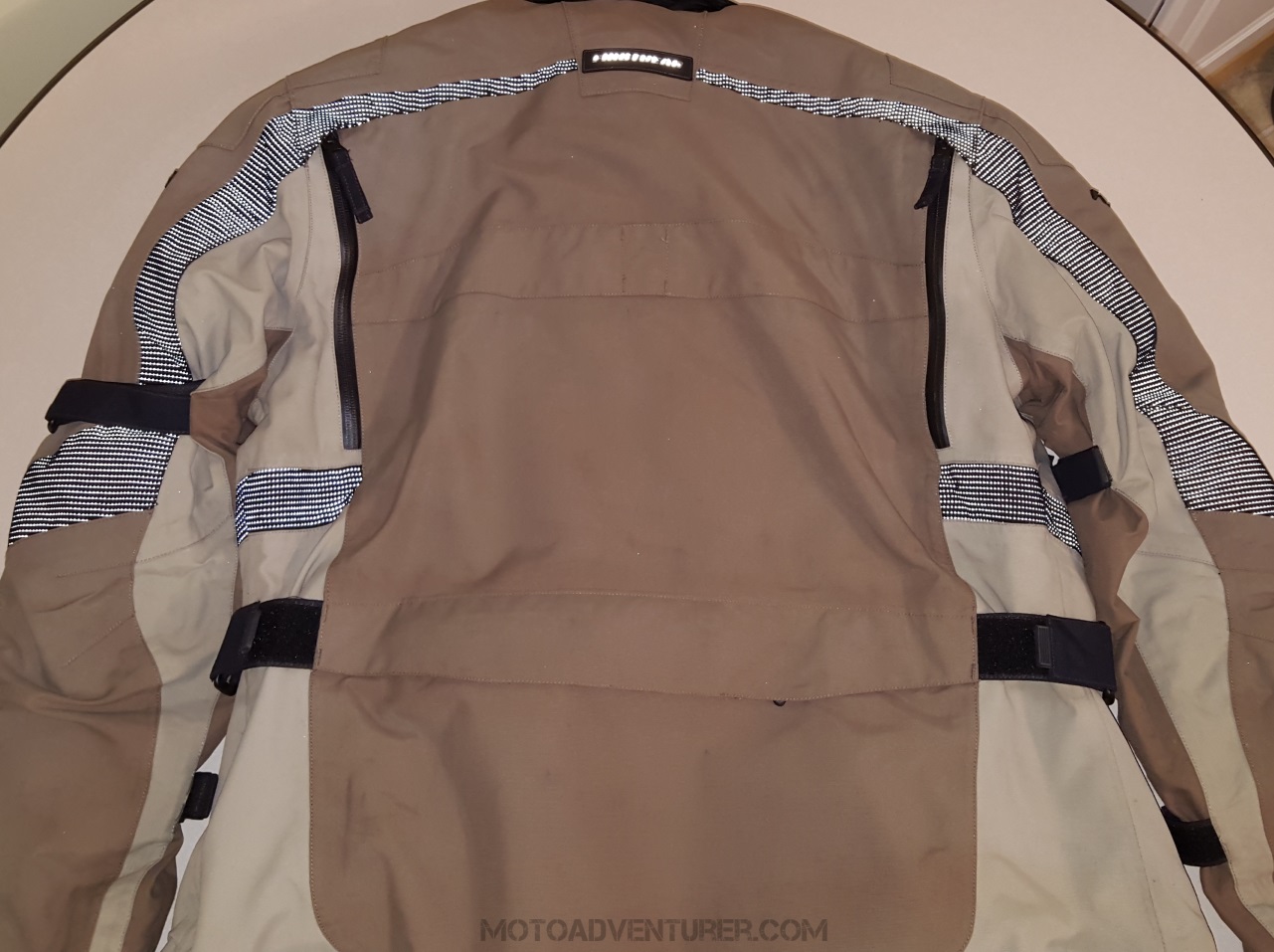
The coyote desert tan color is probably not desirable to most, but as an army guy, I see it as a kind of modern “camo” for the urban motorcyclist. I also like that the reflective panels appear very subdued in daylight, but are actually very effective at night, which is nice touch. If I were shopping for a new jacket today I would estimate that I’d be looking to purchase something in Hi-Viz yellow, but I believe Firstgear also has this jacket in a black grey combination.
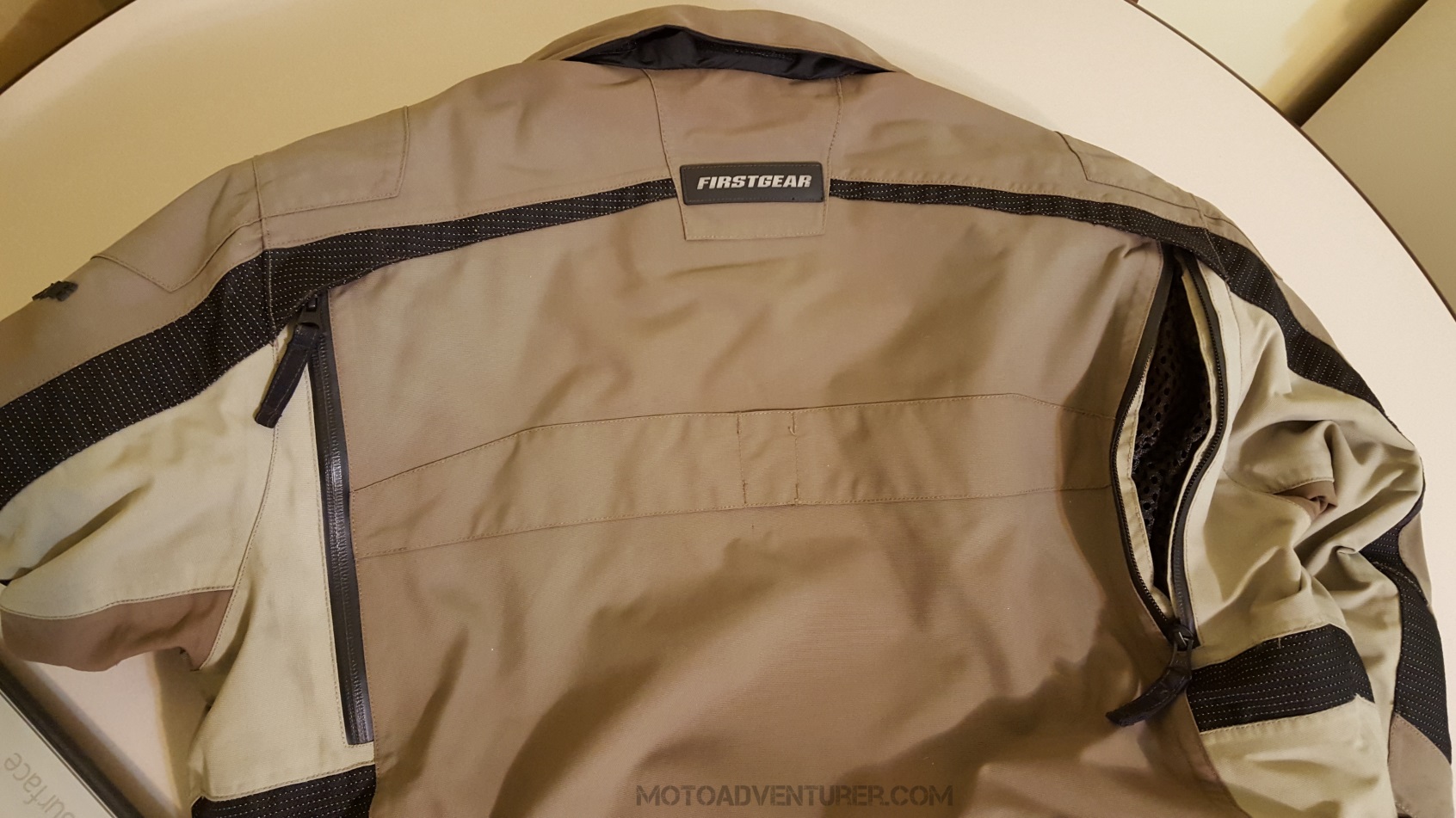
As far as air flow, the wrist vents are by far the best airflow of any non-mesh motorcycle jacket I’ve had. I find that the most uncomfortable part of being hot on a bike is the feeling that the sleeves are sticking to my bare skin from all the sweat, which is why those vents are so great. The chest vents on the Rainier jacket seem somewhat static, but I think it’s just because of the placement. The chest vents are also not waterproof zippers, so I suspect that placement is related to waterproofing. I find that on other jackets, chest vents are often designed for more direct airflow, however I fear rainwater slipping through the seals is more prevalent. The rear exhaust vents on the other hand are waterproof and offer a noticeable cooling effect, especially if air runs up the arms of the jacket. If it’s raining, I don’t often find myself sitting still in traffic on the bike, and thus far, I’ve not encountered any leaking from the exhaust vents. After six years, the seals are still in really good shape, and I suspect that the zipper “garage” really helps keep the water out. Ultimately I don’t feel a significant difference in the chest vents being open versus closed, but there’s no doubt they work. There have been a few times I’ve left a chest vent open by accident while riding in winter; cold at the end of my ride, I’m slapping my forehead when I discover I left one open.
Overall I really like the fitment of the jacket. In the past, I’ve had several “budget” textile jackets with excess material that tends to bunch up in the chest and stomach, which forces the collar to ride up and choke you; very annoying. Other reviews have suggested that the Rainier jacket is cut for a more “athletic build” similar to other European manufacturers, but at 5’10”, 185 pounds, I’m no gym rat, so I wouldn’t be scared off by the “athletic” term; I personally would suggest the Rainier fits “correctly”. For guys rocking the keg in lieu of the six-pack (it happens…), I still find the jacket roomy, and there is a bit of adjustment in the waist, but you may also want to look at something like the Kathmandu jacket. Admittedly, the arms do feel a bit snug with the liner in place, but almost loose with liner removed in summer, even when I have adjustments at their tightest. When I say “snug”, it’s usually when wearing a long sleeve shirt under the liner, it’s just that it gets tiring when trying to change channels on my helmet Bluetooth, but while riding it’s still very comfortable. The jacket also has a taller collar with integrated hood. The collar is a lifesaver in the winter, keeping out the cold, but also behaves itself in the summer when it’s not buttoned, not chafing my neck on the hotter days. The integrated hood is really great for rain, a hard lesson I learned riding down to the Dragon Raid last year; a hood is mandatory equipment if you want to keep your T-shirt dry. On the other hand, the hood can be a bit aggravating in the winter; if not positioned properly in tandem with my neck gaiter, the material tends to bunch up and make my neck tired.
By far my favorite part of this jacket, after keeping me warm, is the D3O armor. For folks that don’t know, CE rated D3O armor is made of materials that behave like non-Newtonian fluids. Sounds complicated (watch the video), but ultimately the armor is flexible under resting conditions, but stiffens up to protect the rider during impact. Firstgear has been integrating D3O on their premium gear for some time now; having ridden with D3O for so long, I’m not sure if I can ever go back to CE rated foam armor. On my ’09 Rainier jacket, the back pad is just foam, but elbows and shoulders are both D3O. According to Firstgear’s website, the new jackets also include a D30 back pad. For whatever reason I’ve been holding off, but if you’re looking to purchase a D3O back pad, it’s only about $25. Thus far, I’ve not been forced to test the jacket’s protection in an “off”, but I’m told it also has Kevlar-reinforced Teramid panels in the impact zones. While I do dress for the “slide”, I’m still hoping I don’t need to find out.
The before mentioned thermal liner is an awesome spring/fall jacket on its own. I would compare the liner to a Columbia fleece jacket for early fall, however I suspect that there is also some “waterproofness” to the liner as well.
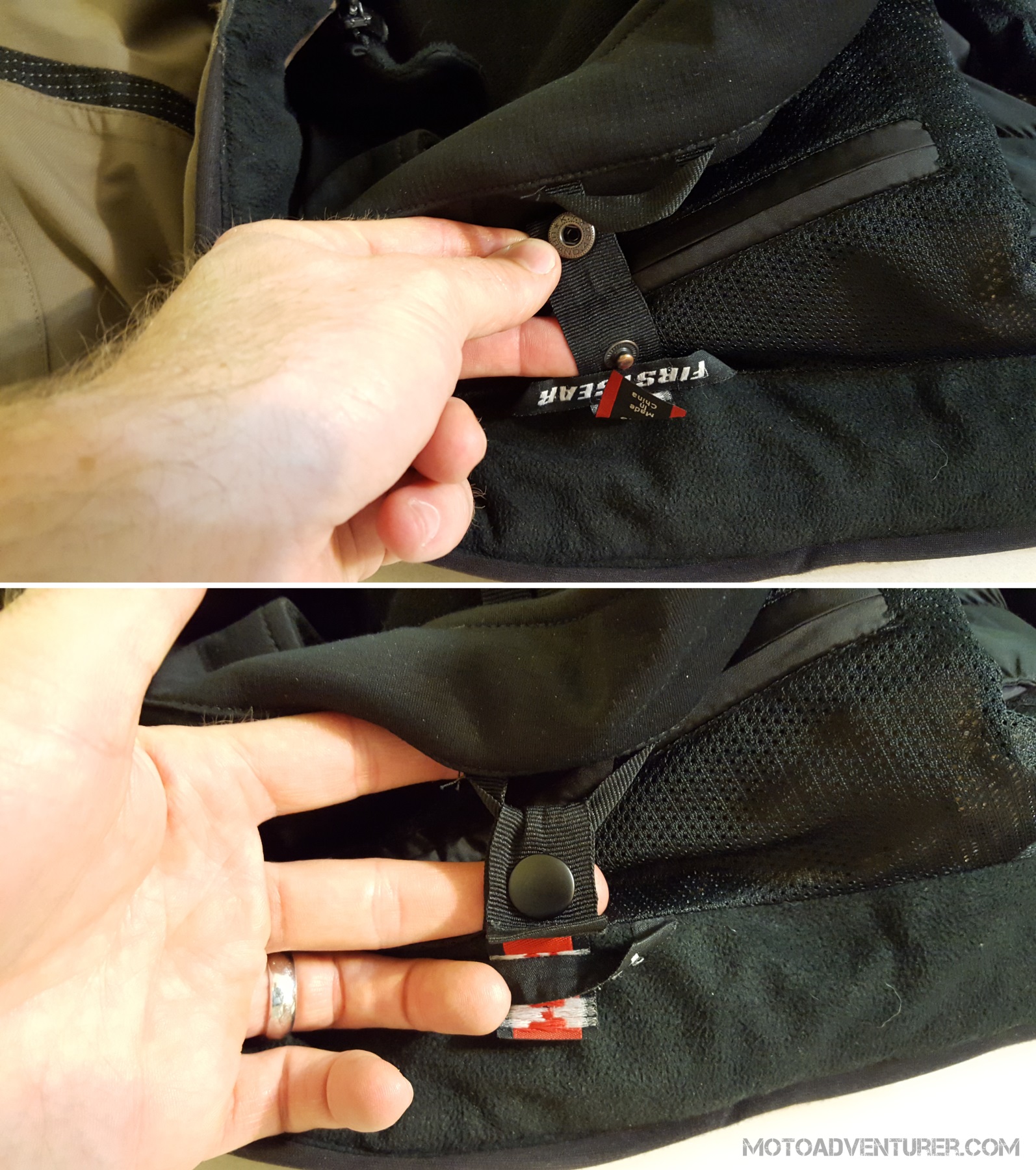
The jacket liner also has significant number of pockets, including a sizable cellphone pocket on the outer chest. Along with the pockets, there is also a zippered pass-through opening for the zipper connection for the matching Firstgear Escape pants. The liner also has vents positioned directly behind the jacket chest vents, however I’ve never felt a need to have the liner installed with the vents open. I have heard mixed rumors that the newer jackets do not include a liner; obviously I don’t sell motorcycle gear, but I admit I’m concerned that without the liner, it might be difficult to comfortably stretch such a jacket through all four seasons without piling on layers.
Looking on the web I see that the Rainier jacket is going to cost your nearly $500 at full retail, however I’ve seen some deals around $425. Admittedly, you get a lot for the money, but I can see the concern with shelling out around $800+ on a jacket and matching pants considering that starts to push you into Aerostich territory. As mentioned, I’m 5’10” at about 185 pounds wearing a size Large. I also struggle a bit with sizing as I’m on the cusp of Medium and Large in most jackets (same with helmets, 22 cm head… always between Small & Medium). To me, the biggest highlights of this jacket are definitely comfort, storage, and the D3O armor. It’s also important to note that the Rainier jacket is probably targeted at long-distance, and all-season riders; it’s really not a tavern to tavern jacket. Having worn the jacket all year, I’m at the point that I don’t even pack rain gear unless I expect to ride the entire day in the rain. In addition, riding in as cold as 24F, I can attest this jacket is excellent in the winter, with only a long sleeve shirt on underneath. I don’t see a need for a heated liner as long as temperatures are above freezing. On the flipside, I’ve worn this jacket in the mid-80’s; while not always ideal, it’s completely comfortable as long as you keep moving. Again, it may be a bit pricey for newer riders, but as you can see, I’m definitely getting my money’s worth and I would recommend this jacket to anyone.
As a moto-aholic it goes without saying that I attend a number of motorcycle related events each year. I would say I generally split my riding time (somewhat) equally between solo riding, group riding, and organized events. Of course, not all of these events are riding, some of these are expositions and cruise-ins (i.e. the International Motorcycle Show). I also try to make it to as many demo events as possible, while you may like the bike you’re currently on, I see no reason not to window-shop when you can.
I typically go to a given event, then take the time in the following weeks to edit photos, video, and write about my experience. As a result, the actual date the event took place may be a bit ambiguous. In order to help folks book their calendars for next year, I figured I would post a schedule of the prominent events I attended, or at least planned on attending, this year (blog posts are hyperlinked), along with a tentative list of events I want to try to make next year. Many of next year’s event dates are actually confirmed already, however for your convenience I have started an Events Calendar (see the drop down link under “events” on the menu bar) where I will update event dates as I receive them.
If you know of other good events or a particular event that you want to hear more about, please leave comments below!
As winter has started to set in around here, during the dark evenings I’ve begun daydreaming about changing bikes next year. Make no mistake, I have a shiny new Tiger 800 XCx square in my sights for the bike I want; that said, I’m not sure a $16,000 payment is something I’m ready to saddle just yet. That’s left me considering used adventure bikes available under the $6k mark. Scanning through Craig’s List it’s obvious that several older Triumph Tiger models are available in that price range, including both the 900 cc triples and the Tiger 1050 that is a bit more “Sport Touring” oriented. I’ve ridden the 1050 before, the power of the liter sized triple is undoubtedly impressive, but thinking about spending $6,000 suddenly I realize that of a gently used, carbureted, Triumph Scrambler also falls in that price range. For most people, the prospect of owning one or the other of these two motorcycles is probably a simple decision, yet I find myself torn between what is logical, and what truly stirs the soul; what looks good on paper is often the antithesis of the motorcycle you “love”. Therein lies the rub…
I wrote just days ago about my “Dream Garage”, bikes 1 and 2 are obviously very functional machines, while choice number 3 is the wild card, the performance bike or the bike I have (almost) no functional reason for, beyond “I want this”. If money were no object, I would have the two previous bikes, combined with some sort of canyon carving machine, however money is very much a deciding factor. As such, I’m pretty much limited to one, or perhaps two motorcycles (in a stretch…), so I’m still on the path of finding the motorcycle that can “do the most with the least”… on a budget.
I suppose I should elaborate on that backstory that led me down this road in the first place. Somewhere around the winter of 2012 I was poised to get off my 150 cc scooter and on to a “real motorcycle”. Scouring the internet for specifications, prices, and reviews, I was drawn to the throwback look of the Triumph Bonneville. After sitting on a few, my wife said I looked silly on a Bonneville, and I (at least temporarily) dismissed the idea, in favor of the parallel twin powered Triumph Speedmaster. The Speedmaster was dark, curvaceous, and simple, so I lusted after it for over a year before my betrothed gifted my new mistress “Lola” to me for my birthday in 2013. So there I was, finally in possession of the motorcycle “I always wanted”, having put a whopping 3,000 miles on a scooter the two years prior. Finally being able to shift gears (I prefer manual transmissions), I was more addicted to riding than ever before; I found myself looking for any method to ride versus drive in nearly all circumstances, pondering “hmm… how can I carry these groceries home on the motorcycle…”. The first year it was 9,000 miles, then 14,000 the second, and this year 17,000 miles; after which I’ve realized that maintenance is expensive, and I don’t really think this cruiser was designed to rip up the twisties, nor take the gravel roads… Thus, late last year I began pondering if there might be a chassis more suited for intended use I have in mind; while I’ve already covered this to some degree, ultimately I feel that I need a more “touring worthy” steed with additional storage, sporty enough not to drag pegs (as I realized at the Dragon Raid this year), and lastly something that I’m not afraid to get dirty.
At any rate, my logical side says that the Tiger 1050 is a slam dunk. I’ve discussed the pros and cons of having a 1050 with several friends that own them, and it’s pretty much a sure thing in their mind. The Tiger 1050 has the additional power that would make touring two-up more comfortable, or at least “more spirited”; but I am already aware that my better half is not a fan of the pillion seat. A new seat is only a matter of $500, so that’s a moot point considering I’m mostly concerned about the initial investment. The 1050 also comes with panniers on most of the used models, considering I have like a two gallon tail bag on the Speedmaster, that’s a big plus for commuting to the office or taking a long weekend on the road. While the Tiger 1050 is almost completely street oriented, it does have adjustable front and rear suspension with almost six inches of travel. I undoubtedly have off-road capability listed on the “want list”, while I currently don’t ride off-road at all, save perhaps the occasional gravel side road, that considered, the 1050’s road preference isn’t a deal breaker either. The 1050 is also a three cylinder, that’s probably the part that is the most “soul stirring” about the whole machine. There is simply nothing like the sound of the angry Triumph triple; that, combined with the 1050’s torque, is a very compelling argument toward the Tiger. The flip-side of the minimal off-road prowess of the 1050, I have on good knowledge that its cornering capability is pretty fierce. I saw the video of a buddy of mine ripping up US-129 on his 1050… I don’t have stones for that business, but it was impressive… if nothing else. I fear the drawback to the Tiger may begin with maintenance. I currently have an air-cooled parallel twin, on which I have done over ninety percent of the maintenance; which also means I have a significant stockpile of parts and tools. The Tiger 1050 also (arguably) runs on high octane fuel with its higher compression ratio; admittedly the Tiger 800 probably runs on mid-range fuel considering it also has better than a 10:1 ratio, but it’s still something to consider when you’re buying 17,000 miles worth of gasoline, those extra pennies a gallon, combined with maintenance costs start to add up over time. Lastly, despite to good looks of the Tiger, I’m not convinced I will ever find myself seeing it as more than a tool, or a means to an ends, which is not the way I look at the XCx or the Bonnie.
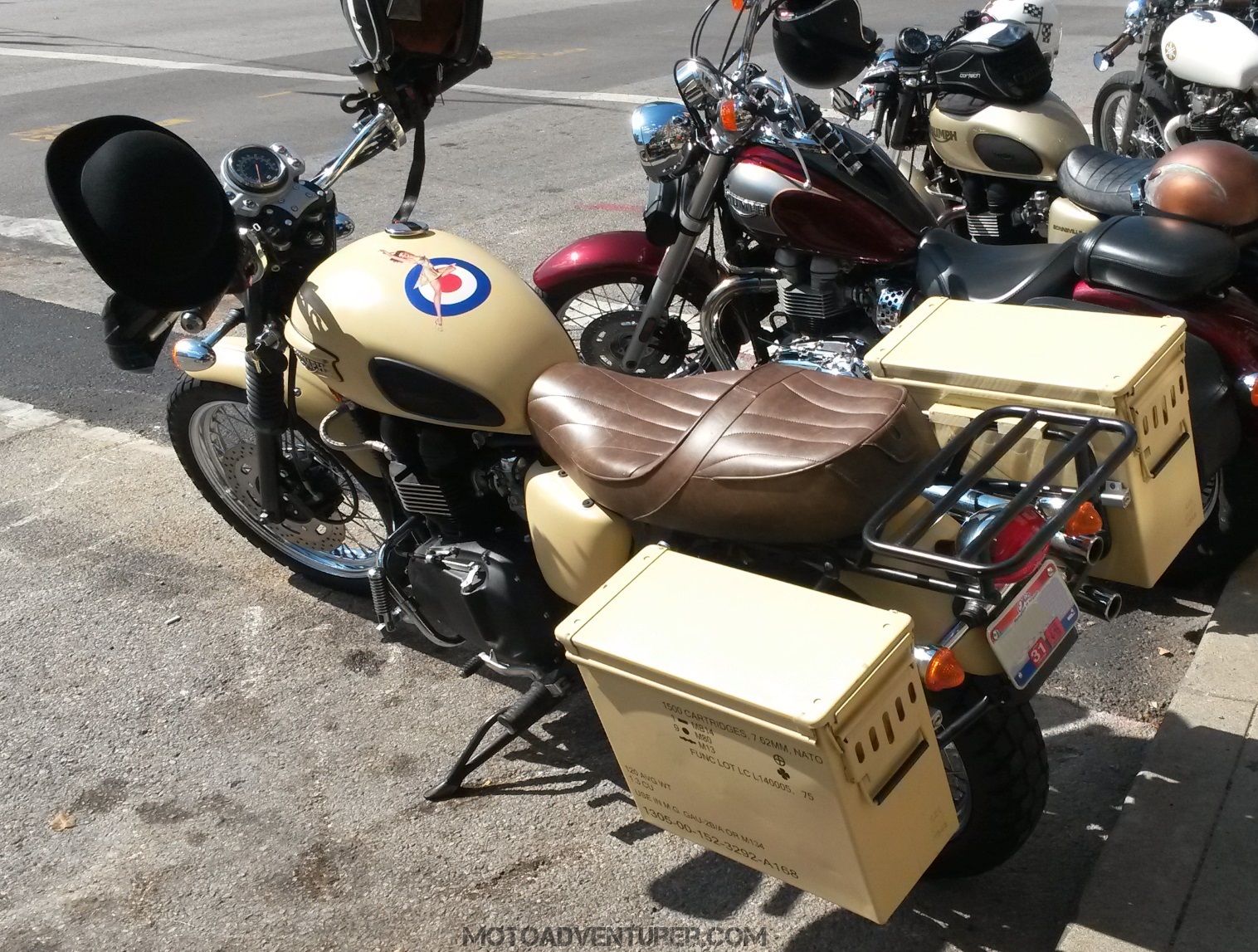
The Scrambler on the other hand is almost the inverse of the Tiger 1050… almost. While the Tiger offers a sporty engine and chassis capable of ripping through the curves, the Scrambler represents the simplicity of a classic British project bike I’ve envisioned for several years now. The Scrambler has the same 865 cc parallel twin, including 270 degree firing order, that I already have in the Speedmaster. Needless to say, I’m already intimately familiar with its quarks and character, all of which I’m very happy with; while the twin engine could stand to have a bit more performance for two-up, but when riding solo, it never disappoints. The Scrambler is also air cooled, versus the liquid-cooled triple; while I’m not escaping the apocalypse or scrambling across South America yet, I would hope in the long run that the air-cooled twin’s simplicity provides ruggedness against the performance oriented 1050 alternative. While I love the angry growl of the triple, after following my buddy Steve around at the Dragon Raid, a good set of pipes really unbridles the grunt of the Triumph twin. On the flip side, the Scrambler doesn’t have suspension on par with the Tiger, especially once we throw riding dirt into the equation; upgrading the suspension would probably be an additional cost adder of easily $2k in the long run (if not more depending on how crazy I want to get). A lot of folks would consider the touring capabilities of the scrambler pretty limited, however considering I already do a fair amount of touring on the Speedmaster, I expect that the mid-controls and upright seating position to be superior to that of the reclined cruiser that currently hurts my back on the long-haul. Storage is pretty much zero in stock form, however I have a good buddy that has converted military ammunition cans into excellent waterproof panniers, which is exactly what I would want to do for the long rides. To me, the advantage of the Scrambler over the Tiger mostly comes down to simplicity and customization; in the end I would be looking to build a truly dirt worthy, carbureted, air cooled motorcycle that looks like it rolled out of “The Great Escape” if not “Mad Max”. There’s no denying that a Scrambler project would be an investment and an emotional attachment that would mean spending a lot more dough in the long run, but offer additional flexibility… if done right. the question would be, do I really want to rely on just one bike that’s essentially a rolling work in progress?
Ultimately this “red vs. blue” argument is about getting over the initial investment hurdle, in the end I expect I would be sinking more money into the scrambler to “build the bike of my dreams” whereas the Tiger 1050 is a tool, and does most of what I want from “go”. It’s a fallacy to believe that everything boils down to black and white, but this strikes me as the classic M-16 versus AK-47 argument, precision versus rugged simplicity, or perhaps just form over function. On paper the a Tiger 1050 can do anything the Scrambler can do, if not more; but l have a feeling that choosing a bike based on stats and finances seldom thrills.
Apparently I’m not the first guy to have this dilemma; have you every found yourself debating between such divergent paths on two wheels?
Saturday was the December open house at Joe’s Cycle Shop (my preferred Triumph dealer); considering that I will be due for my 42,000 mile service any second now, I planned on stopping by to pick up all of the necessary replacement parts. The weatherman claimed it was going to be around 50 degrees, so I made plans to ride up to Greenville for lunch with a few of my riding buddies. The wife and I also made plans to have breakfast with a couple friends near the dealership downtown (also going to Joe’s for the open house), keeping in mind the somewhat tight schedule I had planned, it was necessary for me to ride separate, no big deal…
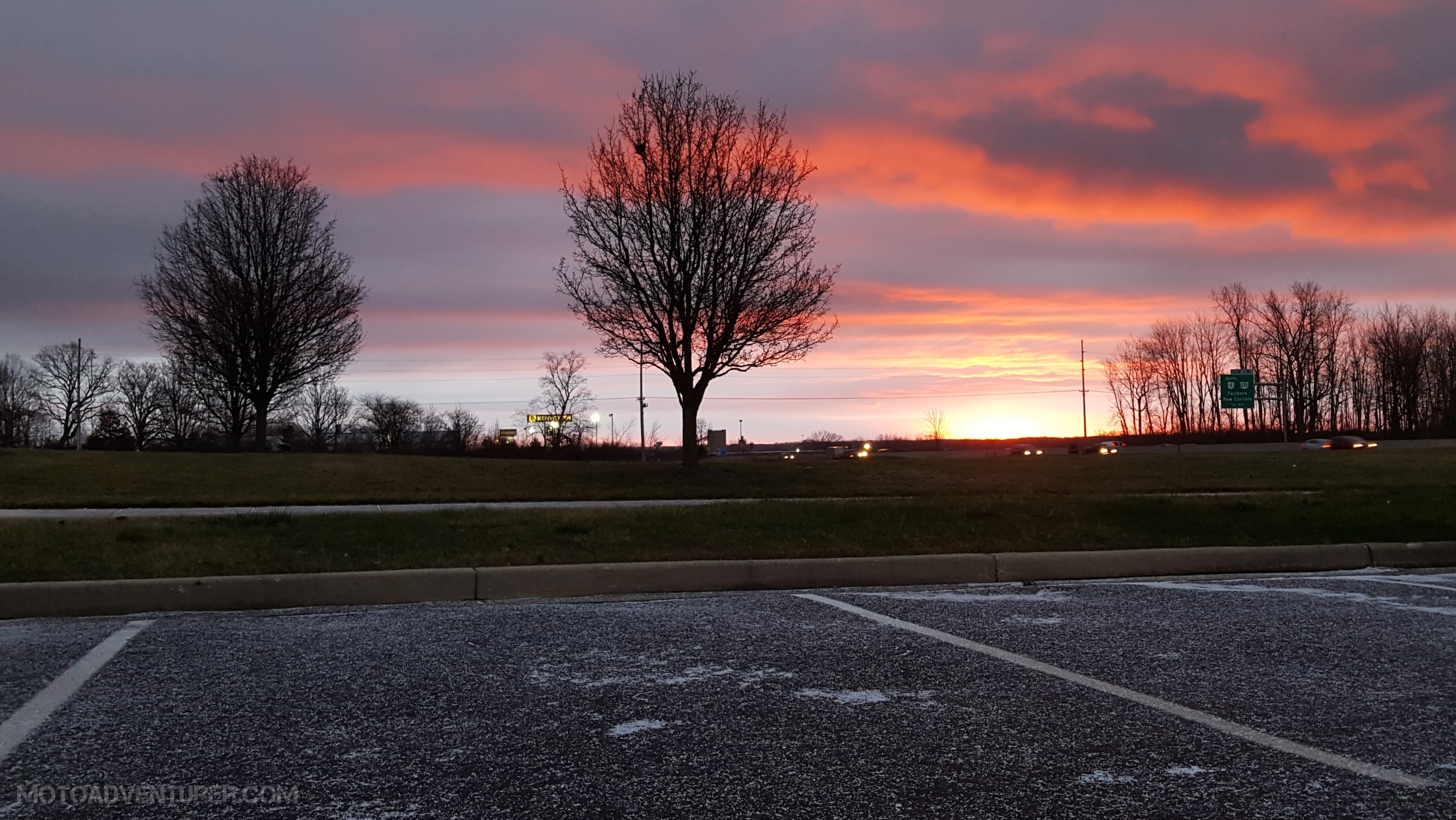
At a crisp 24 degrees, I donned my usual winter getup and backed the bike into the driveway. About as soon as I reached up to flip down my visor, I detected the faintest hint of flurries coming down. Caught off guard, I pulled out my phone and checked my “trusty” Weatherbug app; 0% chance of precipitation, no blobs of precipitation on the radar. I shrugged my shoulders, figured it would taper off in an hour once the sun got a little higher in the sky, so I set off to catch up with my wife, about a mile or so ahead of me.
Cruising down the highway toward downtown, I saw a few swirls of flurries scurrying across the tarmac, but the road remained dry. I took it easy on the overpasses, knowing that they would be affected first, but despite the frigid temperatures, everything was “going as planned”. Bobbing along to the radio, just short of my intended exit, my phone rang (I have a Cardo Bluetooth Communicator). My wife called to inform me that the roads up ahead were soaked and there was snow accumulation; perhaps I should turn around. Like a typical man, I dismissed the concern, informed her I was barely a mile behind her, I’d go slow and I’d be at our destination shortly. At this point, I had seen a few damp spots on the freeway, but no real accumulation of water or snow; however the fog was starting to get a bit dense as I crossed over the Miami River.
Almost the moment I crossed the Stanley Avenue bridge, the freeway was soaked, and I noticed the ever ominous “great white death” stuck to tree limbs and grass (while my wife probably won’t read this, she was probably right…). Slowing down, my destination was fortunately the next exit ahead; at this point, the road was wet, but the tires were still hooking up fine (not entirely sure how…). Coming down the off-ramp, water was starting to pool in various places along the roadway. Fortunately I’ve ridden this area quite a bit, including in the rain, so I was somewhat prepared for the less-than-ideal conditions. Turning at the light, the density of the snow accumulation started to concern me; it wasn’t true winter accumulation by any means, but when you’re on two wheels… any amount of frozen water is cause for concern.
With about three blocks to go, I made sure to gently lean through the corners, keeping the bike upright wherever possible, staying calm, and made no rash movements. For the last couple blocks I was still trying to discern how the road was completely soaked, yet unfrozen at well below 30 F. Pulling into the parking lot, the bike was filthy, I was grumpy that the weatherman had gotten the better of me, yet extremely thankful the shiny parts were still shiny. As more flakes started to collect on the tank, I unplugged my heated gear and went inside to meet my (very frustrated) wife.
You know that moment in all the movies when the “stranger” walks into the bar and every set of eyes in the place is staring at them? Yeah, that’s what happens when you walk into a place with a helmet in your hand with snowflakes on the ground.
At any rate, after a few laughs and an admittance of my stubbornness, I unfortunately cancelled my planned meetup with my buddies for lunch (conditions were less than favorable…), and then subsequently waited for the roads to dry out over the next few hours before heading home.
Having lived in Dayton for over 30 years, I had never seen such odd weather conditions. After talking it over with friends, and a little help from Wikipedia, it seemed apparent that frigid temperatures combined with dense fog led to a flash of low altitude snowfall. Elsewhere around the world I imagine this is a common occurrence, but in urban Dayton, Ohio, it was a first for me.
Like as I said, when the plan goes awry, the adventure begins…
A couple weeks ago, my buddy Tom moved the local moto-tag to a prominent pile of rubble (and otherwise condemned buildings) in downtown Hamilton (formerly Champion Paper Company). Since my wife was working over the weekend (this was the week before Thanksgiving), I had Sunday morning to get out and explore, so I geared up for the sub 40 F temps and headed south.
On the 50 minute ride south, I scoured my memory to think of other prominent urban decay locations between Hamilton and downtown Dayton. Two or three years ago this would have been a slam dunk, but as the economy has somewhat improved, a lot of the blighted properties have recently been demolished. While I actually took classes at the Miami University campus in Hamilton , I admit that I haven’t crossed the river many times. As Tom’s photograph indicated, the industrial parts of downtown appear to be worth exploring for other folks fascinated by urban decay (Hamilton also has a few former train stations). On a cold Sunday morning, there wasn’t a whole lot of traffic on the main drag. Crossing the river I could smell the hints of something delicious from J Austin’s Riverbank Café (hopefully a future Pubs & Street Eats destination), but I suddenly found myself alone on B street along the remnants of former industry in Hamilton. Knowing I still had to find a new tag, with several other destinations in mind, I snapped a quick photo from the side of the otherwise barren road and headed back north.
The night prior I had hoped to take the more scenic roads following the Miami River, however bearing in mind the frigid temperatures and the recent rain, I was concerned I might inadvertently find an ice patch concealed in the roadside shade. That considered, I stuck the main thoroughfares and stopped at a few locations in and around Middletown (Wausau Paper Mill, and the outskirts of AK Steel). From Middletown I continued up the Dixie Highway (formerly US-25) into the Franklin-Chautauqua area to snag a photo of the Dayton Power & Light (DP&L) plant along the Miami River. Knowing it was Sunday, I didn’t expect any issues from security for taking a photo; however once on site, I would have thought the plant was completely abandoned if not for the shiny pickup truck parked inside the perimeter fencing. After checking online, it looks like DP&L closed the plant in June of this year as it could no longer meet federal emissions standards (future derelict site?).
From Chautauqua I skipped over to southern Miamisburg to the former Mound Laboratories complex. To the best of my knowledge, the former nuclear research laboratory has been closed for several years, but the remnants of 50’s era bomb shelters still remain (among brand new commercial buildings). Similar to the DP&L plant, I didn’t want homeland security freaking out about me taking a photo, fortunately, the photo location I had in mind is very visible on Google Street View, and the parking lot was a ghost town so I wasn’t too concerned.
From the former Cold War landmark I headed back up Dixie into West Carrollton to the remnants of Fraser Papers. I can’t pretend to be an expert on the building’s history, but ultimately the Friend Paper Co. opened following the Civil War, was subsequently purchased by Miami Paper Company (where my Grandfather retired), and later a few other companies. Paper manufacturing was apparently all the rage in the Miami Valley in the last century, however I assume it experienced heavy decline in the last few decades considering cheaper labor internationally and advancements in technology. As a result, all that is left standing of the site (at the time of these photos) is the corner water tower, and the original office building next to the railroad. News stories suggest that the city is trying to rehab the historic office building, dated 1859 according to the front cornerstone, hopefully that proves to be true. In the end, the story came full circle considering that the day began with the partially demolished Champion Paper Company in Hamilton and ended with the remnants of the Friend Paper Company in West Carrollton (a few websites suggest it may have been the first mill locally). Urban exploring tends to be my “go-to” ride when the temperatures teeter around freezing; I see no sense in wasting a riding opportunity, but shy away from the potential frozen threats on the backroads.
I want to thank everyone again for offering such encouraging feedback on the survey I sent out a few weeks back. I had a few plans in the works for new content and changes to the website, thanks to comments from the readership, I’ve done some fine tuning on those plans, hopefully I’m improving your experience on the page.
At any rate, after my trip to the Dragon Raid this year, I checked a few items off the Moto Bucket List. As a result, I have put up two new replacements for the completed items, and in addition I’ve started a “Completed” page so folks can ask questions or comment about their own experiences at those places.
While I do love the sound of my own voice… or written monologue in this case, it didn’t occur to me that folks might be interested in hearing more about me (I figured I was boring?). In any case, I have expanded the “About Me” section with a new “More About Me” page for folks that are curious how my eccentric persona was forged prior to Moto Adventurer.
After writing a more lengthy bio, I thought it seemed prudent to write an “About the Blog” type post so new folks could better navigate around the blog. “What’s MotoADVR?” is short story about why I started the blog, and what my ultimate goals are. This new page also includes a list of hyperlinks to help you navigate to your desired topics.
In addition to the “What’s MotoADVR?” page, I’ve also been working on sprucing up the menu bar and widgets to make it easier for folks to find their way around the site. While I’ve been on the web since 1996, the internet has come a long way since America Online (AOL), so I’m still getting over the learning curve on Word Press. I’d love to hear from more experienced Word Press bloggers about triumph and failure with the various themes and widgets in the comments below.
Again, I want to thank you, the dedicated readers, for visiting the site week after week. I’m hoping that the new content is whetting your appetite for new adventures and food destinations to come (hopefully more Pubs and Street Eats now that winter imminent…); while at the same time making the experience more user friendly with these new additions. As always, comments below are greatly appreciated!
I apparently have a sickness, it’s rare, and from what I can tell, untreatable. We’re well into fall, with winter right around the corner here in southern Ohio; that being said, I realize my riding days are numbered at this point. I turned on my phone this morning to check the weather, at a crisp 30F outside, for whatever reason as I stepped out the door, I thought to myself “the game’s afoot Old Man Winter…”
I wouldn’t go as far as to say that I’m in full “Eskimo mode” just yet, but last weekend I took the time to re-install my hand guards bearing in mind the imminent frost. In addition, I’m also beefing up my riding game with the usual heated grips, combined with the new Tourmaster heated gloves I picked up last month. It wasn’t exactly toasty this morning, but my hands are far better prepared for the sub-freezing temperatures headed our way.
If you’re new to the blog, I have a general principle, “Is the road dry? Does the bike start? Then ride that thing!” This attitude requires a substantial amount of preparation and risk mitigation, but thus far, Lola has been on the road every calendar month since she rolled off the showroom floor. Getting up ten minutes early each morning may seem like a waste of time for some, but when you drive a base model car, it still beats scraping the windshield!
That “magical temperature” is different for everyone, so at what point do you finally hang up the keys? What do you do to stay warm until that day?

 Turn the key. Pull in the clutch. Thumb the ignition.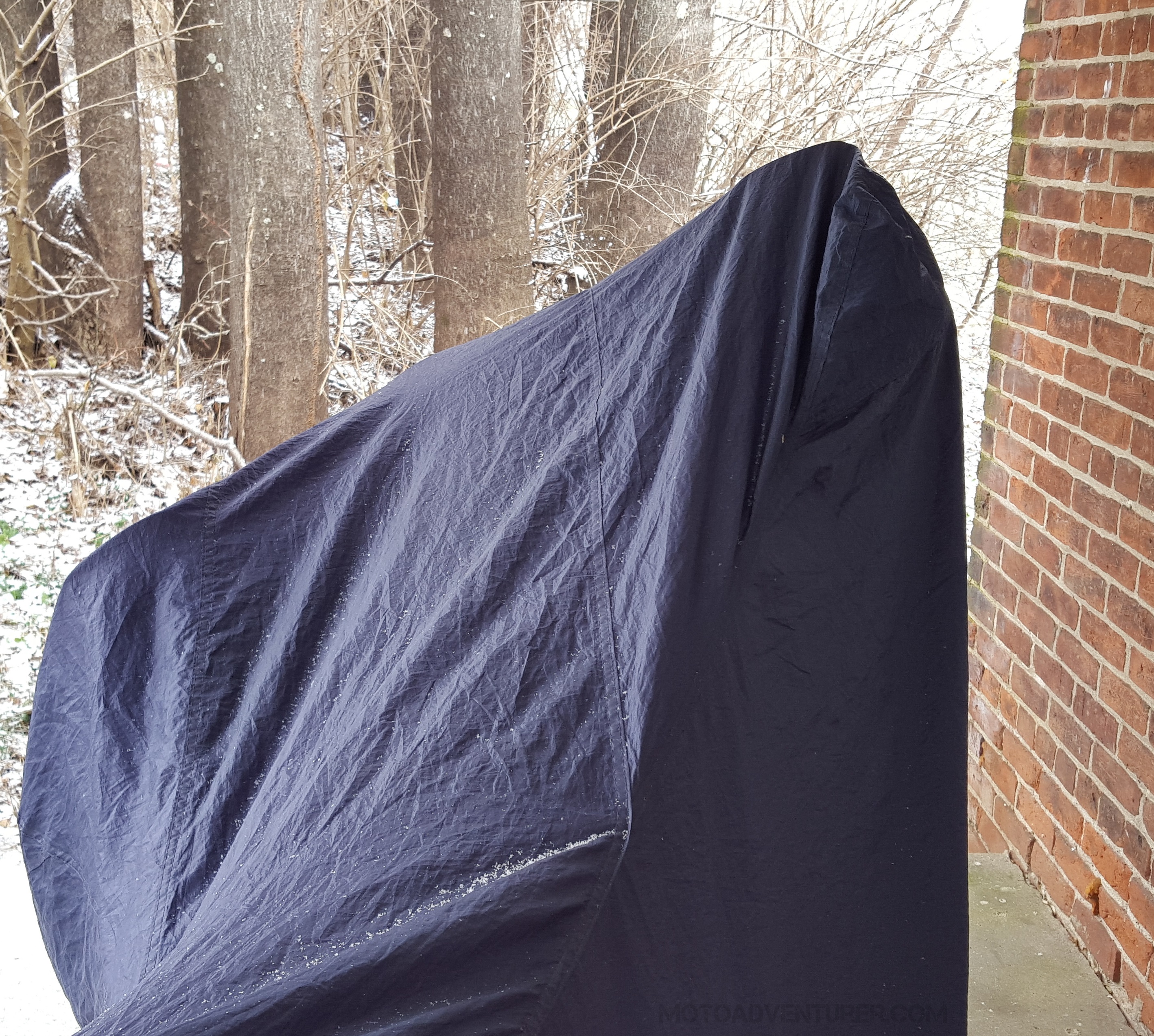
 Spend $600 on dependable cold weather gear
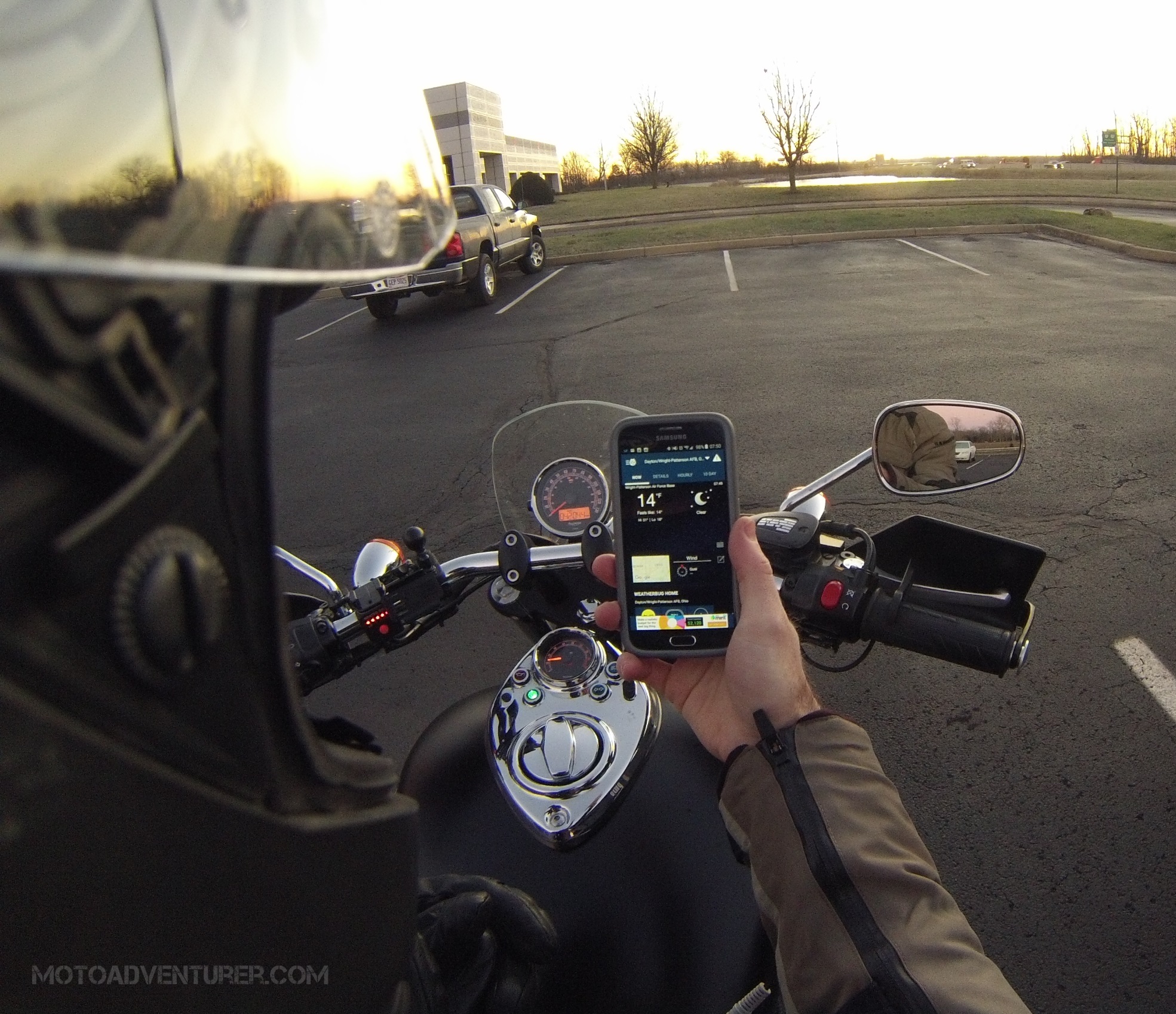 Watch the weather religiously
 Hand Guards or Hippo Hands
 This plan isn’t fool proof, and absolutely not without pitfalls. Salt, water main breaks, unsuspecting drivers, and cold rubber, all things to be avoided, and above all, riding on two-wheels in the snow is a no-go, even for me. Despite all that, you’re going to be grounded at some point (Snow or excess salt). I hit that impasse yesterday morning as the second January snowfall started coming down. In the interim, put some Sta-Bil in the tank and keep it covered while you wait out the storm. As mentioned in the conventional advice, I recommend starting the bike and running it through a full heat cycle from time to time. Avoid short idles as they can cause moisture inside the block from condensation; run the bike (preferably ride) long enough to get the engine good and hot to burn off any moisture in the engine or the pipes. With a little luck, you’re probably only going to be off the road for a couple weeks (it was about 5 weeks back in 2014).
 While you may be “crazy” among acquaintances, and probably even friends, I believe there are advantages to riding through the winter. For one, it keeps your skills sharp. Many riders break from November until March; but “Rider Focus”, like algebra, is a perishable skill, lost over months of riding in the stagnant car. Short rides through the winter help shallow out the learning curve come spring. I’m also a firm believer that like airplanes, sitting idle is actually bad for a motorcycle. Routinely running the engine gets oil circulated over the essential parts, and helps burn moisture out of the crankcase, keeps the seals from dry-rotting, etcetera, etcetera.
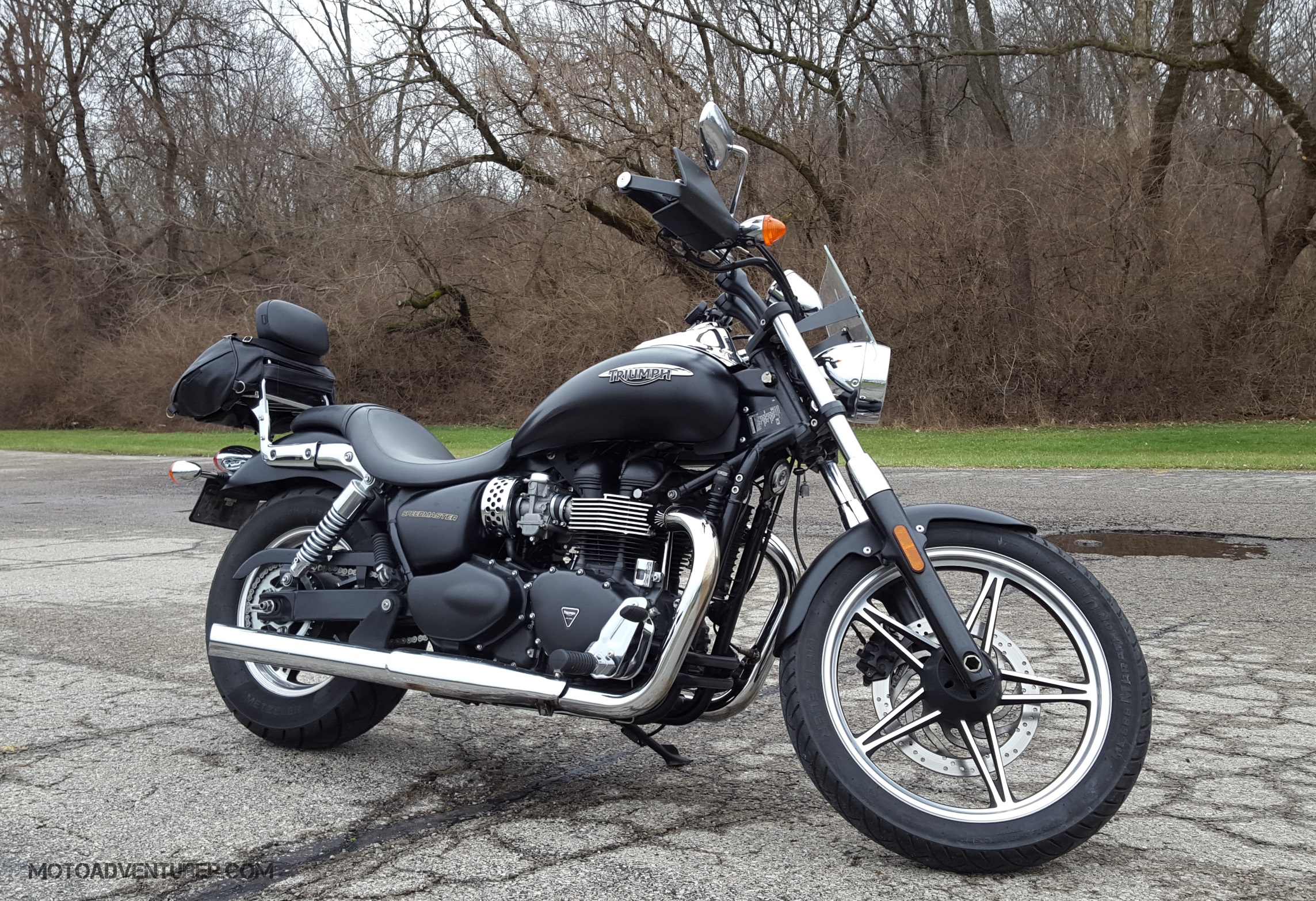 I realize this advice is not for everyone. Ohio is a very strange place, while “vanilla” in my opinion, the weather here can easily swing from summer to winter in about 24 hours, if not faster. I’ve played ice hockey in 72 degree weather in December, it was 7 degrees earlier this week, and I managed to ride the bike Saturday when just above freezing. The locals often say “Don’t like the weather? Wait a few hours, it’ll change”. The line in the sand is different for everyone, over 40F is typically my Dad’s rule, and I’ve met other guys that ride as long as the roads are dry and it’s above freezing. But If you’re not comfortable, it’s not fun, and there’s no shame in that. All I am saying is that there is an alternative when it comes to winterization, if you have the means, and the passion…. Ride the bike…


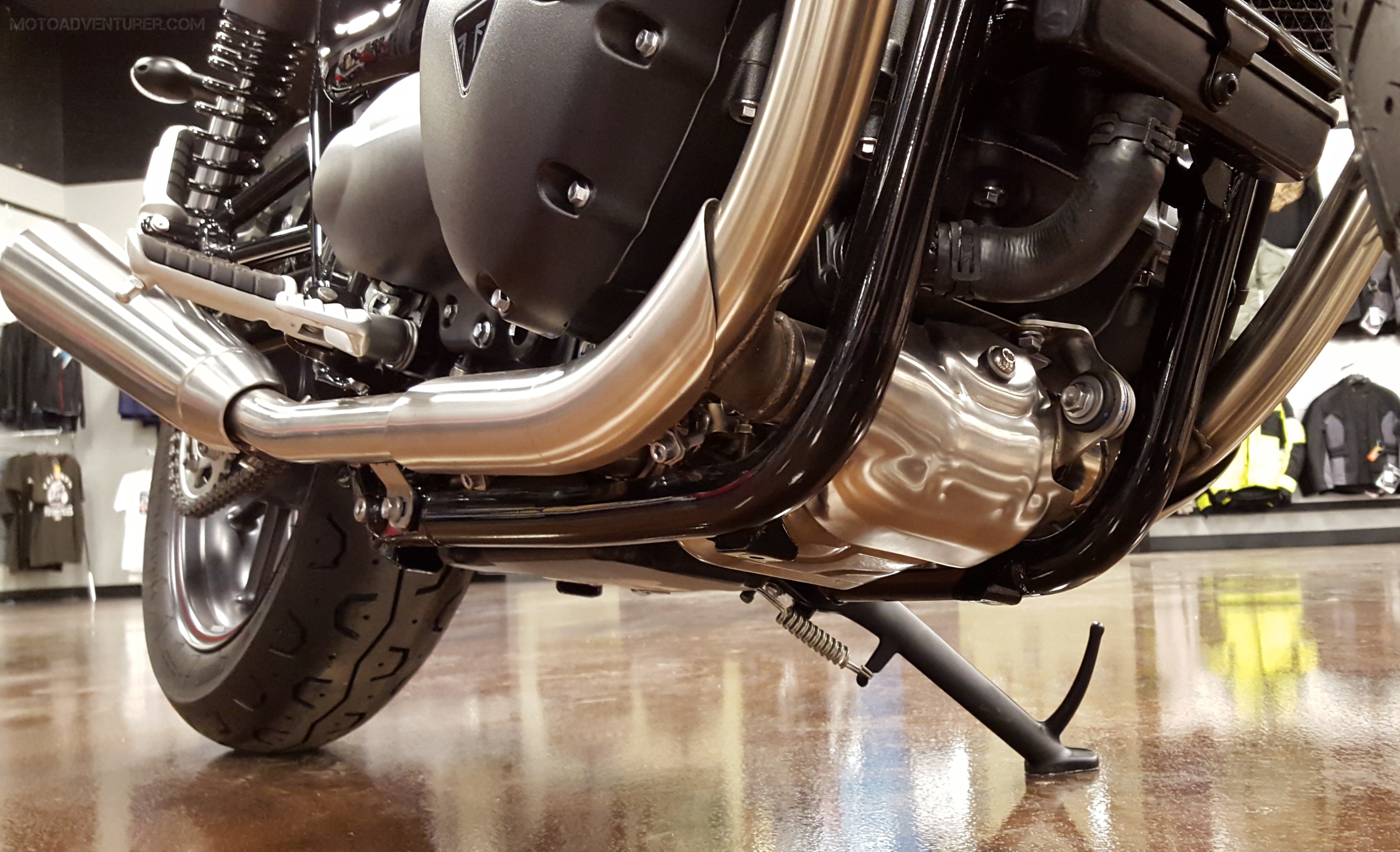


















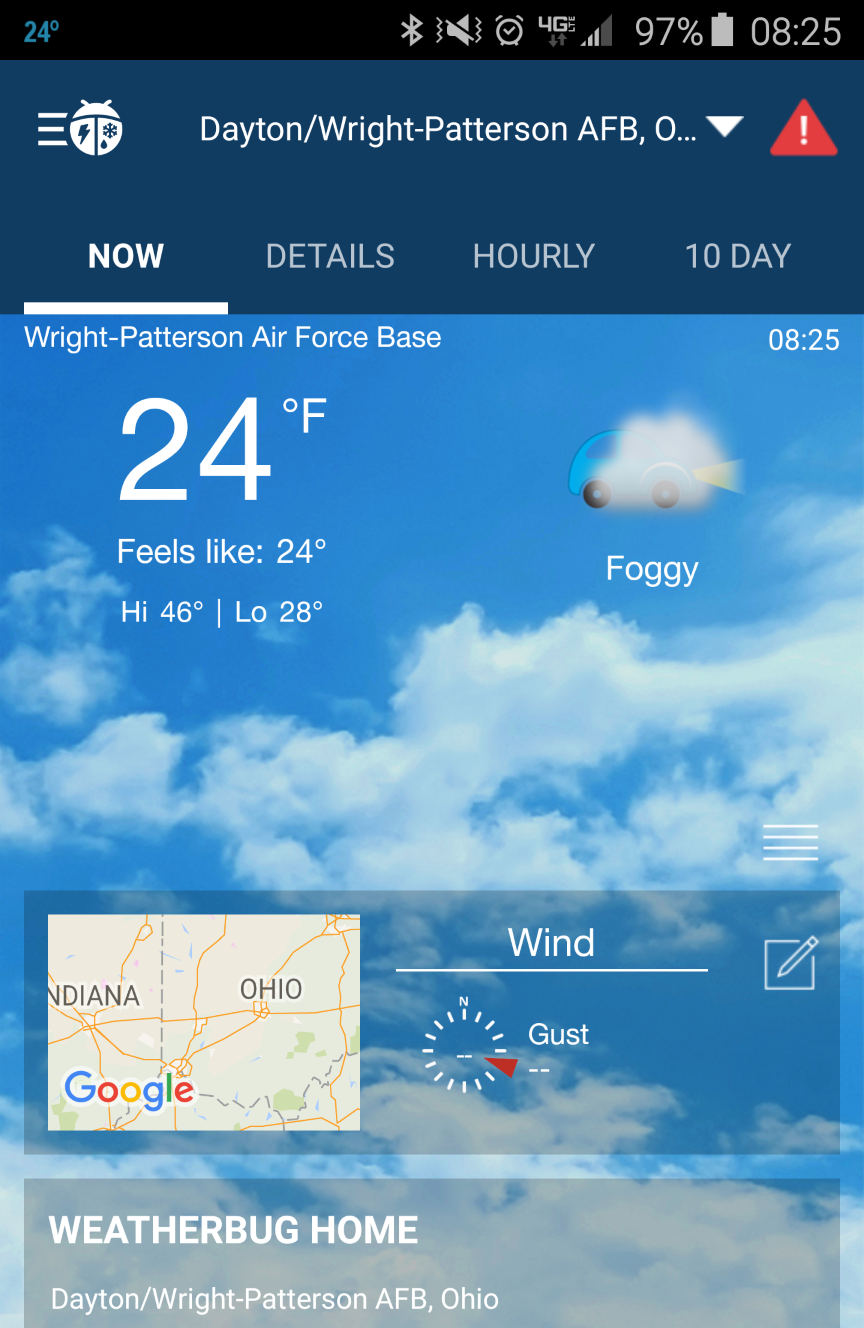


 I apparently have a sickness, it’s rare, and from what I can tell, untreatable. We’re well into fall, with winter right around the corner here in southern Ohio; that being said, I realize my riding days are numbered at this point. I turned on my phone this morning to check the weather, at a crisp 30F outside, for whatever reason as I stepped out the door, I thought to myself “the game’s afoot Old Man Winter…”
 I wouldn’t go as far as to say that I’m in full “Eskimo mode” just yet, but last weekend I took the time to re-install my hand guards bearing in mind the imminent frost. In addition, I’m also beefing up my riding game with the usual heated grips, combined with the new Tourmaster heated gloves I picked up last month. It wasn’t exactly toasty this morning, but my hands are far better prepared for the sub-freezing temperatures headed our way.
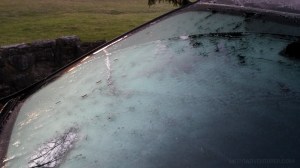
 If you’re new to the blog, I have a general principle, “Is the road dry? Does the bike start? Then ride that thing!” This attitude requires a substantial amount of preparation and risk mitigation, but thus far, Lola has been on the road every calendar month since she rolled off the showroom floor. Getting up ten minutes early each morning may seem like a waste of time for some, but when you drive a base model car, it still beats scraping the windshield!


